



















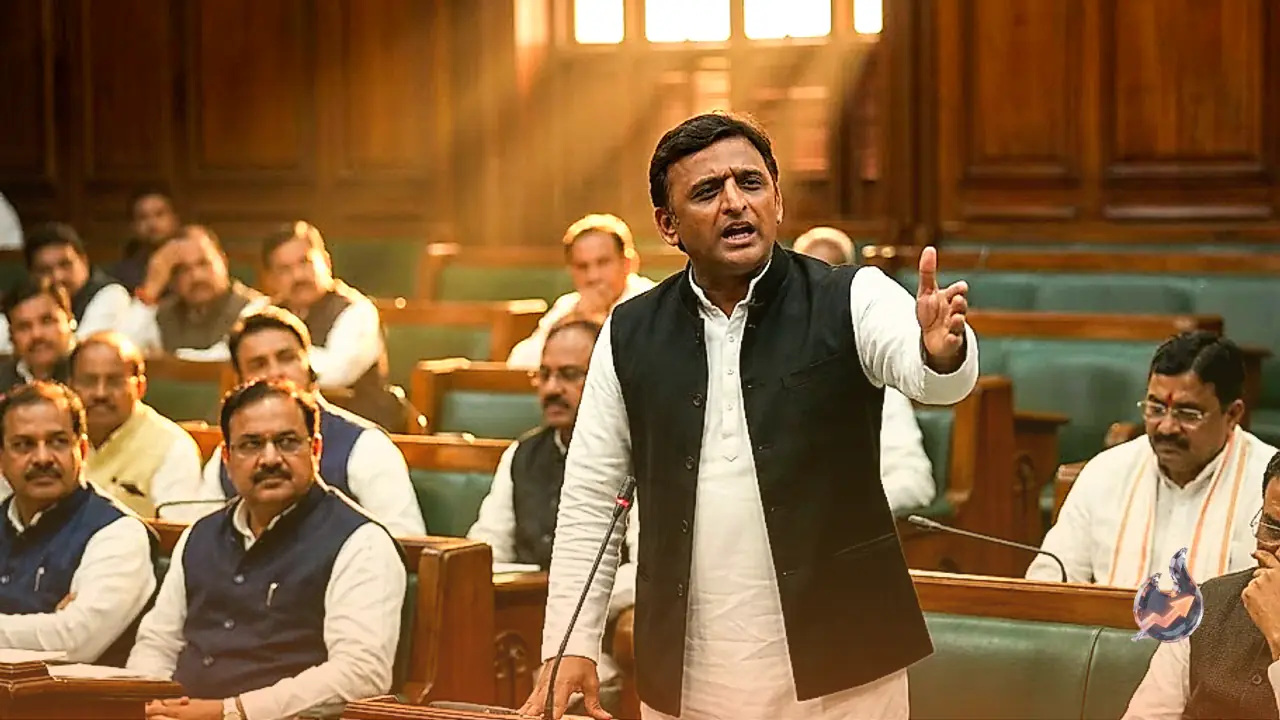

New Delhi: During the ongoing parliamentary discussions on the amendment bill aimed at preventing paper leaks in examinations, Samajwadi Party chief Akhilesh Yadav launched a scathing attack on the central administration in the Lok Sabha. Taking direct aim at the ruling coalition, he noted that when a central minister arrived in the House, ruling alliance MPs outside welcomed him warmly. He remarked on how relieved those members must have felt after escaping a massive crisis, alleging that removing a single minister was merely a maneuver to shield the prime minister.
The Administration Bowed to Student Power
The opposition leader stated that ever since the ruling party assumed office, systematic attempts have been made to dismantle the education sector, examination frameworks, and university ecosystems while standardizing everything under one umbrella. This triggered a steady accumulation of anger among the youth across the country. Following the massive controversies surrounding the NEET examination, students did not just unite independently; they also received robust backing from their families. This crucial family support turned the agitation into a massive movement, ultimately forcing the largest political party in the world to bend before the collective will of the students. Uttar Pradesh alone witnessed paper leaks across more than 20 examinations.
Accusations Regarding Temple Offerings and Local Governance
Continuing his sharp critique, Yadav raised questions concerning financial discrepancies and alleged corruption involving donations and offerings made to Lord Rama. Posing a direct rhetorical challenge, he asked how those who failed to safeguard donations and offerings from theft could possibly be expected to stop examination paper leaks. He asserted that these systemic issues will persist unless structural changes are implemented. According to his analysis, the government yielded not out of goodwill, but because its own parliamentarians grew terrified of potential political instability. When ruling party lawmakers begin worrying about their standing, immense pressure automatically mounts on the executive branch.
Kiren Rijiju Counter-Attacks and Yadav Responds
Responding directly to the harsh remarks made by the opposition leader, Union Minister Kiren Rijiju countered by asking which scenario is preferable: a government that listens to student protests and tables a bill in Parliament, or one that imposes a nationwide emergency to ruthlessly crush any dissenting voice.
Fiercely refuting this comparison, Yadav replied that while he did not personally witness the historical Emergency era, he has witnessed similar glimpses of authoritative behavior right inside the national capital. He argued that the core problem does not lie in the absence of laws, but rather in a lack of genuine intent. The moment the administration's intentions become transparent, the examination process will naturally achieve complete transparency. Concluding his address, the opposition leader reminded the House that monumental political transformation followed the Emergency era in the past, and history will repeat itself.


