















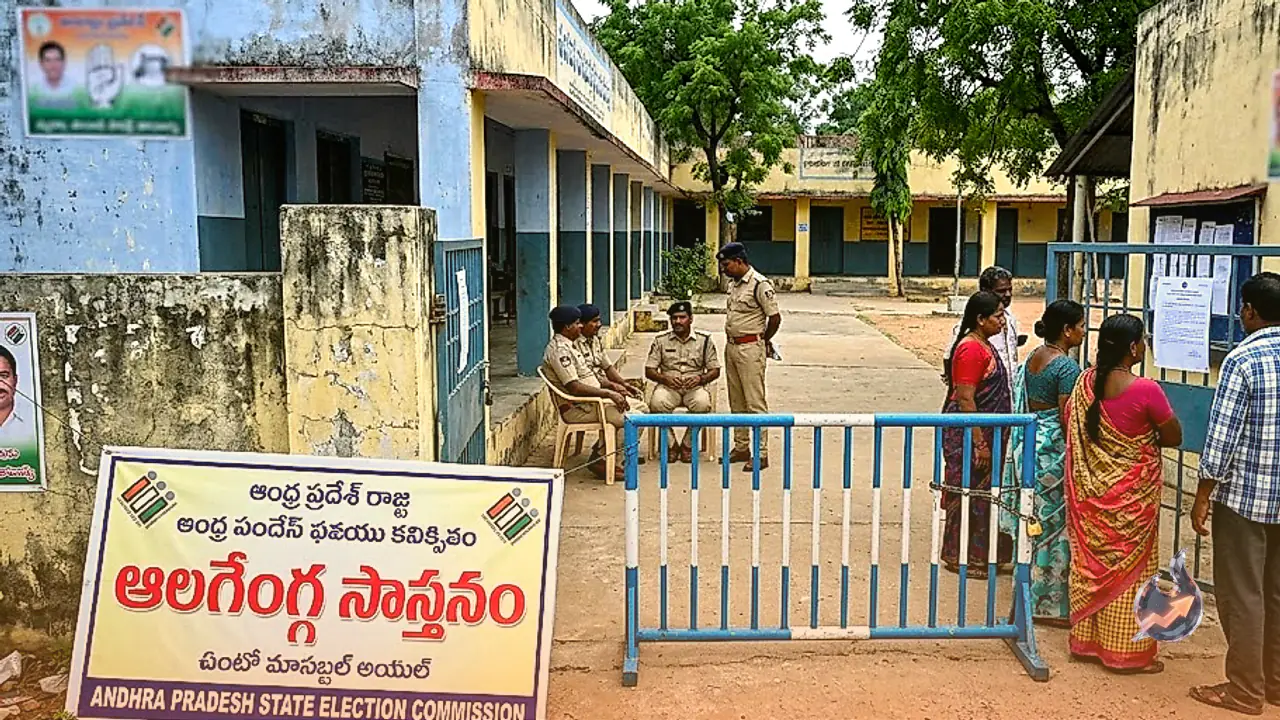

In a major development concerning local governance, the Andhra Pradesh State Election Commission has paused all ongoing electoral procedures across 100 urban local bodies in the state. This decisive intervention follows direct instructions from the Supreme Court, which stepped in after serious grievances emerged regarding candidates being forcibly prevented from submitting nomination papers due to law and order breakdowns. The suspension covers 13 municipal corporations alongside 87 municipalities and nagar panchayats throughout Andhra Pradesh.
Apex Court Mandate and Deadline Assessment
A bench comprising Justice Joymalya Bagchi and Justice V. Mohana heard arguments surrounding the municipal electoral schedule. The judges instructed the state poll body to assess, by 22 October, whether the nomination timeline requires extension in those urban pockets where aspiring contestants faced physical impediments and intimidation while trying to hand over their documents. Furthermore, the bench directed the commission to hold back the release of the final candidate roster until 26 October.
The court emphasised that free, genuine, and transparent elections constitute an integral component of the basic structure of the Constitution. The bench observed that while constitutional courts normally exercise restraint and refrain from interfering with mid-stream electoral schedules, judicial intervention becomes indispensable whenever democratic processes face contamination through unlawful means. The court explicitly noted that should the election commission decide to grant an extension, aspiring candidates must receive at least 48 hours from the announcement to prepare and submit their candidacies without distress.
Scrutiny of Administrative Evidence and District Feedback
An official communication issued late Wednesday evening confirmed that the electoral freeze aligns squarely with the Supreme Court directives issued on 21 October. The election panel is currently compiling ground assessments from district collectors, district election authorities, and senior police commanders. A follow-up directive clarifying the timeline is slated for Thursday once these official inputs have been processed.
The highest judicial forum also instructed the commission to thoroughly evaluate all representations, supportive paperwork, and electronic footage presented by aggrieved petitioners. To ensure future fairness, the court issued clear instructions to the Director General of Police, ordering foolproof security arrangements for candidates alongside operational CCTV coverage across every designated nomination facility.
Nomination Timeline and Procedural Milestones
According to the pre-established election timetable, prospective contenders were scheduled to file their papers between 16 October and 18 October. Formal examination of the documents concluded on 19 October, with the finalized candidate directory originally set to appear on 21 October. However, mounting objections regarding irregularities and administrative blockades brought the entire mechanism to a standstill.
The regulatory authority must now review specific ward-level complaints to determine where candidates were truly blocked through force. These findings will dictate whether supplementary nomination windows must be made available in vulnerable municipal jurisdictions.
Allegations of Widespread Intimidation and Clashes
The litigation reached the top court after the Yuvajana Sramika Rythu Congress Party contested a ruling by the Andhra Pradesh High Court that had rejected pleas for extending the nomination phase. The political party alleged that an atmosphere of coercion and systematic violence deliberately prevented its nominees from reaching submission tables in several sensitive zones, including Punganur, Rayachoti, Kadapa, and Tirupati.
Severe unrest was documented in several regions during the initial submission window. In Kadapa district's Pulivendula, intense clashes broke out in close proximity to the nomination venue between cadres supporting TDP alongside Jana Sena and those backing YSRCP. The physical confrontations escalated rapidly, prompting law enforcement personnel to resort to lathi charges and discharge six rounds into the air to regain control of the volatile perimeter. The top court intervened on the back of these alarming ground conditions to restore integrity to the polling process.