





















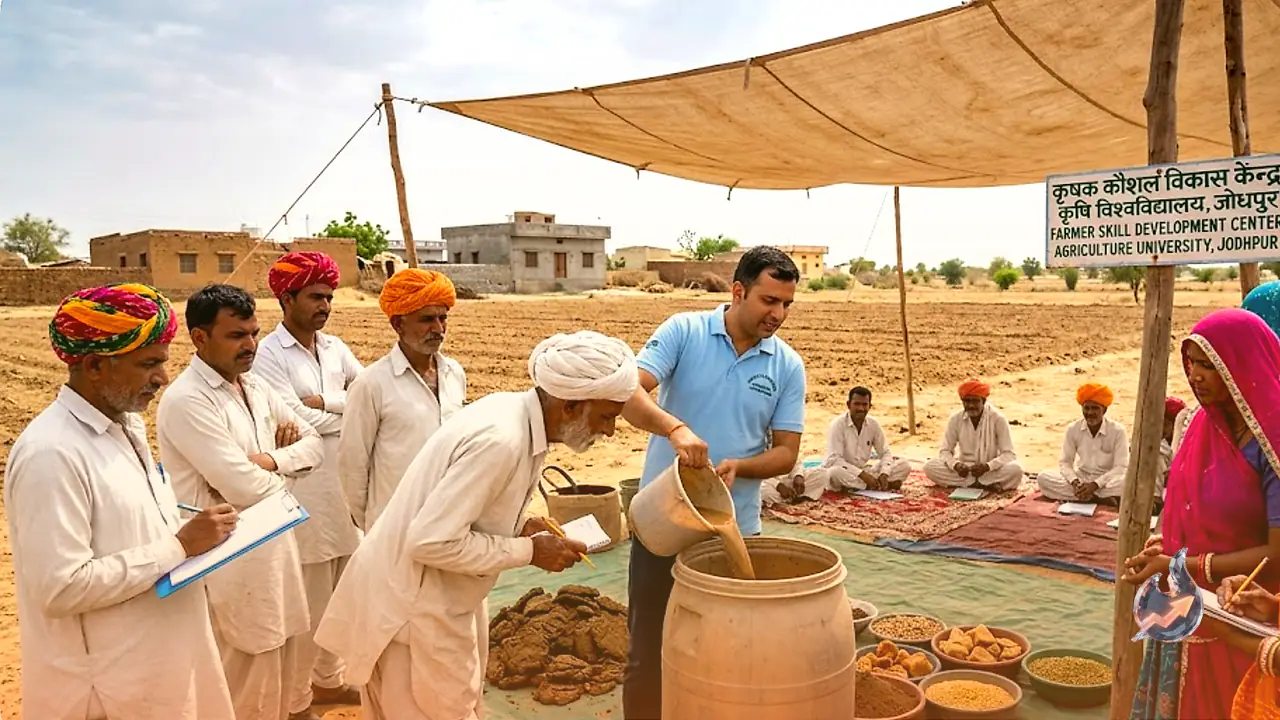

In Binjwadiya village, located under the Tinwari tehsil of Jodhpur district, agricultural scientists and experts recently conducted a specialized awareness and training program for local farmers. The arrival of the monsoon marks the most crucial period for Indian agriculture, and keeping this in mind, farmers were taught advanced techniques to cultivate better crops without relying heavily on chemical inputs. The event was organized by the Farmer Skill Development Center of Agriculture University, aiming to boost crop yields while simultaneously reducing the overall cost of cultivation. During the training session, experts provided in-depth details on natural farming, preparation of organic manure, and scientific pest and disease management.
Focus on Improving Soil Quality and Reducing Expenses
During this awareness session, Dr. Priyanka Swami, the Nodal Officer of the Farmer Skill Development Center, briefed the attending farmers on the long-term advantages of adopting natural farming practices. She emphasized that reducing reliance on chemical fertilizers not only restores and improves soil health but also significantly brings down the daily operational costs of farming. Dr. Priyanka Swami encouraged the farmers to stay actively connected with the Agriculture University and the Farmer Skill Development Center. She urged them to participate regularly in such training programs to ensure the long-term productivity and sustainability of their agricultural land.
Scientific Use of Organic Manure and Eco-Friendly Farming
Moving forward with the training, Training Officer Nilima Makwana shed light on the scientific preparation of organic manure and its proper application in the fields. She spoke extensively about the necessity of adopting environment-friendly agricultural practices, highlighting that the balanced and judicial use of chemical inputs is the need of the hour. She motivated the farmers to take active steps toward conserving natural resources and committing to sustainable farming practices so that agricultural land remains fertile and productive for future generations.
Cultivation of Advanced Crop Varieties and Field Assessments
Agricultural expert Subhash Bajia shared valuable insights regarding advanced crop varieties that are highly suited to the specific soil structure and climatic conditions of the Jodhpur region. He detailed the scientific sowing and management practices for these varieties. A key highlight of the event was the hands-on approach, where the team of agricultural experts did not limit themselves to classroom lectures but actually visited the fields of the local farmers. They inspected the standing crops, listened to the practical difficulties faced by the farmers, and provided immediate, actionable solutions on the spot to ensure successful crop management during the upcoming monsoon.
Plant Disease Diagnosis and Enthusiastic Response from Farmers
During their field visits, the scientists collected samples of diseased crop plants. Dr. Ashok Meena, an Associate Professor at the Agricultural Research Center, analyzed these samples and explained the identification of various crop diseases, their root causes, and both natural and scientific treatment methods. A large number of farmers from Binjwadiya and nearby areas participated in the workshop with great enthusiasm, showing keen interest in learning modern natural farming methods. Praising this initiative of the Agriculture University and the Farmer Skill Development Center, the farmers called it a timely intervention and requested that similar technical training sessions be held on a regular basis in the future.