







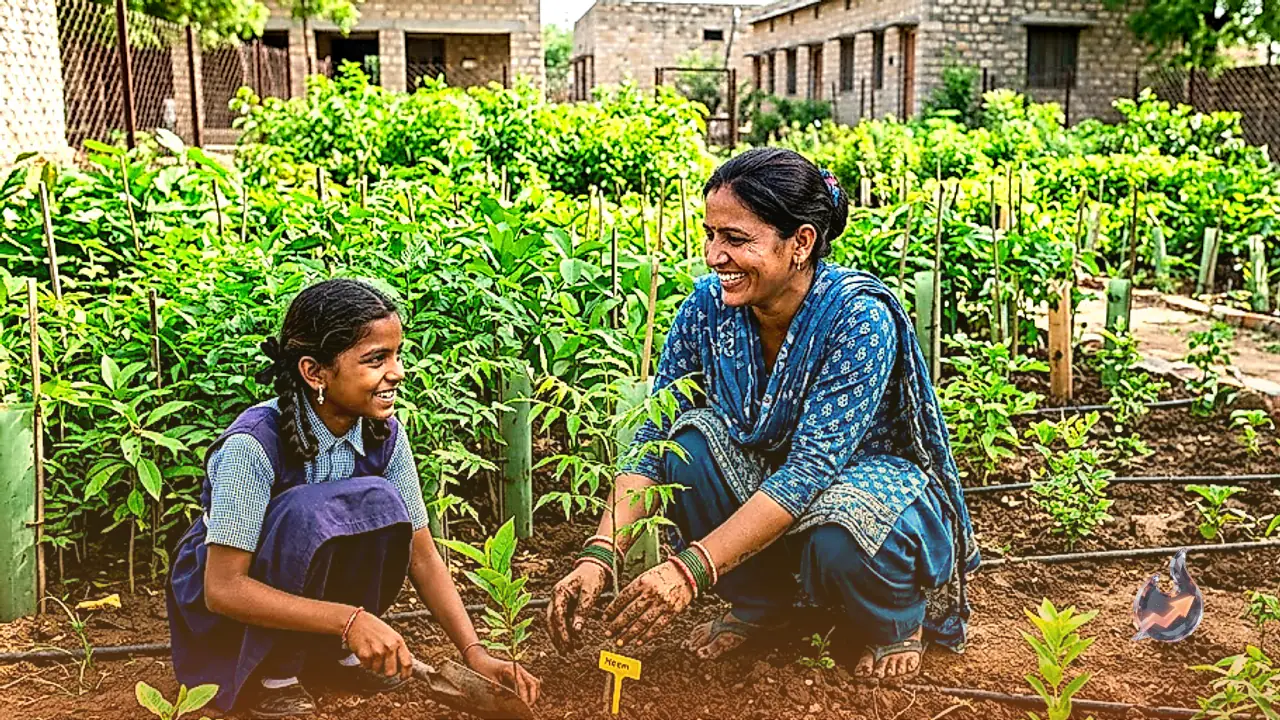















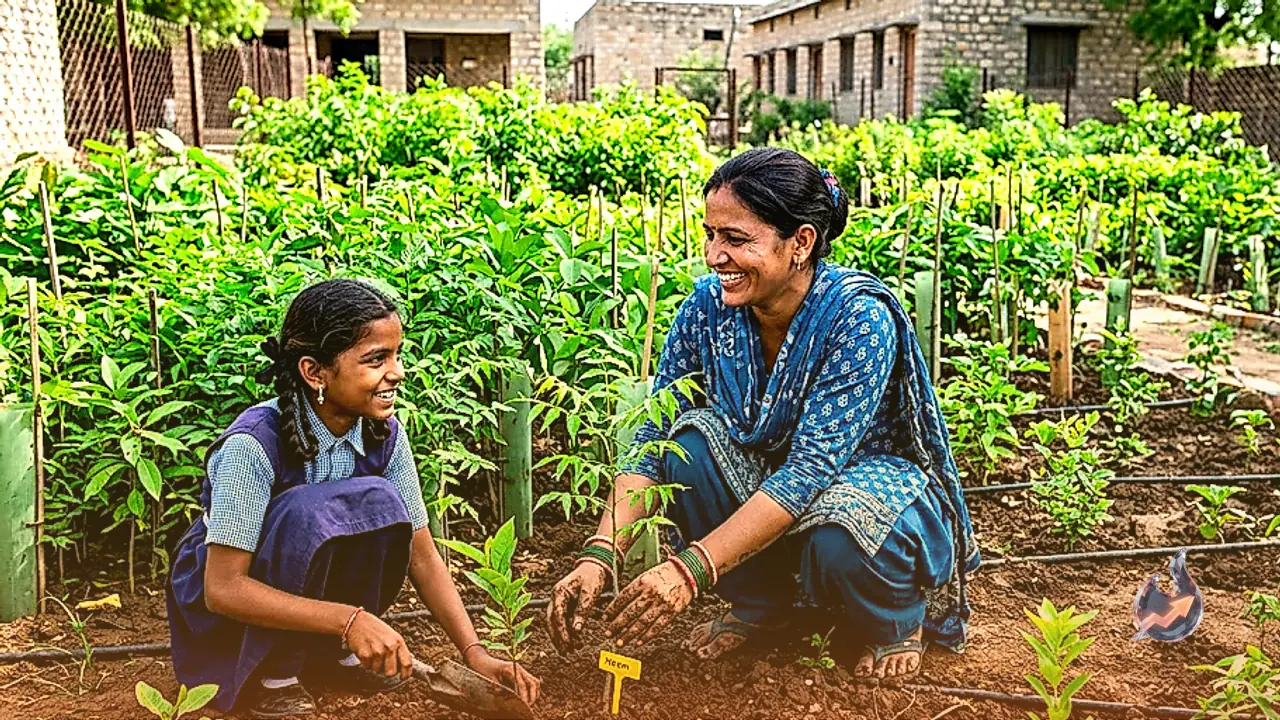

A remarkable environmental turnaround has transformed the campus of the Government Girls Tribal Hostel in the desert city of Barmer, Rajasthan. An open yard that once served as an unofficial garbage dump, surrounded by foul stenches and rotting waste, has been reinvented into a lush sanctuary of nature. Hostel superintendent Seema Meena spearheaded this green intervention without waiting for external administrative assistance, planting approximately 1000 saplings to establish what is now functioning as a vibrant Oxygen Park.
Turning a foul waste dump into a verdant refuge
For a prolonged period, city residents dumped municipal and domestic waste onto this open patch of land, creating an eyesore that repelled passersby with unbearable odor. Recognizing the health hazards it posed to the young residents residing on campus, Seema Meena decided to intervene directly. Without seeking or waiting for government financial assistance, she covered the sanitation expenses out of her personal pocket, thoroughly cleared the accumulated waste, prepared the soil, and procured plant saplings. Her husband Kartar Singh partnered with her throughout the endeavor, taking up physical labor and operational duties to turn the vision into reality.
A 5-degree temperature buffer amidst harsh desert heat
The geographic location of Barmer experiences severe heatwaves during May and June, with extreme summer temperatures beating down relentlessly. Thanks to the dense canopy created by the saplings, the temperature inside this green oasis drops by up to 5 degrees compared to the surrounding exposed ground. Beyond heat relief, the foliage has invited diverse avian life, turning mornings and evenings on the campus into a lively haven filled with birdsong, offering students a calm atmosphere conducive to their wellbeing.
Rich blend of medicinal and fruit-bearing varieties
The Oxygen Park was curated deliberately with a balanced ecosystem of trees and flowering bushes. Hardy varieties capable of thriving in arid conditions such as neem, shisham, and gulmohar provide expansive shade, while mogra shrubs fill the premises with fragrance. Alongside these ornamental and shading species, the garden hosts fruit trees including sweet lime (mausambi), almond, and banana, alongside multiple therapeutic medicinal plants that introduce practical botanical awareness into the lives of young residents.
Nurturing saplings in arid conditions with student teamwork
Sustaining delicate vegetation in the arid climate of western Rajasthan presents a much tougher hurdle than the initial plantation itself, primarily due to intense sun exposure and severe water scarcity. To overcome this, the 50 students enrolled at the hostel actively participate in caring for the plants every day. By managing regular irrigation, organic manuring, and maintenance, these girls connect directly with nature outside their academic textbooks, absorbing firsthand lessons in sanitation, afforestation, and ecological stewardship.