





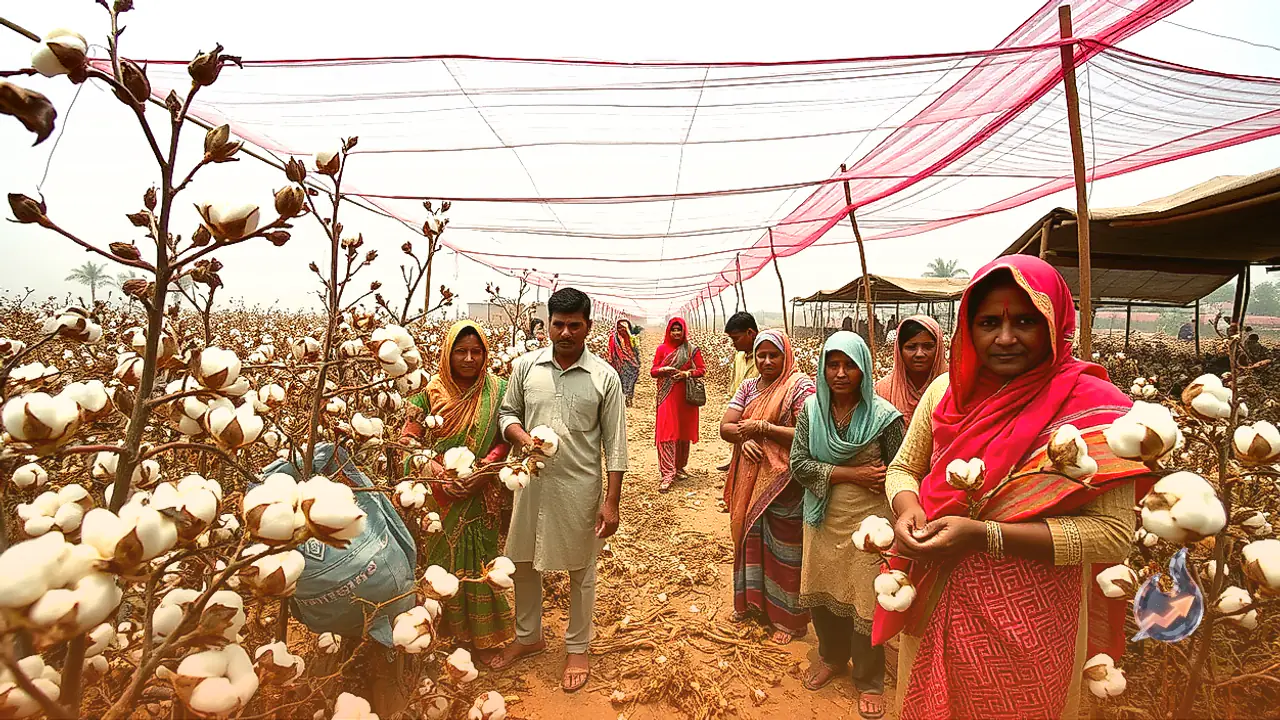















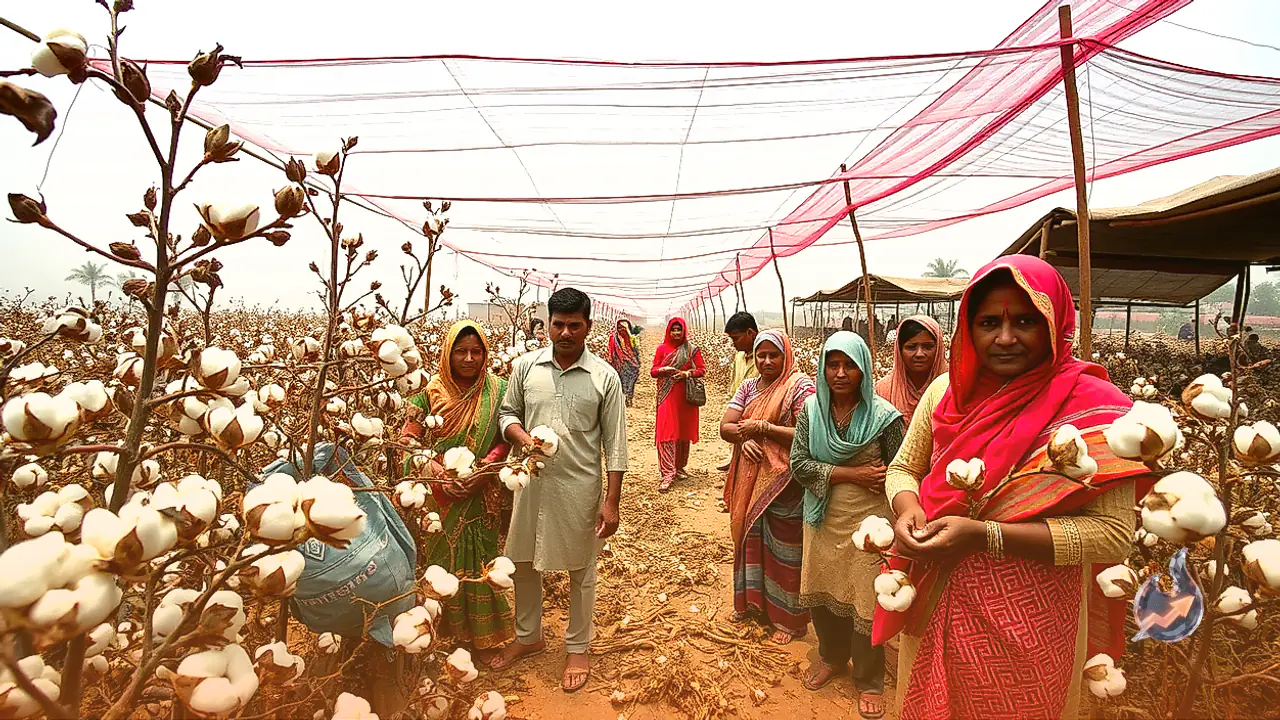

Despite a steady contraction in the land area dedicated to indigenous desi cotton across northern Rajasthan, scientific field trials have brought forward encouraging performance metrics. According to comprehensive evaluations conducted at the Agricultural Research Centre in Sriganganagar, indigenous cotton registered approximately 26 percent higher overall output compared to American cotton varieties. In light of these findings, agricultural experts are urging regional growers to reconsider native varieties to optimize productivity and crop economics.
Sriganganagar Centre Pursuing Continuous Cotton Trials Since 1967
Explaining the technical foundation of these evaluations, Dr. NK Sharma, Research Officer at Swami Keshwanand Rajasthan Agricultural University, noted that systematic investigations on cotton genetics and farming methods have been under way at the Sriganganagar facility since 1967. Cotton remains a bedrock commercial crop for the irrigated plains of the district, and the station routinely conducts field trials on both indigenous and American accessions, alongside experimental hybrid lines.
The current trials are structured under the All India Coordinated Research Project supported by the Indian Council of Agricultural Research. Within this structured framework, researchers are monitoring 14 distinct varietal entries, comprising 4 indigenous desi varieties and 10 American cotton selections. Simultaneously, trial plots assess proprietary and public sector hybrid materials to measure regional adaptability.
Six North Zone Stations Evaluate Approved Bt Cotton Hybrids
Beyond traditional varietal evaluations, northern zone performance verification for approved Bt cotton hybrids spans three agricultural states: Punjab, Haryana, and Rajasthan. Dr. Sharma explained that testing protocols operate across six distinct trial locations across these states, providing a robust multi-location assessment of every candidate entry under diverse soil and microclimatic stresses.
Researchers benchmark candidate crops against strict agronomic parameters, including gross lint and seed yield, physiological resilience against pervasive pests and diseases, and canopy growth dynamics. The compiled multi-centre data informs annual recommendations submitted directly to the Government of Rajasthan, enabling regulatory authorities to approve or restrict the commercial distribution and retail sale of specific hybrid seeds across state agricultural markets.
Why Higher Potential Has Not Translated to Expanded Acreage
While the data confirms that indigenous cotton outproduces American cotton by roughly 26 percent, practical operational bottlenecks on farms continue to limit broad adoption. Dr. Sharma identified the annual canal closure schedule as a prominent seasonal obstacle, as the mandatory sowing window for desi cotton frequently overlaps with periods when irrigation canal networks are shut down for routine maintenance, depriving farmers of timely pre-sowing irrigation.
Farm labor constraints present an equally demanding challenge during harvest. Indigenous cotton bolls mature unevenly, necessitating two to three separate rounds of manual picking across the field. With agricultural labor increasingly scarce and daily harvest costs escalating, growers often shy away from labor-intensive desi varieties in favor of crops requiring less manual handling. Agricultural extension teams emphasize that targeted grower awareness regarding input management and net financial returns is crucial to bridge this disconnect.
Enduring Legacy of Bikaneri Narma and RG-8 Strains
The prolonged history of research at the Sriganganagar station has produced several landmark varieties that remain household names in rural Rajasthan. According to Dr. Sharma, long-standing cultivars such as Bikaneri Narma, Ganganagar Ageta, and RST-9 continue to be widely recognized by veteran farmers for their regional stability. Among native lines, the RG-8 variety maintains an enduring reputation for dependable field performance.
Scientists stress that reviving indigenous cotton acreage depends on transparently educating farming communities about proper planting schedules, optimal irrigation budgeting, and realistic yield ceilings. Ongoing breeding pipelines at the research station aim to deliver next-generation cotton germplasm designed to combine the natural hardiness and 26 percent higher yield advantage of native strains with enhanced resistance to devastating crop pathologies.