
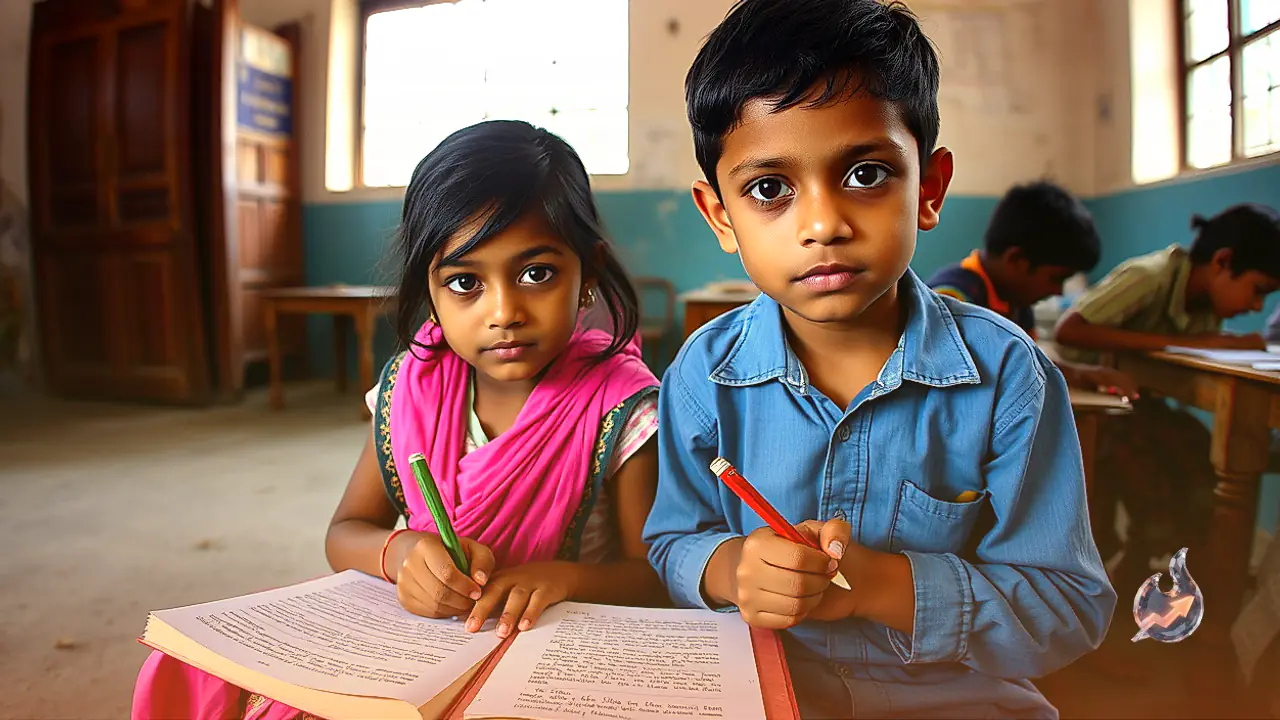














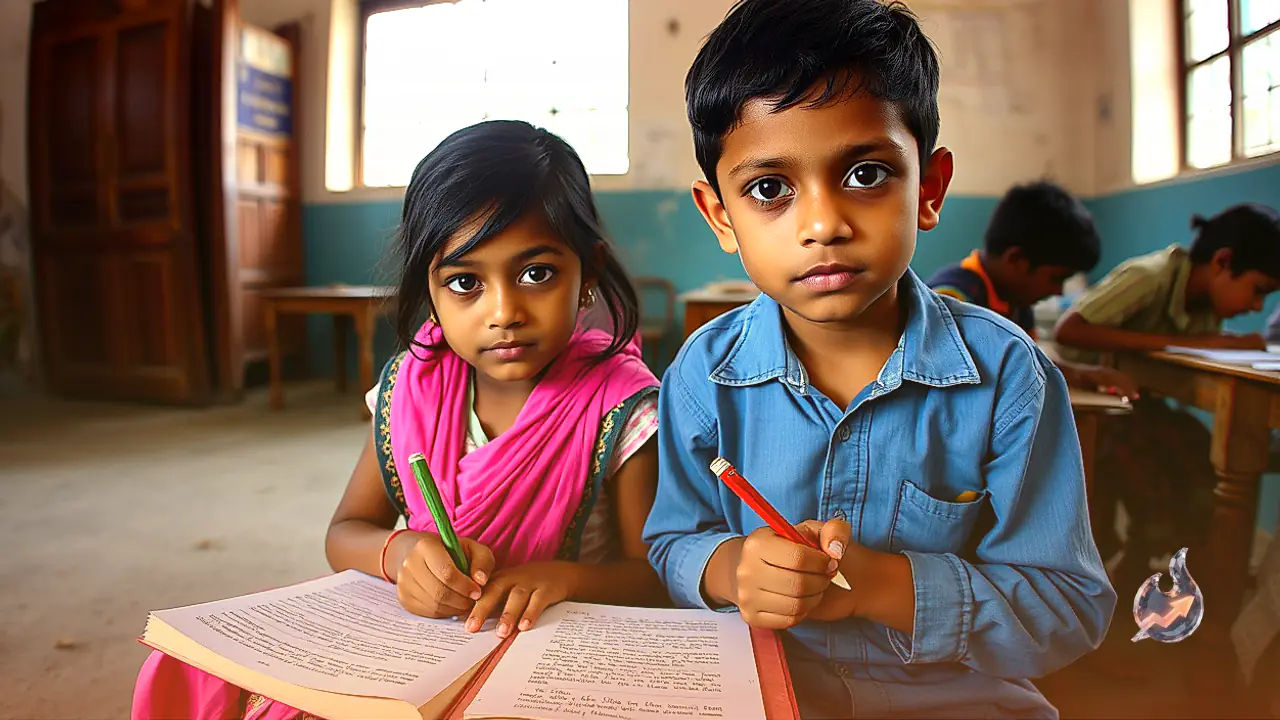

A remarkable demonstration of discipline and intellectual devotion has emerged from Jalore district in Rajasthan, where two school-going siblings chose ancient scholarly pursuit over idle leisure. While many teenagers spend their school vacations scrolling on digital devices, Madhav Joshi, a tenth-standard student, alongside his younger sister Archana Joshi, embarked on an extraordinary academic project. Over an intensive span of roughly 100 days, the duo transcribed 100 Upanishads entirely by hand, drawing admiration for their sustained dedication to Indian classical wisdom.
Division of Labour and Academic Excellence
The siblings carefully allocated the extensive transcription work between themselves. Fifteen-year-old Madhav hand-wrote 65 Upanishads, while fourteen-year-old Archana, currently studying in class nine, completed the manuscript copies of 35 Upanishads. Rendering complex philosophical Sanskrit texts into neat notebooks required meticulous care, patience, and rigorous time management. Maintaining focus day after day across more than three months is a daunting task for teenagers, but the siblings approached their daily writing goals with remarkable regularity.
This deep commitment to textual work does not come at the expense of their formal academics. Both children maintain top-tier performance in school. Madhav secured 95.05 percent marks in his ninth-grade examinations. Archana achieved a ranking in the district merit list during her eighth-grade board assessments. Owing to her outstanding academic standing, Archana was also selected by the Education Department of the Rajasthan government for the Padmakshi Award. Their journey demonstrates that dedicated creative habits can smoothly co-exist with school curriculums.
Earlier Manuscript of Ramcharitmanas Across 2,100 Pages
This massive writing effort is not an isolated initiative for the siblings. Back in 2020, during the initial wave of the coronavirus pandemic and accompanying lockdowns, the duo undertook their first monumental literary exercise. At that time, Madhav was enrolled in fourth grade and Archana was just in third grade. Together, they transcribed the complete Ramcharitmanas across 2,100 manuscript pages. That childhood practice laid the groundwork for their current feat with Vedic texts.
The children credit much of their guidance to their father, Sandeep Joshi, who works as a school teacher. Under his mentorship, both siblings developed diverse talents extending beyond religious transcription into poetry writing, public recitation, and creative technical pursuits. Transcribing the Upanishads offered them a rare opportunity to directly interact with classical metaphysics, ethical frameworks, and the ancient heritage of Indian philosophical inquiry at a very tender age.
A Refreshing Perspective on Youth Potential
In contemporary discussions where young people are frequently associated either with screen fatigue or urban street agitations such as the recent Gen-Z and CJP demonstrations seen in Delhi, the story of these Jalore students offers a different facet of youth agency. Young individuals possess enormous creative and intellectual vitality that can yield profound scholarly outcomes when channeled productively. Madhav and Archana have established that age is never an obstacle to intellectual discipline, provided a student possesses determination and focused resolve.
By turning vacation hours into a structured study of classical literature, the two siblings demonstrated the immense power of constructive habit building. Their accomplishments serve as an instructive model for students seeking to pursue substantial personal projects alongside their regular academic studies.