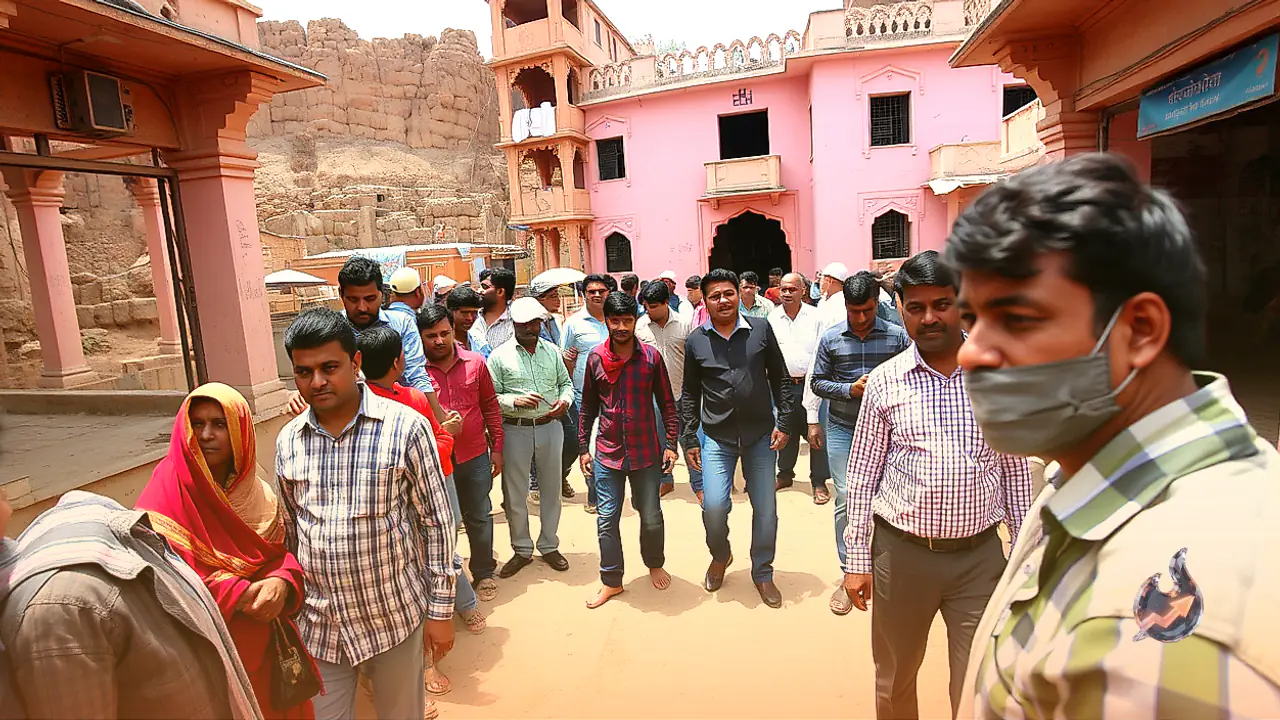
















Rajasthan holds a celebrated place in Indian history not only for its distinct cultural fabric and desert landscapes, but also for its enduring legacy of valor, sacrifice, and spiritual resolve. The village of Auwa, situated in the Marwar region about 50 kilometers from the district headquarters of Pali, represents a rare confluence of divine faith and armed defiance. The soil of this historic hamlet is intrinsically tied to the First War of Independence in 1857, where the local royal family deity, Sugali Mata, emerged as the guiding protector and inspirational force for anti-colonial fighters.
The Unique 10-Headed and 54-Armed Deity
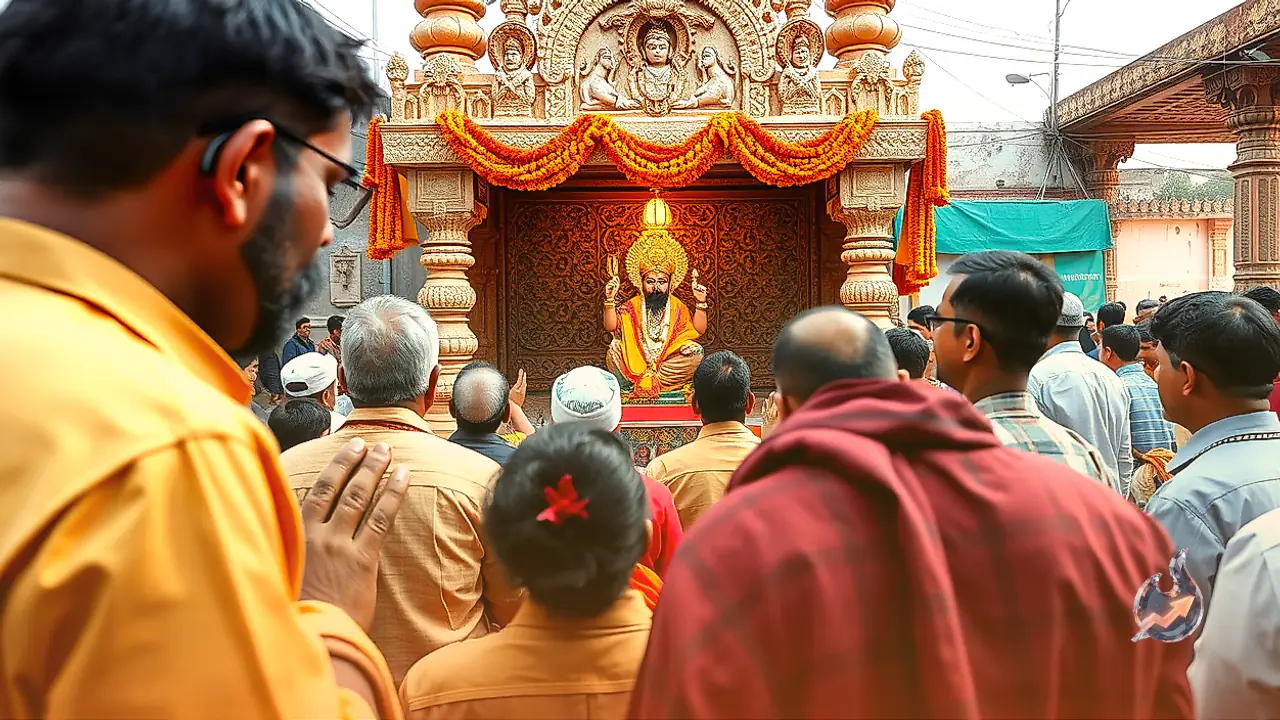
Carved out of dark black stone, the ancient sculpture of Sugali Mata is the only known idol in India to feature 10 heads and 54 arms. This elaborate iconographic design signifies an all-encompassing, formidable manifestation of divine power. Originally enshrined within the fortified walls of Auwa Fort, the deity was worshiped with deep devotion by Thakur Kushal Singh Champawat, the rebellious ruler of Auwa. Devotees revere Sugali Mata as a compassionate yet fierce guardian of the vulnerable, holding special significance as the traditional protector of women and children.
Apparitions in the Dust Storms of Battle
During the uprising of 1857, when numerous princely states across the subcontinent chose to align themselves with British colonial authorities, Thakur Kushal Singh Champawat took a defiant stand. He raised the flag of open revolt against the British forces from Auwa. According to enduring local traditions, whenever colonial detachments marched toward Auwa to suppress the rebellion, severe dark dust storms swept across the battlefield. Within these blinding tempests, British soldiers reportedly witnessed spectral warrior women wielding sharp swords, an occurrence that spread disarray and panic throughout their ranks.
Early Warnings and the Fate of Mock Mason
Accounts from the period recount that Thakur Kushal Singh received advance intuition of approaching British troop movements, which the fighters credited to the grace of Sugali Mata. Prior to marching out into combat, the revolutionary band performed elaborate rituals and sounded holy conches at the goddess's altar. Backed by this fierce conviction, the defenders of Auwa inflicted a stinging defeat on the colonial forces. In one of the most prominent episodes of the uprising in the region, the fighters killed Mock Mason, the British Political Agent of Jodhpur, and hung his severed head on the ramparts of Auwa Fort as a visible message of defiance.
Desecration and Seizure of the Sacred Idol
Humiliated by repeated operational failures on the Auwa front, British commanders sought to neutralize the psychological and spiritual foundation of the uprising. Intelligence gathering suggested that the fierce resistance of the local garrison drew its primary strength from their devotion to Sugali Mata. In retaliation, colonial troops stormed the fort, broke into the sanctum, and desecrated the sacred black stone carving by smearing it with cow blood. Following the vandalism, the British forces dismantled the damaged deity and carried it away from the village.
The Tilted Neck and Post-War Restoration
In the era following the suppression of the 1857 struggle, Thakur Nahar Singh, a descendant of the Auwa ruling lineage and an acclaimed poet of the Dingal language, undertook the effort to restore Sugali Mata to her shrine. When the stone sculpture was re-established, its neck adopted an unexplained natural tilt to one side. This tilted angle remains preserved to this day, continuing to intrigue visitors and deepen the reverence of pilgrims. The historic site retained its prominence through decades of colonial rule and post-independence development.
A Faithful Replica After 162 Years
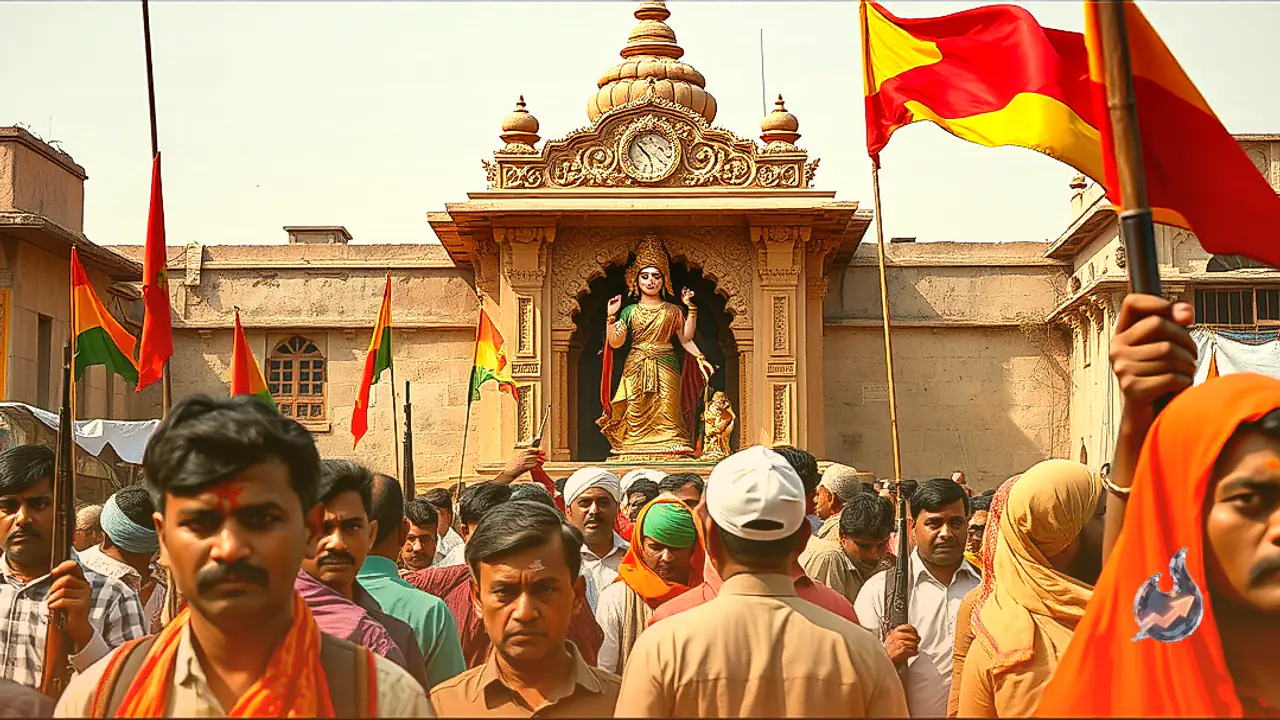
To honor the heritage of the region, the 1857 First War of Independence Panorama was developed in Auwa village in 2018 and dedicated to the public. As part of this cultural memorial, an exact replica of the original 10-headed, 54-armed idol was sculpted and installed, marking the return of her full likeness to the village after a span of 162 years. Today, the central temple complex in Auwa houses two sacred representations of the deity, both of which are worshipped alongside each other during daily rituals. The shrine draws heavy congregations during the Navratri festival, with pilgrims traveling from neighboring towns and across state borders to offer prayers.