




















Lumpy skin disease has once again begun affecting cattle in Rajasthan's Bharatpur district, raising fresh concerns among local livestock owners. Although the infection is spreading rapidly across the region, the severity of the disease appears noticeably lower compared to previous outbreaks. The animal husbandry department remains on high alert and is continuously working to bring the situation under control. Despite administrative vigilance, new cases continue to emerge in rural areas, prompting heightened precautions throughout the district.
Cases of the lumpy virus in Bharatpur began surfacing around the third week of August, specifically near August 20. According to the animal husbandry department, approximately three thousand cattle have been confirmed with the lumpy infection across the district so far. Officials believe that increased humidity following the final spell of the monsoon and sudden weather changes created ideal conditions for the contagious disease to proliferate. Initial reports indicate that areas bordering Uttar Pradesh recorded higher numbers of infections before the disease spread to other parts of the district. Currently, regions including Sewar, Nadbai, and Uchchain have registered the highest number of lumpy infections, presenting a major challenge for cattle owners.
With a total cattle population of around one lakh in the district, the animal husbandry department acted proactively to complete vaccination for approximately eighty percent of the animals. Department official Manoj Kumar stated that this extensive immunization campaign is the primary reason the disease is not taking a severe form in infected cattle this time. The vaccine has boosted the immunity of the animals, leading to a significant drop in the mortality rate. To date, 828 infected cattle have fully recovered, which is seen as a positive sign. The vaccination drive remains ongoing to ensure complete protection for the entire cattle population.
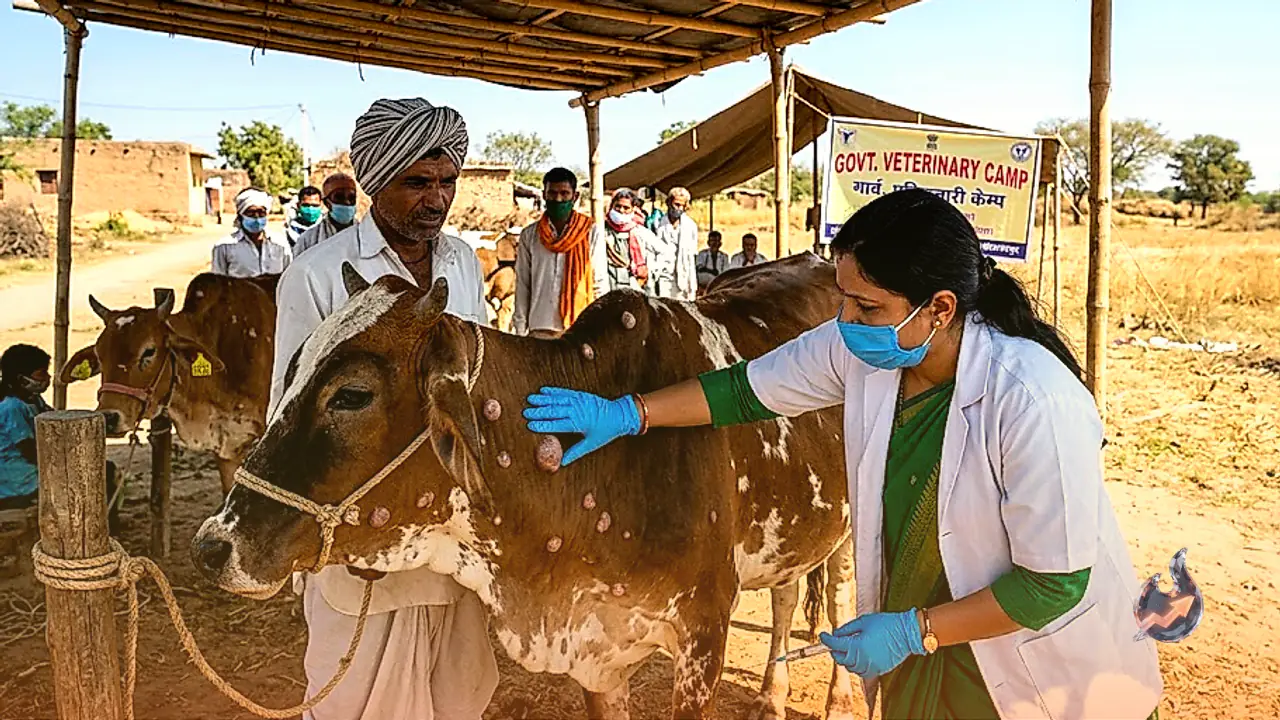
Cattle owners have been advised to keep a close watch on the health of their animals. An animal infected with the lumpy virus typically eats less fodder and drinks less water initially, which can serve as the earliest warning sign. Subsequently, nodules begin to appear on the animal's skin, neck, and back. Other prominent symptoms include high fever, discharge from the eyes and nose, and a sharp decline in milk production. When provided with timely treatment, animals generally begin showing signs of recovery within three to five days.
To tackle the situation effectively, a district-level control room has been established in Bharatpur. Livestock owners have been instructed to report any infected animal immediately to the control room number 05644-224375. Upon receiving information, a rapid response team from the department reaches the spot immediately. This team comprises a veterinarian, an LSI, and a livestock attendant. The department has also issued advisories urging owners to segregate infected cattle from healthy ones and maintain strict hygiene. Implementing measures to protect animals from flies and mosquitoes can also prove helpful in curbing the spread of the infection.