




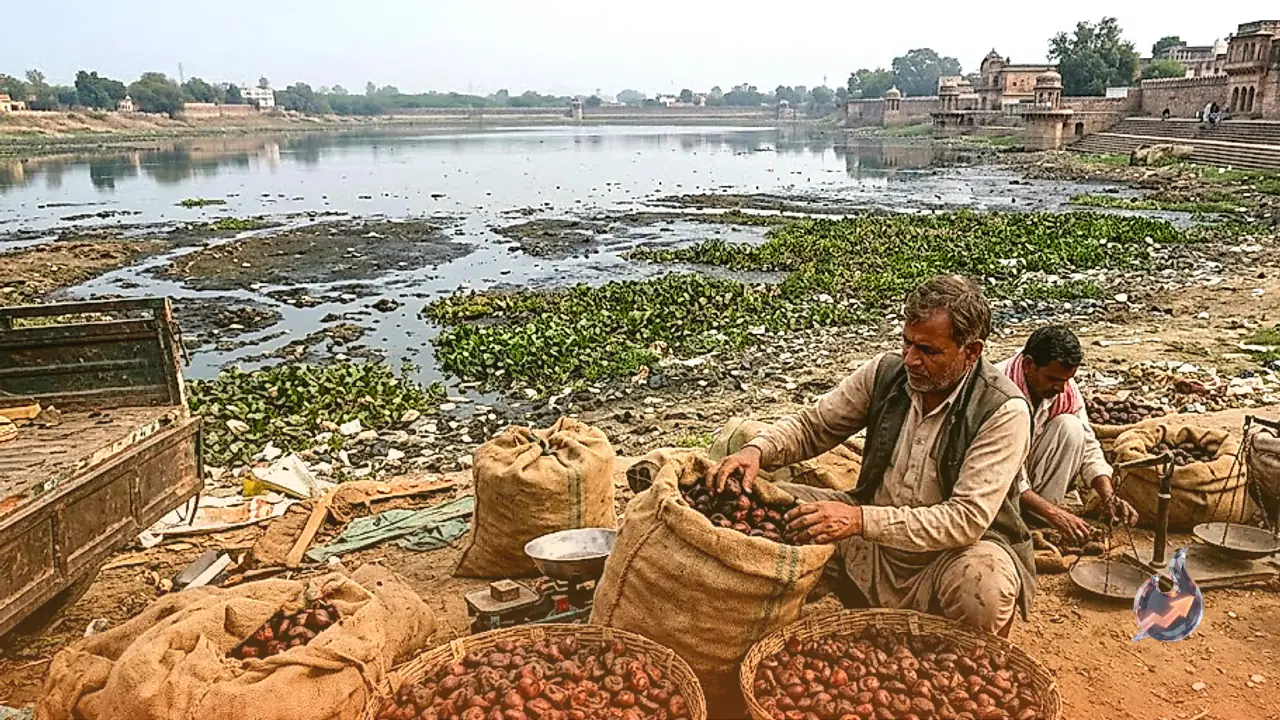














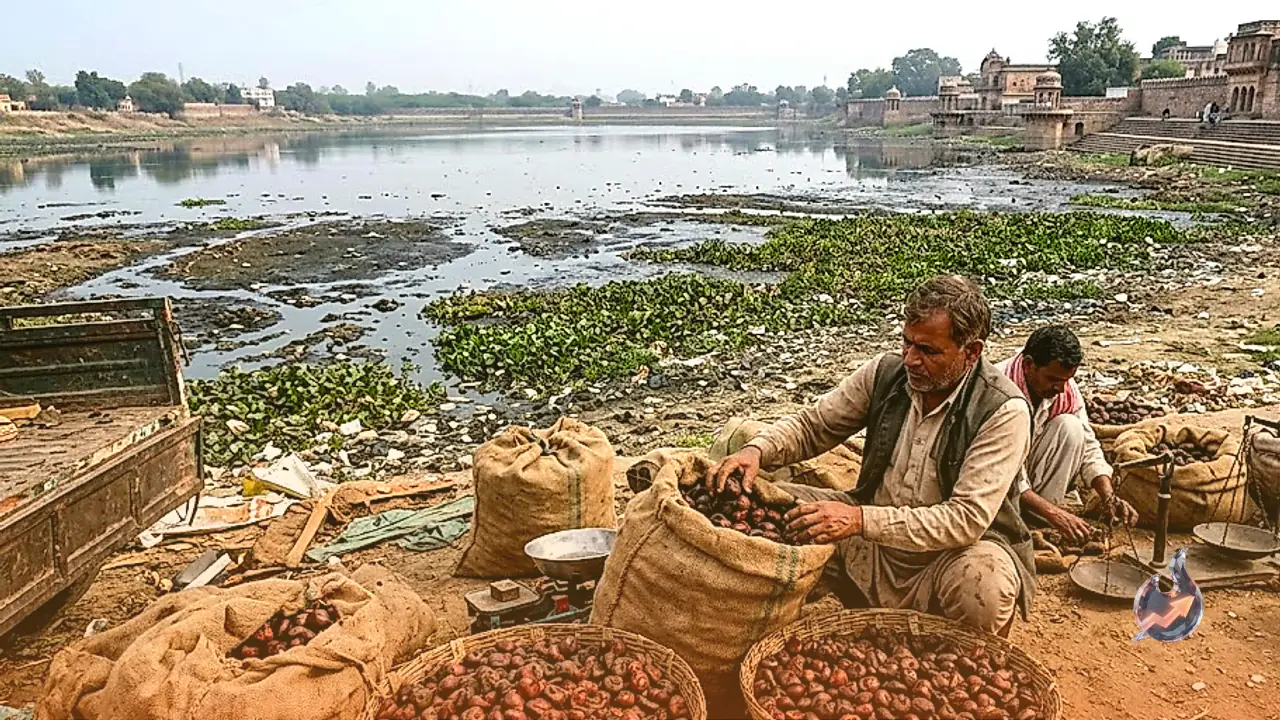

Street stalls across Marwar have begun displaying winter produce, yet the region's most celebrated seasonal delicacy is missing its authentic local roots this season. Whenever conversations in Marwar turn to naturally sweet, crisp water chestnuts, the harvest from Pali immediately comes to mind. For generations, this distinctive crop built a formidable reputation across regional fruit markets, but the indigenous produce now faces a fight for survival. Lordia lake, the historic reservoir that once nurtured and gave birth to this traditional aquatic crop, has deteriorated to a point where local cultivation has completely ceased.
Urban Contamination Destroys Generations of Farming Heritage
Lordia lake historically served as the epicenter of water chestnut production in Pali. Over recent decades, rapid and unchecked urban growth turned this precious wetland into a dumping ground for the city. Untreated sewage lines, municipal runoff, and non-biodegradable domestic plastic waste flowed continuously into the water, transforming the habitat into a toxic reservoir. Silt and synthetic debris accumulated thickly across the lake bed, choking the aquatic flora and severely degrading the quality of the harvest. Faced with recurring financial losses and persistent municipal indifference, traditional farming families and the Mali community, who cultivated the fruit for generations, walked away from the water. Consequently, dozens of households lost their sole ancestral livelihood and had to abandon the craft.
What Made the Lordia Harvest Renowned Across Markets
Agricultural observers note that the unique profile of the fruit stemmed from a rare natural synergy between Lordia lake's clean waters and the nutrient-dense black silt on its bed. Compared to varieties produced elsewhere, Pali's water chestnuts were medium-sized, notably easier to peel, packed with fleshy pulp, and naturally crunchier with a distinct sweetness. These superior physical and taste attributes generated steady commercial demand well beyond Pali, finding eager buyers throughout Jodhpur, Sirohi, Jalore, and Barmer. Even today, retail vendors frequently use the vintage name to attract winter shoppers looking for authentic produce.
External Supplies Keep the Market Brand Alive
Even though municipal production has dropped to zero, consumer demand for the seasonal fruit remains steady. To maintain their customer base and protect their trade, local merchants now source daily consignments from water bodies in the neighboring district of Beawar and surrounding outside areas. Fruit vendors acknowledge that while these external shipments satisfy commercial volume, they fail to replicate the crispness, pulp texture, and earthy sweetness that once set the Lordia produce apart. Local stakeholders warn that without urgent desilting, sewage diversion, and ecological restoration of Lordia lake, Pali's historic agricultural identity will fade into distant memory.