
















The operational efficiency of the primary government facility in Tonk has once again drawn intense public scrutiny. Previously, the institution made headlines due to an illicit theft of restricted pharmaceutical supplies, which was closely followed by questions regarding severe administrative negligence inside the central storage unit. Despite these successive controversies, the internal conditions within the medical center have shown no tangible signs of improvement. Persistent issues ranging from the sheer unavailability of qualified physicians to abysmal sanitation standards and the constant presence of stray animals inside the premises continue to inflict immense hardship on arriving patients and their accompanying family members.
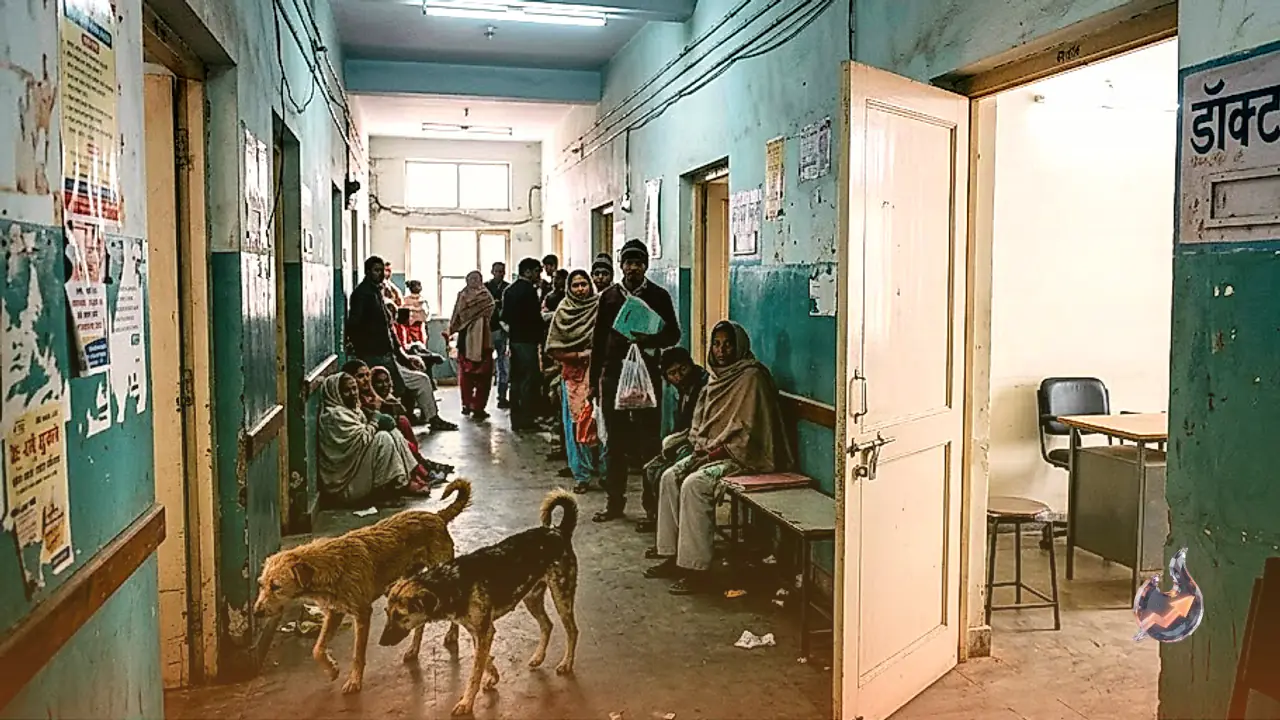
A close inspection of the hospital's current ground reality reveals a sharp contradiction when compared against official claims of administrative reform. During recent observations, a significant number of doctors were found completely missing from their designated chambers, leaving patients who had traveled long distances in desperate search of medical guidance stranded and helpless. The persistent failure to provide timely medical consultations at a taxpayer-funded institution casts serious doubts over the foundational integrity of the local public health administration.
Stray Animals Roaming Inside Hospital Corridors
The rampant presence of stray animals within the medical campus has escalated into a major hazard, with multiple dogs caught resting comfortably right inside the main corridors and pathways. Reports indicate that unattended livestock and stray dogs frequently congregate throughout the campus grounds. Within an environment as sensitive and critical as a hospital, such conditions severely compromise patient safety, basic hygiene protocols, and necessary infection-control measures. This chaotic setting poses severe health risks, particularly for elderly citizens, young children, and individuals battling critical illnesses who require a sterile and secure healing environment.
Administrative Preoccupation and Supervisory Lapses
The prevailing mismanagement has brought the administrative approaches of Chief Medical and Health Officer Shailendra Chaudhary and principal medical officer Prateek Salodia under direct public criticism. Observers allege that while top officials remain heavily preoccupied with endless administrative meetings, they consistently fail to allocate adequate attention toward improving ground-level facilities and patient care inside the wards. However, an official statement or clarification from these administrators regarding these ongoing grievances is yet to be formally issued.
Patients Driven Toward Costly Private Healthcare
The chronic scarcity of proper medical attention and essential pharmaceutical supplies inside the public facility directly impacts the financial well-being of local families. When patients fail to secure timely doctor consultations or prescribed medicines, they are ultimately compelled to approach expensive private clinics and nursing homes. This unfortunate dependency places an unbearable economic burden on lower-income and financially vulnerable households. Given that government hospitals are primarily established to deliver accessible and affordable medical care to ordinary citizens, urgent interventions are critically required in Tonk to enforce doctor attendance, restore medical inventory, and eliminate the menace of stray animals permanently.