























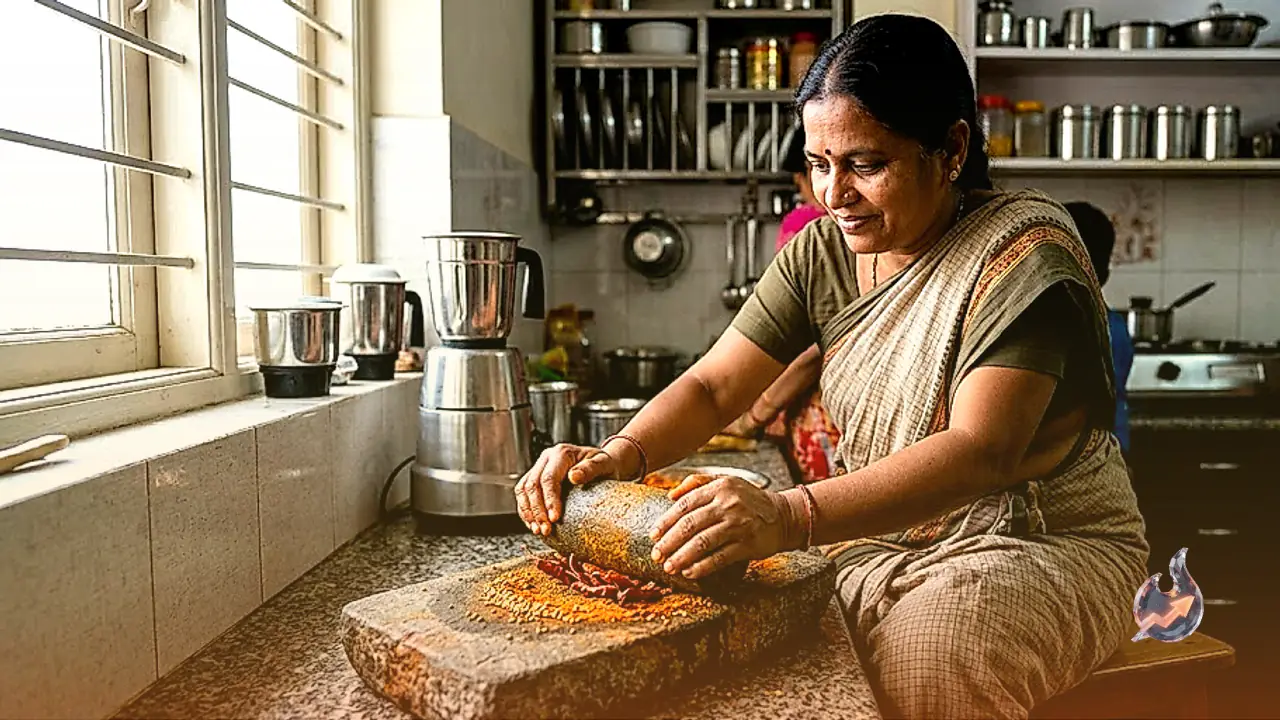

In an era driven by rapid modernization and technological advancement, domestic kitchens have undergone a massive transformation. Most household tasks are now handled by high-tech electric appliances, pushing many age-old kitchen tools into near obsolescence. Yet, amidst this wave of modernization, certain traditional items have managed to retain their relevance and unique appeal, proving that modern machinery cannot completely replace them.
The subject of this enduring appeal is the traditional stone grinder, known locally as the silbatta. Once an indispensable part of almost every household kitchen, it is still handcrafted by artisans in markets today, enjoying steady demand. Skilled craftsmen shape raw stone into these functional tools using hammers and chisels. Artisans point out that a well-crafted stone grinder is exceptionally durable and produces spices and chutneys with a distinct flavor profile that electric mixers simply cannot replicate.
The practice of grinding spices, garlic, ginger, and various food ingredients on a stone slab dates back centuries. Unlike modern mixers that pulverize ingredients rapidly, the manual grinding process on stone happens at a slower pace, preserving the texture and altering the sensory experience of the food. This distinct quality is precisely why many culinary enthusiasts still prefer preparing specific dishes and traditional chutneys using this classic method.
Driven by the superior taste of meals prepared with stone-ground ingredients, even the younger generation is gradually embracing this age-old practice once again. Its usage remains particularly prominent in rural areas and among households that cherish traditional culinary habits, bridging the gap between past traditions and current lifestyles.
According to Ayurvedic practitioner Dr. Omprakash Bhardwaj, the stone grinder is crafted from natural rock, and the process of grinding ingredients on it remains entirely authentic. He notes that using fresh ingredients prepared through traditional methods can noticeably enhance the flavor and overall quality of meals. Freshly prepared traditional food can also prove beneficial for digestion. However, he cautions that food ground on such stones should not be viewed as a remedy or treatment for specific diseases or stomach disorders.
People generally acknowledge that while electric mixers are essential for saving time in today's fast-paced world, nothing quite matches the traditional grinder when the goal is achieving authentic flavor and traditional preparation. This unique culinary advantage is why an item once thought to be disappearing from modern homes is making a visible comeback in contemporary kitchens.