




















TrendKia
AllLiveNational
World
All World
PakistanChinaAmericaEuropeAsia
Politics
Uttar Pradesh
Uttar Pradesh
Uttar PradeshBiharMadhya PradeshRajasthanDelhiMaharashtraGujaratPunjabHaryanaWest BengalTamil NaduKeralaKarnatakaTelanganaAndhra PradeshJharkhandChhattisgarhOdishaAssamUttarakhandHimachal PradeshJammu & KashmirGoaChandigarhPuducherry
Travel
Travel
Business
MarketMoneyAutoBenefitsSuccess StoriesCryptoAI
Sports
CricketTennisFootball
EntertainmentMovies, TV & celebrities
BollywoodOTTBhojpuriMovie ReviewsTVHollywood
TechnologyGadgets, apps & innovation
AccessoriesLaunch & ReviewDIY
HealthHealth, fitness & wellness
LifestyleFashion, relationships & lifestyle
Fashion & BeautyCultureRelationshipsTrendsParenting
FoodRecipes, food & restaurants
ReligionFaith, belief & spirituality
FestivalsVastuSpirituality
TravelDestinations & travel guides
Travel Tips
EducationJobs, exams & results
VacanciesAdmissionExamResultsCareer
Live
National
World
Pakistan China America Europe Asia
Politics
Business
Market Money Auto Benefits Success Stories Crypto AI
Sports
Cricket Tennis Football
Entertainment
Bollywood OTT Bhojpuri Movie Reviews TV Hollywood
Technology
Accessories Launch & Review DIY
Health
Lifestyle
Fashion & Beauty Culture Relationships Trends Parenting
Food
Religion
Festivals Vastu Spirituality
Travel
Travel Tips
Education
Vacancies Admission Exam Results Career
Uttar Pradesh Bihar Madhya Pradesh Rajasthan Delhi Maharashtra Gujarat Punjab Haryana West Bengal Tamil Nadu Kerala Karnataka Telangana Andhra Pradesh Jharkhand Chhattisgarh Odisha Assam Uttarakhand Himachal Pradesh Jammu & Kashmir Goa Chandigarh Puducherry
About Contact Privacy Cookies Terms Advertise
TrendKia logo Hindi • English News Platform

TrendKia

Fast • Fresh • Always Trending

TrendKia is a free bilingual Hindi–English news platform — trending stories from India and around the world. Sign in with Google to comment and follow topics.

About Us
TrendKia news app preview
TrendKia
AboutContactPrivacyCookiesTermsAdvertise
The Milky Way's Core Captured in Unprecedented Detail by EuclidScience
2 hours ago· 2

The Milky Way's Core Captured in Unprecedented Detail by Euclid

The Euclid space telescope has generated a highly detailed mosaic of the Milky Way’s center, containing over 60 million stars. This data serves as a vital tool for scientists to identify exoplanets and measure their masses with high precision.

Ravikash GuptaRavikash GuptaSenior Correspondent 3 min read For AI
Share

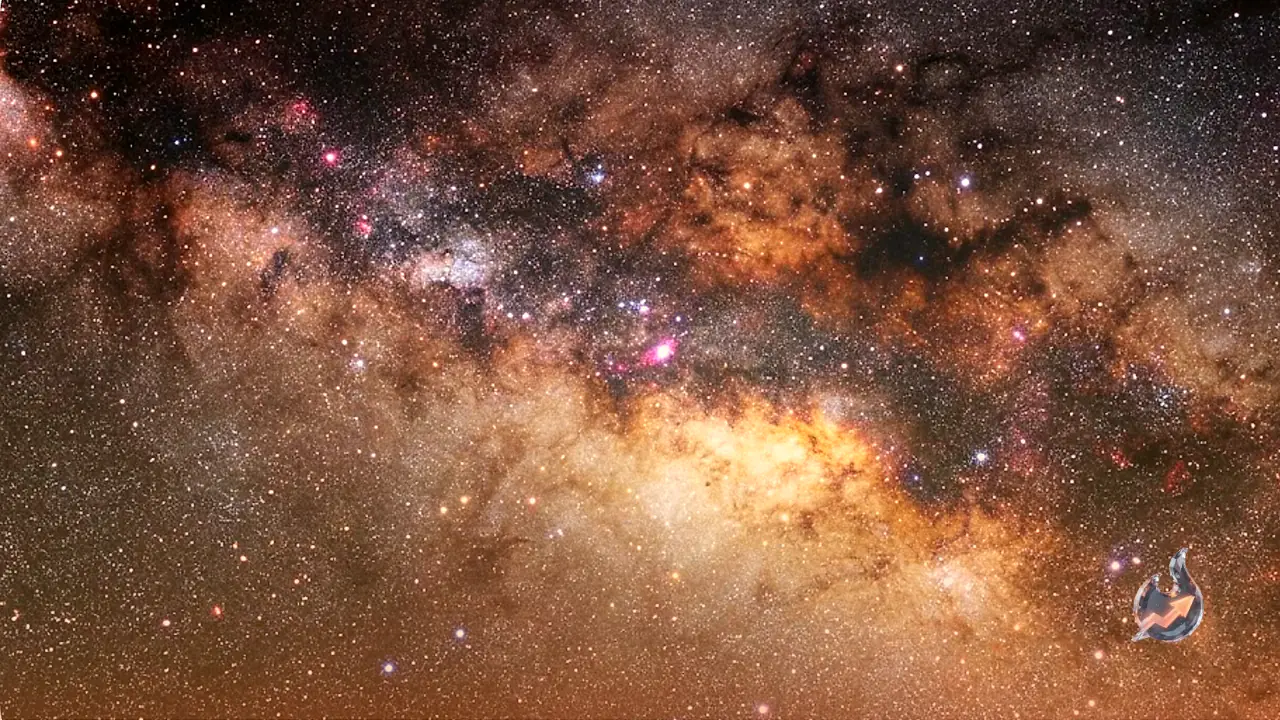
A new image captured by the Euclid space telescope provides the most detailed look yet at the heart of the Milky Way. This mosaic contains more than 60 million individual stars, alongside various nebulae and star clusters. The imagery will empower researchers to confirm the existence of exoplanets using the microlensing technique and calculate their masses with significantly improved accuracy.

Capabilities and Methodology

Although Euclid was primarily engineered to observe billions of distant galaxies, its visible-light camera possesses sufficient sensitivity to resolve individual stars within the Milky Way's core—an area that is both densely populated and exceptionally bright—without being obscured by the intense light. On March 23, 2025, Euclid directed its focus toward the galactic bulge, creating this massive image during just 26 hours of observation. The resulting mosaic is composed of nine distinct pointings, with each exposure covering an area of the sky larger than the full moon.

Comparing Observational Power

The quality of Euclid's visible-light images is comparable to that of the Hubble Space Telescope, yet there is a significant difference in speed and scale. Each pointing that Euclid achieves in a matter of hours covers a field of view 270 times larger than that of Hubble. To appreciate its efficiency, one should consider that the Keck Observatory would require approximately 2,000 hours to capture a comparable mosaic.

Exoplanets and Microlensing

This new image documents one of the most crowded regions of the Milky Way, making it a prime location for searching for exoplanets via gravitational microlensing. Jean-Philippe Beaulieu, who led the observing campaign, noted in a press release that to detect microlensing, one must observe areas of the sky densely packed with stars, such as the center of our galaxy. During the past two decades, nearly 300 exoplanets have been identified using this technique, all through ground-based telescopes pointed toward the galactic center. Euclid’s image includes 51 known planetary systems and will facilitate the study of many more yet to be discovered.

An Archive for Future Missions

While identifying a new microlensing event requires several weeks of observation, meaning Euclid could not record new events during its relatively short campaign, the value of the image lies in its data. It provides the essential metrics to measure the masses of known planets and those yet to be found. Natalia Rektsini, who led the data publication, explained that in just 24 hours, Euclid captured the stars involved in all future microlensing events that the Roman space telescope will detect, well before the stars and planets align. This allows researchers to use Euclid data as a historical reference, showing how stars appeared before they overlapped.

Broad Scientific Utility

Effectively, Euclid’s observations will function as a reference archive for upcoming missions, enabling more detailed exoplanet studies and precise mass measurements. Valeria Pettorino, ESA’s Euclid project scientist, highlighted that within 24 hours, the mission delivered unique, sharp, and wide-ranging data on the Milky Way’s center. These findings have potential for various scientific applications, ranging from studying brown dwarfs and binary stars to mapping stellar motions and dust distribution across our galaxy.
What this means for you

Across India: Advancements in space exploration provide researchers with access to global data sets for academic study.

For space enthusiasts: This data enhances understanding of galactic structure and planetary formation, paving the way for future astronomical discoveries.

Questions & Answers

When did the Euclid space telescope capture the image of the Milky Way?
Euclid observed the center of the Milky Way on March 23, 2025, capturing the image over a 26-hour period.
What is the primary significance of this image?
The image features over 60 million stars and covers an area 270 times larger than the field of view of the Hubble Space Telescope in a single pointing.
What is the microlensing technique?
It is an astronomical method used to detect exoplanets by observing densely packed star fields in the galaxy.
How will this data be used in the future?
This data will help measure the mass of exoplanets and serve as a crucial reference archive for upcoming missions like the Roman space telescope.
#Science#Space#Astronomy#EuclidTelescope#MilkyWay#Exoplanets#NASA

Comments 0

Sign in to join the conversation.

Sign in

No comments yet — be the first.

Three Indian Sailors Killed in Gulf of Oman Strike: Shashi Tharoor Tears Into US Over 'Insensitive' Statement, Presses Jaishankar TooPolitics1
Three Indian Sailors Killed in Gulf of Oman Strike: Shashi Tharoor Tears Into US Over 'Insensitive' Statement, Presses Jaishankar Too
Wall Street's Big Bet on AMZN: Where Could Amazon Stock Land Between 2026 and 2028?Market2
Wall Street's Big Bet on AMZN: Where Could Amazon Stock Land Between 2026 and 2028?
FCC's 'Know Your Customer' Plan Could End Anonymous Phones — Plus the Week's Biggest Breaches and BustsSecurity3
FCC's 'Know Your Customer' Plan Could End Anonymous Phones — Plus the Week's Biggest Breaches and Busts

Latest news straight to your inbox

The day's big stories, in one email.

TrendKia बाज़ारAdvertisementमानसून सेल — हर चीज़ पर 50% तक छूटTrendKia बाज़ारअभी खरीदें →
Citizen journalism

Become a TrendKia journalist

Voice of the people

Share news, photos and videos from your area with TrendKia and let your voice reach the nation. Every citizen a journalist.

Join now
Citizen journalistCitizen journalist
Citizen journalist
Citizen journalist

Related stories

Two Near Identical Quakes Hit Venezuela Moments Apart, and Scientists Call It a Rare Chain ReactionScience
Two Near Identical Quakes Hit Venezuela Moments Apart, and Scientists Call It a Rare Chain Reaction
3 days ago
Frozen Cells of 2,300 Vanishing Species Will Be Stockpiled as Colossal Joins Forces With Federal ScientistsScience
Frozen Cells of 2,300 Vanishing Species Will Be Stockpiled as Colossal Joins Forces With Federal Scientists
3 days ago
Why India's Monsoon Clouds Vanished in 24 Hours and the Sky Started Spitting Dust DevilsScience
Why India's Monsoon Clouds Vanished in 24 Hours and the Sky Started Spitting Dust Devils
3 days ago
When Norway Finds the Net, the Ground Shakes in Bergen and a Quake Sensor Is Quietly Logging ItScience
When Norway Finds the Net, the Ground Shakes in Bergen and a Quake Sensor Is Quietly Logging It
4 days ago
Trained pigeons are catching lung tumours that radiologists miss, and it points toward smarter medical AIScience
Trained pigeons are catching lung tumours that radiologists miss, and it points toward smarter medical AI
4 days ago
A Heat Dome Just Shut Down the Very Climate Summit Meant to Tackle It, as Britain Braces for 39CScience
A Heat Dome Just Shut Down the Very Climate Summit Meant to Tackle It, as Britain Braces for 39C
4 days ago
A roadside tea stall in Bikaner led scientists to a lizard species never confirmed in India beforeScience
A roadside tea stall in Bikaner led scientists to a lizard species never confirmed in India before
4 days ago
Light-Activated Glue Could Replace the Delicate Stitches Surgeons Use to Repair Cut NervesScience
Light-Activated Glue Could Replace the Delicate Stitches Surgeons Use to Repair Cut Nerves
4 days ago