


















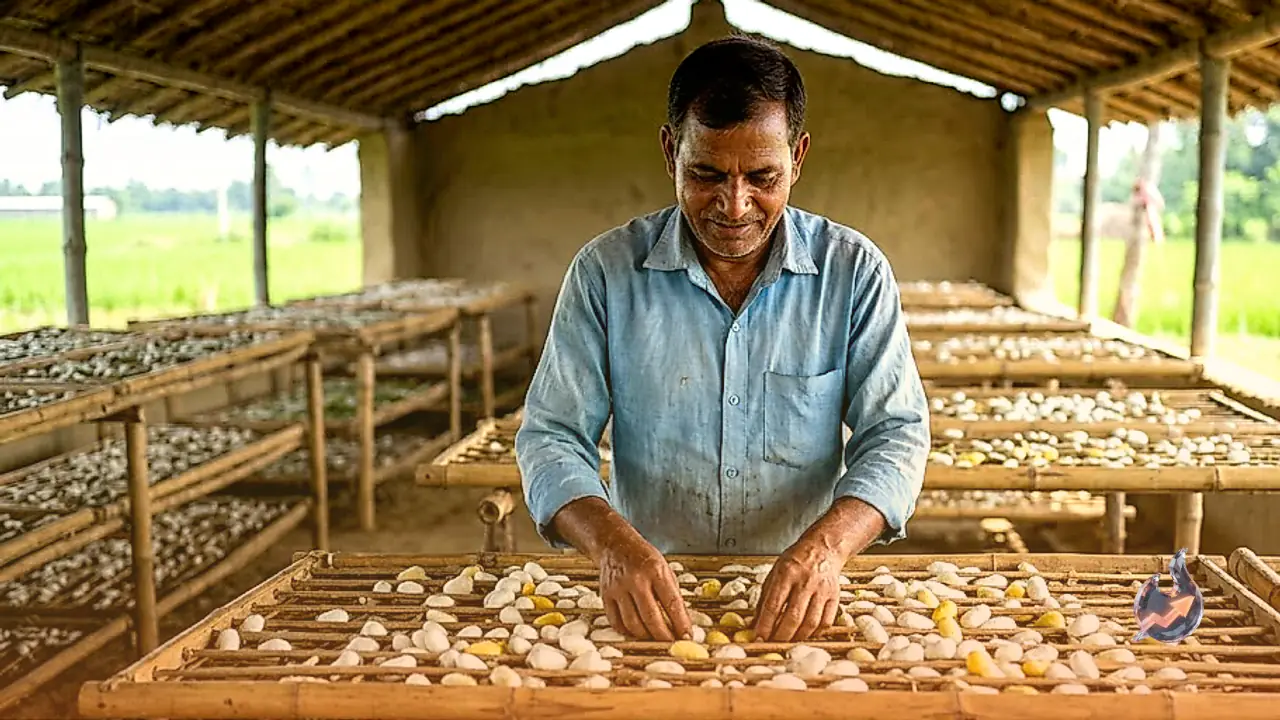

In Uttar Pradesh's Lakhimpur Kheri district, farmers are increasingly taking up sericulture alongside traditional crop cultivation as a powerful way to boost their agricultural income. The potential to generate substantial returns from smaller land parcels, combined with the capability to harvest multiple yields annually, has turned silk farming into a highly attractive financial venture. To expand sericulture and mulberry plantation across the district, local agricultural initiatives are actively creating awareness among farmers, encouraging them to cultivate mulberry trees, rear silkworms on the leaves, and harvest lucrative silk cocoons for the market.
The Sericulture Process and Mulberry Plantation
One of the primary advantages of sericulture is its long-term sustainability. Once a farmer plants mulberry saplings, the trees provide fresh leaves for silkworm feeding over an extended period without requiring replanting. During the rearing cycle, silkworms consume tender mulberry leaves, grow rapidly, and subsequently spin protective cocoons around themselves. These cocoons serve as the foundational raw material for silk production, and selling them in the market provides farmers with a steady stream of revenue.
Demonstrating the long-term profitability of this enterprise is local farmer Ram Murti, who has been practicing silkworm rearing continuously for approximately 30 years. By conducting four distinct rearing cycles every year, he has successfully transformed his economic standing, earning lakhs of rupees annually through consistent cocoon production.
Market Pricing Dynamics and Doorstep Selling
The market demand for silk cocoons continues to rise steadily. Currently, cocoons command an average price of around ₹400 per kilogram in the market. However, actual realization prices fluctuate based on quality, silkworm variety, prevailing market demand, and the overall condition of the cocoons. High-quality cocoons frequently secure premium prices, prompting more farmers in the region to adopt sericulture as a commercial enterprise.
For Ram Murti, marketing the produce has proven remarkably hassle-free. Due to strong market demand, traders visit his home directly to purchase the harvested cocoons on the spot. This eliminates the need for farmers to travel long distances to agricultural markets, saving both transportation costs and valuable labor time.
Weather Sensitivity and Seasonal Rearing Precautions
Silkworms are extremely sensitive organisms, making climate management a crucial factor in successful sericulture. Monsoon weather demands heightened vigilance inside rearing houses, as heavy rainfall, elevated humidity levels, and sudden temperature shifts can severely impact silkworm health and cocoon quality.
During the rainy season, farmers must ensure proper drainage around the rearing facility to prevent waterlogging, alongside maintaining adequate ventilation for air circulation. Excessive humidity dramatically increases the risk of disease outbreaks among silkworms. Similarly, extreme summer heat can adversely affect silkworm development. Maintaining optimal temperature, strict hygiene, and moisture control remains essential for securing healthy cocoon harvests.