























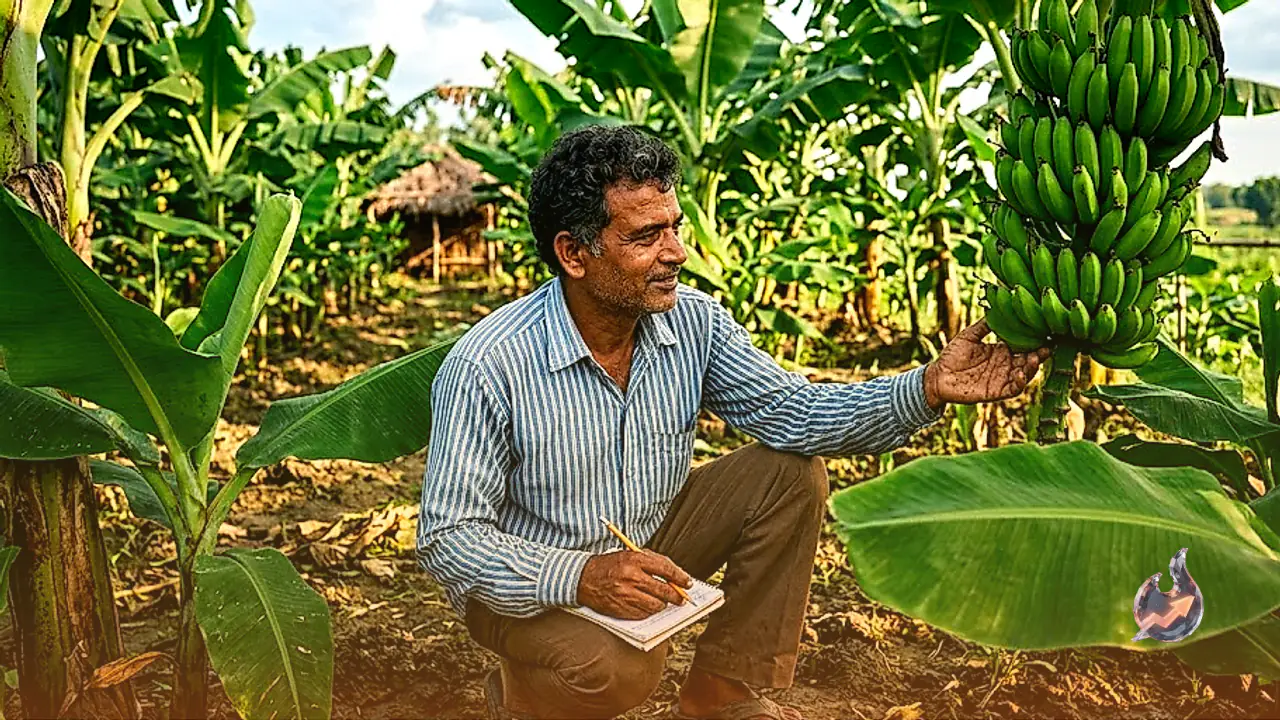

In the Tarabganj development block of Gonda district in Uttar Pradesh, a farmer has demonstrated how moving away from traditional crop patterns can transform rural livelihoods. Despite earning qualifications in higher technical education and securing positions in banking and industrial training sectors, Rajesh Kumar Tiwari chose to return to his roots. Engaging in agriculture since 2001, he turned banana cultivation into a sustainable commercial engine for his household. He currently manages banana plantations across approximately 12 bighas and plans to expand the cultivation area further in the near future.
From Electronics Degree to Agricultural Enterprise
Rajesh Tiwari holds a bachelor of science degree with a specialization in electronics. Following the completion of his studies, he secured employment in a bank. After working in the banking sector for a period, he chose to resign. Subsequently, he gained employment at ITI Mankapur, but eventually stepped away from that role as well to return home. Dedicating himself entirely to agriculture, he has been continuously farming since 2001.
Shifting from Subsistence Farming to Cash Crops
During the initial stages of his return, Tiwari practiced traditional agriculture common to the region. Over time, he recognized the limitations of standard cereal farming and sought out a commercial crop capable of yielding dependable returns. That evaluation led him to commercial banana farming, identifying bananas as a viable cash crop with high revenue potential for dedicated growers. Encouraged by the initial harvest results, he steadily expanded the land allocated to banana cultivation.
Weathering Setbacks and Recovering Past Losses
Agricultural ventures carry market and weather risks, which Tiwari experienced directly when banana growers across the area faced severe financial losses last year. Rather than scaling back or abandoning the crop, he demonstrated resilience by increasing his banana acreage for the subsequent cycle. That decision proved beneficial, as strong yields and returns during the current season fully offset the financial losses suffered in the preceding year. Tiwari emphasizes that farmers facing crop downturns should persist with rigorous farm management rather than abandoning their efforts.
Economics of Cultivation and Essential Maintenance
Overseeing 12 bighas of plantation, Tiwari breaks down the precise economics and agronomic care required for commercial bananas. Preparing and maintaining one bigha of banana crop incurs an expenditure of approximately 30,000 to 40,000 rupees. In turn, gross revenue per bigha ranges between 60,000 and 100,000 rupees, yielding healthy margins. He notes that actual earnings fluctuate based on local weather conditions, total yield, fruit quality, and prevailing market prices. Ensuring regular watering cycles, prompt crop surveillance, and structured plant care remain vital to maintaining peak output.