



















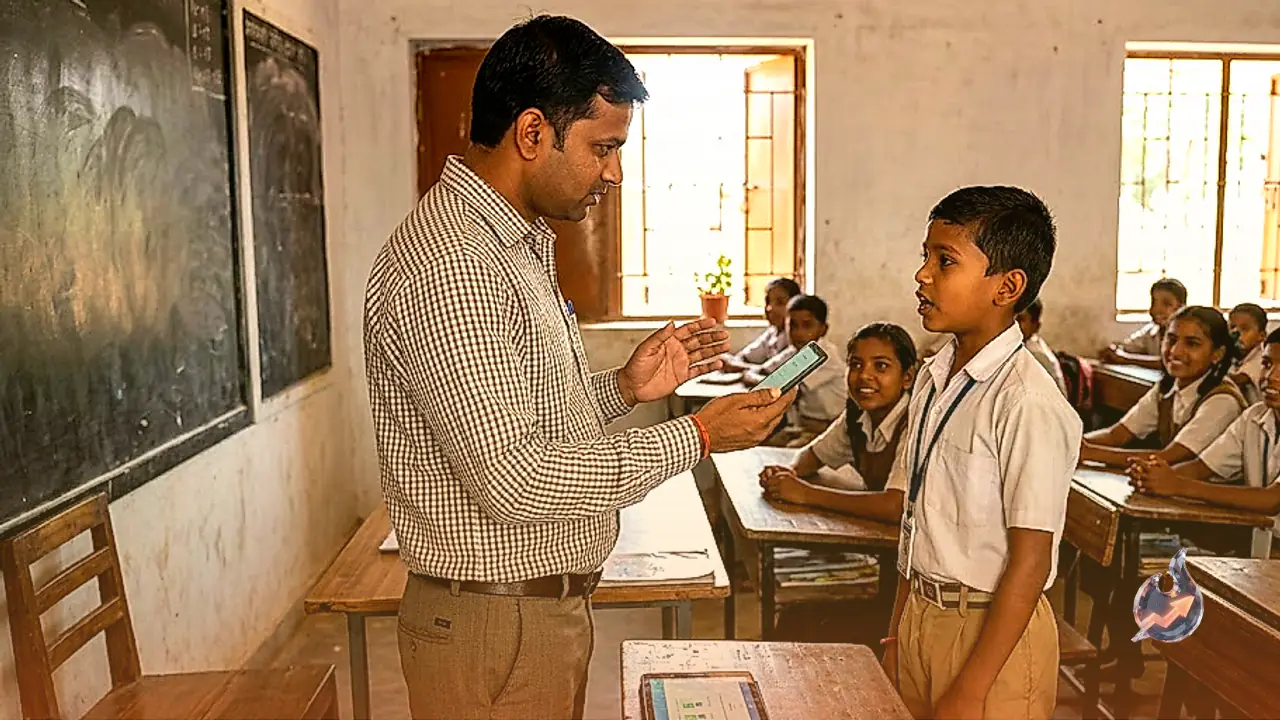

A government school teacher in Chhattisgarh has revolutionized the morning routine for his students by developing a voice-activated digital attendance system. Rohit Gupta, an educator at the Swami Atmanand School in Bilaspur, located within the Batauli block of Surguja district, has successfully built and deployed the "BOLU Smart Attendance" web application. This homegrown digital solution completely eliminates the need for traditional paper registers and manual roll calls. Instead, students simply speak their names to log their daily presence, showcasing a remarkable integration of modern programming and educational management right in the heart of rural India.
How the Voice-Activated System Works
The core functionality of the BOLU Smart Attendance app revolves around seamless voice recognition. When a student arrives at school, they only need to state their name aloud. The system's programming instantly verifies the audio input against its database to authenticate the student's identity. Once the voice is successfully matched, the application records the attendance in real-time. Adding an interactive and welcoming touch to the digital process, the app immediately responds by saying "Good morning" to the student, audibly confirming that their presence has been logged for the day. This immediate feedback not only ensures accuracy but also creates an engaging start to the school day.
Preventing Duplication and Ensuring Transparency
One of the critical challenges with any attendance tracking method is the potential for proxy or duplicate entries. Gupta's smart system addresses this issue head-on. The application automatically captures and logs the exact date and time for every single attendance entry. If a student attempts to register their presence a second time on the same day, the software immediately recognizes the duplication. The system actively blocks the redundant entry, ensuring that the final data remains entirely transparent, accurate, and free from manipulation.
Cloud Storage and Effortless Data Management
Behind the engaging voice interface lies a robust data management architecture. All the attendance records generated by the BOLU app are automatically synced and securely stored in the cloud, specifically utilizing Google Sheets. This cloud-based approach provides immense flexibility for school staff. Teachers and administrators can access the comprehensive attendance database 24 hours a day, from any location. Because the application is fully responsive, it operates smoothly across various digital devices, including smartphones, tablets, and desktop computers. This accessibility allows educators to effortlessly generate daily, monthly, or annual attendance reports with just a few clicks.
Tracking Absenteeism and Saving Instructional Time
The transition from manual registers to a centralized digital platform significantly streamlines school administration. By managing the attendance of multiple classes from a single unified dashboard, teachers save valuable instructional time that was previously lost to lengthy roll calls. Furthermore, the automated data collection makes it much easier to identify patterns of chronic absenteeism. Educators can quickly spot students who are frequently missing classes, enabling timely interventions and better student support.
A Continued Legacy of Educational Innovation
The BOLU Smart Attendance system is not Gupta's first foray into educational technology. The teacher has a proven track record of developing creative tools aimed at enhancing the quality of learning. He previously gained widespread appreciation in the academic community for creating the "BOLU Robot" and the "Smart Barakhadi Yantra", which is a smart device for teaching the Hindi alphabet. This new attendance application represents the latest advancement in his ongoing series of technological innovations designed specifically for the classroom environment.
Institutional Support and the Power of Vision
Gupta attributes a significant portion of his success to the supportive environment fostered by the Surguja Education Department. He emphasized that the local educational authorities consistently encourage teachers to embrace new technologies, experiment with fresh ideas, and develop solutions that directly benefit the student body. This institutional backing provided him with the necessary motivation to program the BOLU app. Ultimately, Gupta believes that groundbreaking innovation does not strictly require massive financial resources or state-of-the-art laboratories. Instead, he asserts that transformative digital solutions can emerge from rural government schools when driven by strong determination, big ideas, and a genuine passion for improving the educational landscape.