

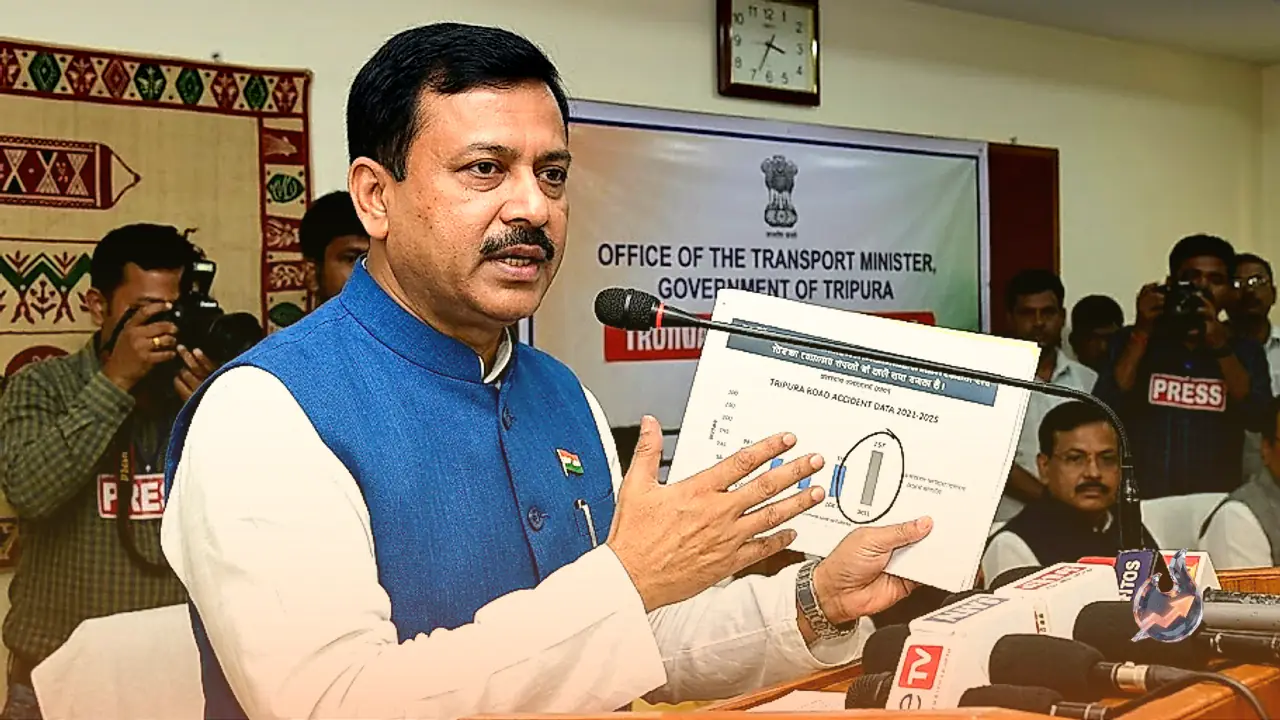















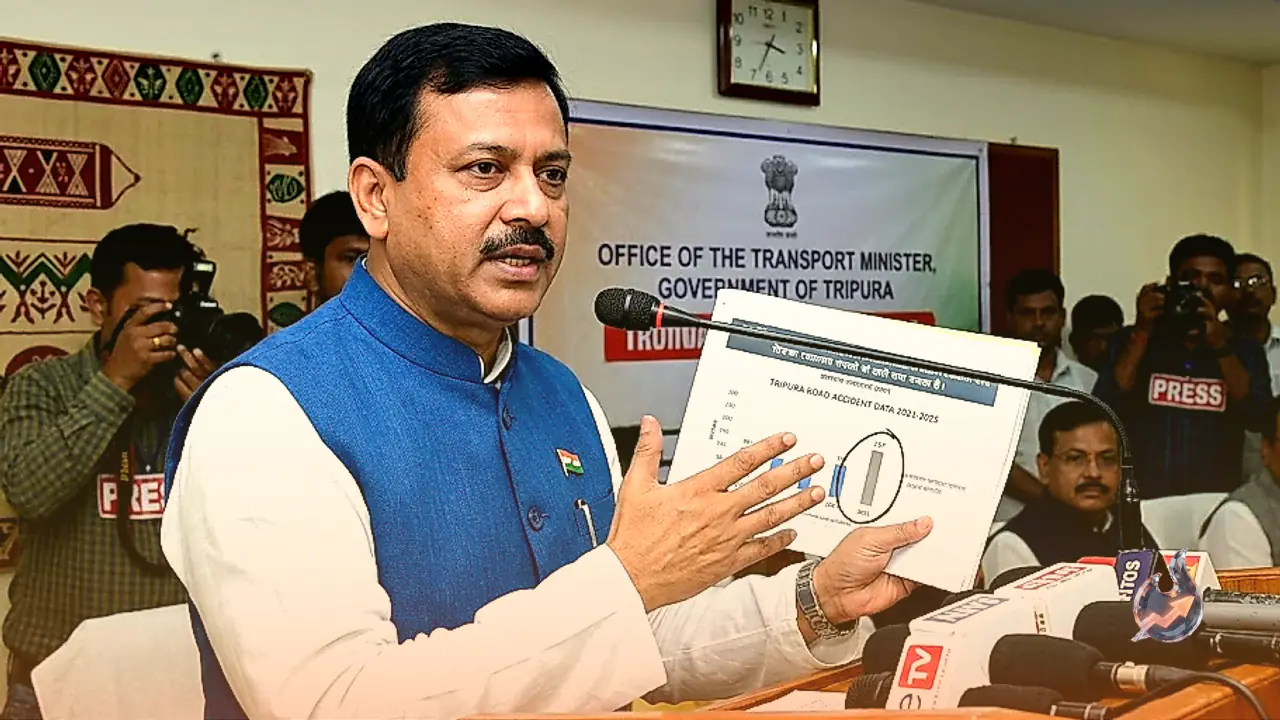

Systematic road safety initiatives and joint administrative vigilance across Tripura have started yielding measurable results, leading to a steady drop in highway and street casualties over recent years. Transport Minister Sushanta Chowdhury presented these findings during an awareness and sensitisation convention held at the State Guest House. The minister credited this positive shift to rigorous field monitoring, sustained regulatory enforcement, and seamless operational coordination between the transport authorities and the state police force.
Three-Year Trend in Traffic Accidents and Casualties
Official records reveal a consistent downward path in fatal occurrences throughout the northeastern state. During 2023, local roads witnessed 577 crashes resulting in 261 deaths. The following year, 2024, saw 578 mishaps with the fatality count decreasing to 226. Progress continued firmly into 2025, as aggregate collisions dropped down to 527 while lost lives diminished significantly to 157.
Reviewing recent developments in the present calendar year, the minister noted that road tragedies had claimed 134 lives up to August. Alongside ongoing efforts to bring down collision rates, administrative focus remains fixed on extending swift emergency medical relief and fiscal security to injured travellers through dedicated welfare mechanisms designed to support crash victims and their households.
Strict Enforcement Measures and Vehicle Scrutiny
Traffic management agencies have intensified on-ground surveillance to penalise vehicular non-compliance. Enforcement teams flagged 524 instances of non-standard registration number plates, leading to challans in 485 cases that generated more than Rs 2 lakh in collective penalties. Legal notices were dispatched to an additional 39 non-compliant vehicle operators to ensure complete adherence to prescribed standards.
Key Central Welfare Frameworks for Crash Victims
The outreach initiative placed particular emphasis on informing the public about three central government programmes: Rah-Veer, PM-RAHAT, and the Hit-and-Run Compensation Scheme. The Rah-Veer initiative, which earlier functioned under the Good Samaritan framework, awards Rs 25,000 to anyone who promptly transports an accident casualty to medical care during the critical golden hour, alongside shielding rescuers from procedural police harassment in accordance with governing norms.
Complementing this rescue reward, the PM-RAHAT initiative offers cashless medical care up to a limit of Rs 1.5 lakh for eligible patients meeting requisite operational terms. Meanwhile, the Hit-and-Run Compensation Scheme extends fiscal relief directly to eligible injured individuals or bereaved kin, disbursing varying compensation tiers determined by whether an event caused grave injuries or loss of life.
Call for Community Engagement and Local Leadership
Addressing the social response to these frameworks, Chowdhury observed that despite substantial monetary incentives, public participation rates during road crises remain noticeably low when weighed against crash frequency. He highlighted that 413 traffic collisions occurred during July and August 2026 alone, demonstrating the vital necessity of deeper community involvement.
Urging grassroots elected officials, including Panchayat Samiti leaders, Zilla Parishad representatives, and urban civic body executives, to proactively educate residents in their local jurisdictions about available aid, the minister emphasised that road vigilance cannot remain restricted to periodic ceremonies and must evolve into an active public movement powered by Jan Bhagidari.