























As monsoon rains set in across Uttar Pradesh's sugarcane belt, including Shahjahanpur, farmers are on alert over Pokkah Boeng, a dangerous fungal disease that spreads rapidly through cane fields during this season. The infection first attacks the upper leaves of the sugarcane plant, and if left unchecked, it can significantly hurt both the yield and the quality of the crop.
Rising humidity gives the fungus room to spread
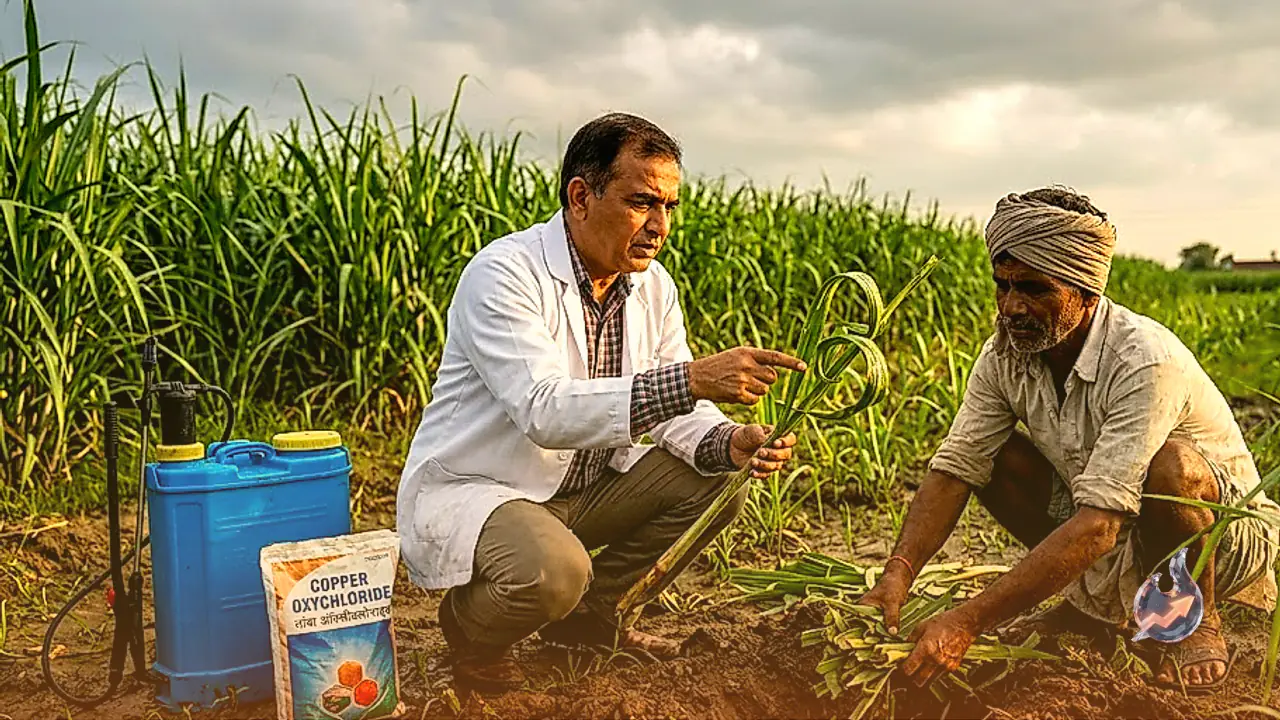
According to Shahjahanpur-based crop protection scientist Dr Hadi Hussain Khan, Pokkah Boeng is a fungal disease that spreads most aggressively during the rainy season. High humidity in the air during these months creates ideal conditions for the fungus to multiply and travel across a field quickly. Dr Khan says sugarcane farmers need to keep a close watch on their crop through this period, so that the disease can be managed as soon as the first symptoms appear and the crop can be saved in time.
Curled, bangle-like leaves and a vinegar-like smell give it away
The disease is fairly easy to identify once farmers know what to look for. It begins with a twisting or curling of the upper leaves of the sugarcane plant, which take on a bangle-like, coiled shape. Dr Khan explains that if this early stage goes unnoticed and the infection is allowed to spread further, the affected leaves start giving off a sharp, vinegar-like smell. That smell is a clear sign that the disease has turned severe and the crop needs immediate treatment.
Copper oxychloride spray is the most effective fix
Chemical treatment is considered the most reliable way to protect sugarcane crops from Pokkah Boeng. Dr Khan recommends that farmers use a fungicide called copper oxychloride, mixing 3 grams of the chemical in one litre of water to prepare a solution and spraying it thoroughly over the affected plants. The fungicide immediately halts the further spread of the fungus, cutting off the infection before it can reach healthy parts of the plant.
Infected parts must be buried in a pit, not left in the field
Dr Khan says spraying fungicide alone is not enough, regular monitoring of the fields is just as important. If only a few plants in a field show symptoms of Pokkah Boeng, farmers should carefully cut off the infected portions from the base of the plant. Since this is a fungal disease, leaving these cut portions lying in the open field would be a serious mistake. Instead, they should be collected in a large polythene bag so that the fungus and its spores do not travel through the air to healthy plants nearby.
These infected remains, once collected in the polythene bag, should then be carried well away from the main sugarcane field. A pit roughly two to three feet deep should be dug there, and the infected material buried inside it. Before covering the pit with soil, Dr Khan advises sprinkling a little carbendazim or copper oxychloride fungicide into it. This step ensures that the fungal spores and mycelium present in the buried material are completely destroyed, preventing the disease from resurfacing in the field later.
Timely action remains the best protection
Dr Khan is clear that ignoring Pokkah Boeng can cost sugarcane farmers dearly, since the disease not only lowers the yield but also affects the overall quality of the cane. Regular inspection of fields through the monsoon, spraying copper oxychloride as soon as symptoms appear, and properly disposing of infected plant parts, these three steps together can help farmers keep their sugarcane crop safe from this disease.