




















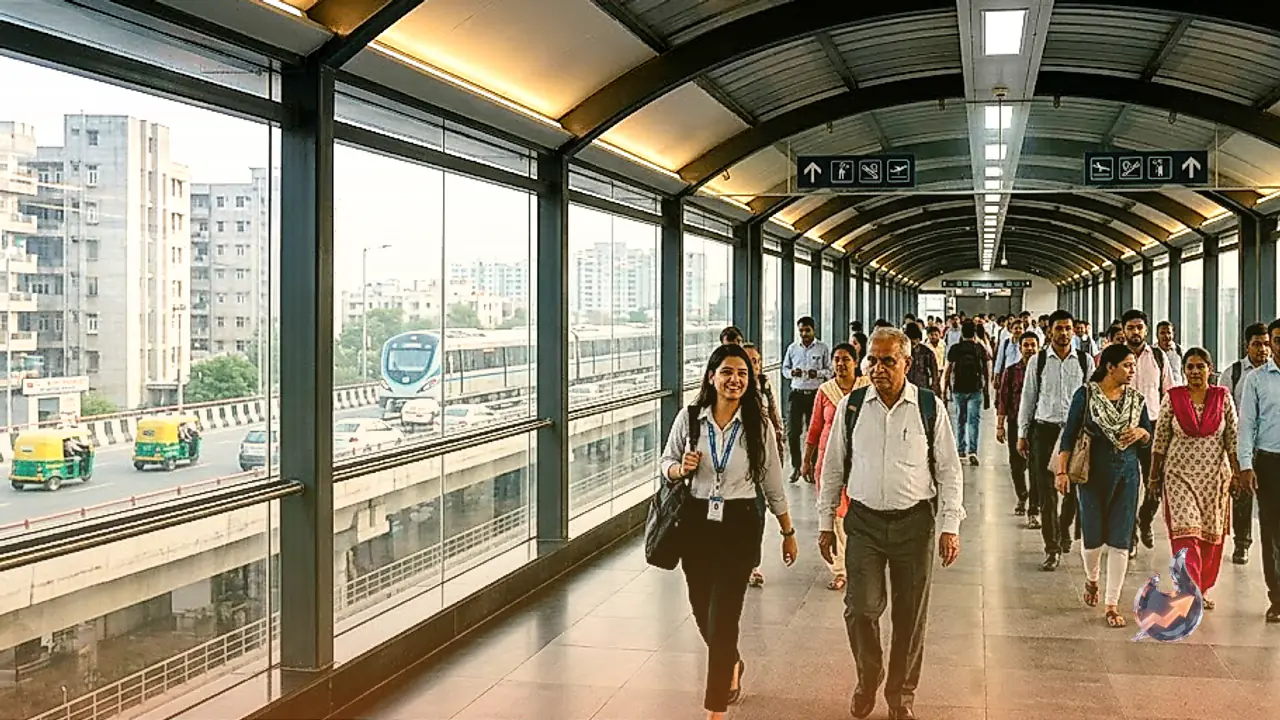

Delhi-NCR has officially launched its very first air-conditioned skywalk for the public. Noida Authority threw the skywalk open to commuters on Friday, coinciding with Rakshabandhan, and chose to do so without holding any formal inauguration ceremony. This major milestone comes after missing a series of ten successive deadlines. The newly opened skywalk seamlessly connects the Sector 51 station on the Aqua Line with the Sector 52 station on the Blue Line, bringing much-needed relief to daily public transport commuters. On its very first day of operation, over 45,000 passengers utilized this connector to travel between the two metro lines.
Convenience for Commuters and Protection from Rain
Noida Authority ACEO Vandana Tripathi stated that the facility was opened on a trial basis following the completion of all essential construction works. It was launched without a formal inauguration to ensure that travelers could immediately benefit from its amenities. The establishment of this route provides immense assistance to metro commuters, especially during the rainy season, as the walk between Sector 51 and Sector 52 now takes approximately five minutes to complete.
Structure, Dimensions, and Construction Expenses
The total construction cost for this AC skywalk amounts to roughly 33 crore rupees. The structure spans a length of approximately 460 meters with a width of nearly six meters. To facilitate smooth movement, a total of 10 travelators, which include automatic stairs and ramps, have been installed at intervals of every 50 meters. Prior to the commissioning of this skywalk, commuters were forced to navigate narrow, congested pedestrian pathways filled with autos, e-rickshaws, and local vendors between the two stations. Construction on this project officially began in March 2023.
Delays, Architectural Changes, and Cost Escalations
The ACEO added that an official inauguration of the skywalk may take place later after implementing necessary improvements based on feedback gathered from passengers and the technical team during the trial period. The project was originally targeted for completion within a span of six months. However, due to repeated design alterations, complications involving metro cables and beams, NGT restrictions, and various other technical hurdles, the project missed a total of ten deadlines. Three years ago, the initial estimated cost stood at 25 crore rupees, which eventually escalated to 33 crore rupees over time.