





















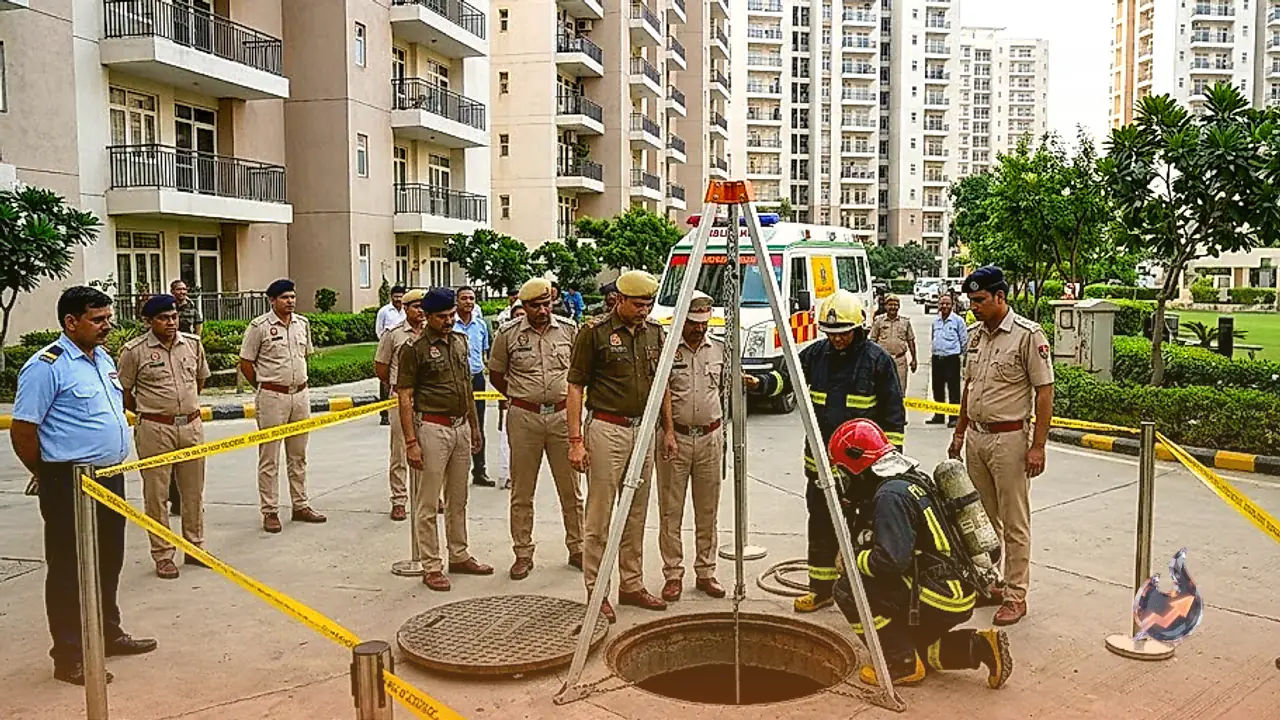

In a tragic incident that took place on the night of July 25-26, 2026, two people lost their lives while cleaning a sewage treatment plant tank at the Eldeco society located in Sector 150, Greater Noida. This harrowing accident has once again brought to light the grave negligence and blatant disregard for safety standards during sewer and tank cleaning operations.
What Happened Inside the Tank That Night
Shashikanth Sharma, a 40-year-old cleaning contractor, entered the 12-foot-deep tank to clean it without wearing any safety gear. Due to the hazardous and toxic gases accumulated inside the enclosed space, he lost consciousness almost immediately upon entry.
Noticing Shashikanth unresponsive, the society security guard, Akash, also ventured into the tank without any protective equipment in a bid to rescue him. Overcome by the same poisonous fumes, Akash collapsed as well.
Police and Rescue Operations
Upon receiving information about the incident, the Knowledge Park police station team and fire services rushed to the spot. Both individuals were rescued and pulled out of the tank before being rushed to the hospital, where doctors pronounced them dead upon arrival.
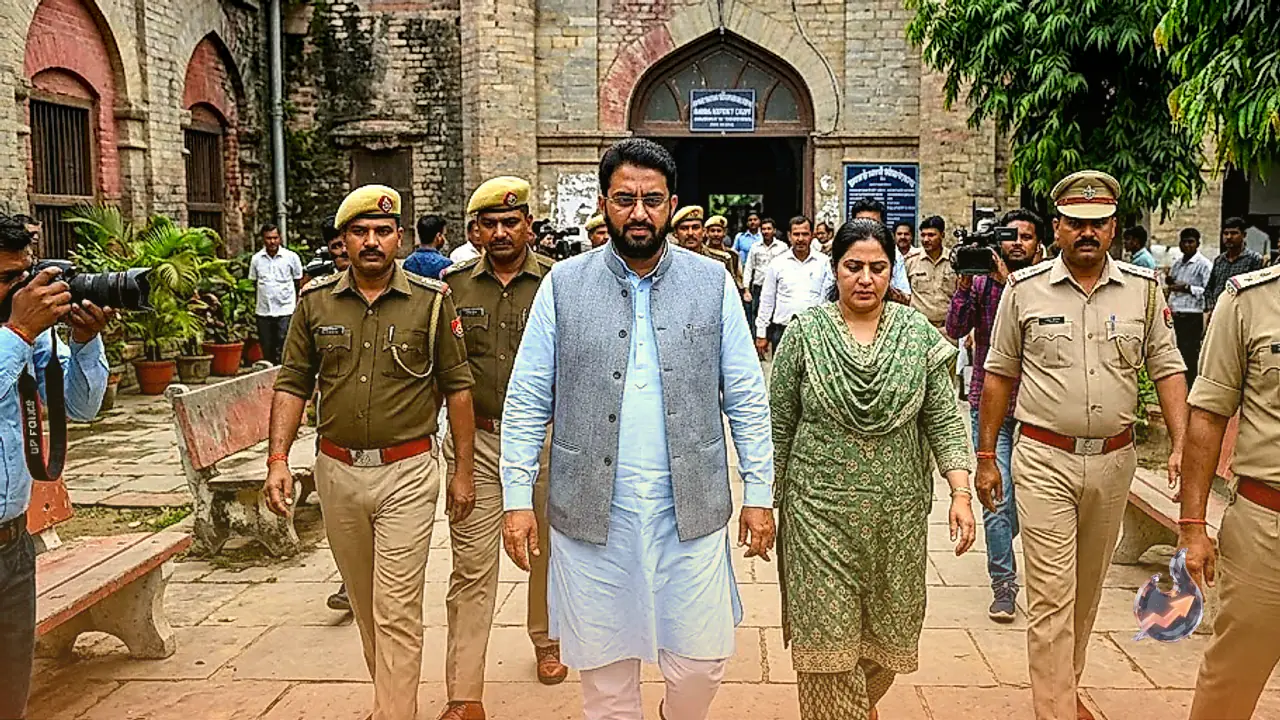
Akash was merely 22 years old and hailed from Firozabad, while Shashikanth Sharma was a native of Karauli in Rajasthan. The police have taken the bodies into custody and sent them for post-mortem examinations. Following charges of gross negligence and disregarding safety protocols, police have registered a case and detained four individuals, including the contractor.
Why Sewage Tanks Accumulate Lethal Gases
Sewage tanks contain high concentrations of hazardous gases such as hydrogen sulfide, methane, carbon dioxide, ammonia, and carbon monoxide. In most cases, fatalities are not caused by a single toxic gas alone, but rather by the combined lethal effect of oxygen deficiency and poisonous gases like hydrogen sulfide.
In such emergencies, a recurring pattern is observed where a second person enters the confined space without protective equipment to rescue an incapacitated individual and ends up falling victim to the exact same gas. This unfortunate chain reaction leads to multiple casualties in a single incident.
Manual sewer cleaning refers to a process where an individual enters sewers, manholes, or septic tanks directly to clear waste using bare hands or basic tools. Undertaking this work without necessary safety equipment, gas testing protocols, oxygen support, and other mandatory safeguards is considered a clear violation of the law. In modern times, manual cleaning should be entirely replaced by machines and advanced equipment.
The Legal Framework in India
The primary legislation governing this issue in India is the Prohibition of Employment as Manual Scavengers and their Rehabilitation Act, 2013, commonly known as the PEMSR Act, 2013. This law was enacted with the core objective of eliminating the inhuman practice of manual scavenging and rehabilitating individuals associated with it.
According to this legislation, no person can be compelled to clean human excreta manually or enter sewers and septic tanks for cleaning without proper safety arrangements. If any institution, contractor, or local body engages in such practices, strict legal action can be initiated against them.
Manual sewer cleaning is governed by rigorous laws and regulations. Under normal circumstances, deploying any individual to clean a sewer or septic tank without protective gear is completely illegal.
Key Provisions of the Laws and Rules
The regulatory framework surrounding manual scavenging and sewer maintenance comprises two core legislative instruments
- Prohibition of Employment as Manual Scavengers and their Rehabilitation Act, 2013: This statute explicitly prohibits manual scavenging, which involves the manual cleaning of human excreta.
- Ban on Unprotected Cleaning: It bans deploying any person to clean sewers or septic tanks without appropriate safety measures.
- Rehabilitation Mandate: The legislation provides for the proper rehabilitation of individuals formerly engaged in such occupations.
- 2023 Amendment Rules: The updated rules emphasize mechanized cleaning as the mandatory primary approach for maintaining sewers and septic tanks.
- Strict Conditions for Entry: If human entry into a sewer is required under unavoidable circumstances, prior gas testing, personal protective equipment, oxygen support, harnesses, trained supervision, and emergency rescue arrangements are made strictly mandatory.
- Penalties for Offenses: A first-time conviction carries a penalty of imprisonment for up to two years, a fine, or both.
- Repeat Offenses: Subsequent offenses attract imprisonment of up to five years along with substantially higher fines.
Human Rights Violations and Accountability
Fatalities occurring during sewer maintenance constitute a grave violation of basic human rights. It is the fundamental responsibility of governments and local authorities to ensure that cleaning operations are fully mechanized.
Furthermore, guidelines mandate that adequate compensation must be provided to the bereaved families in the event of deaths occurring inside sewers or septic tanks.
The primary method for cleaning sewers and septic tanks must rely strictly on machines, suction tankers, jetting machines, and robotic equipment. Deploying any individual into a sewer without adhering to legal safety standards is a punishable offense, and accountability must be enforced strictly against violators.