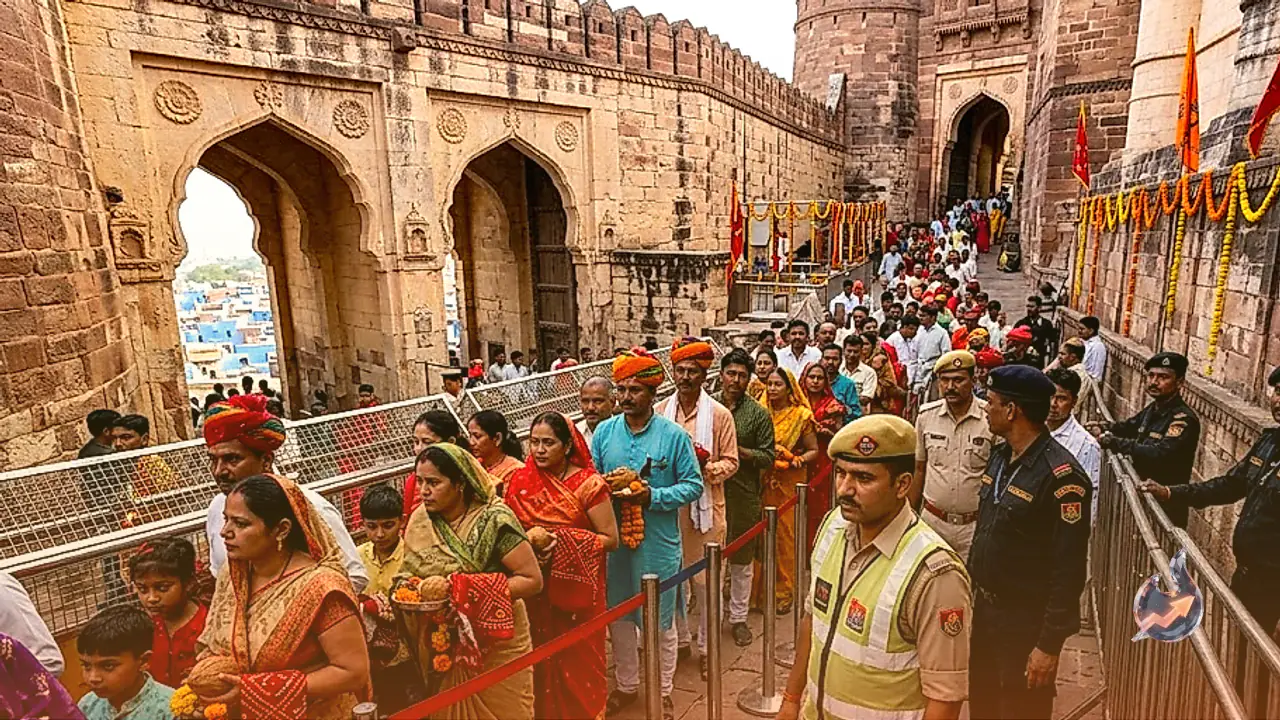

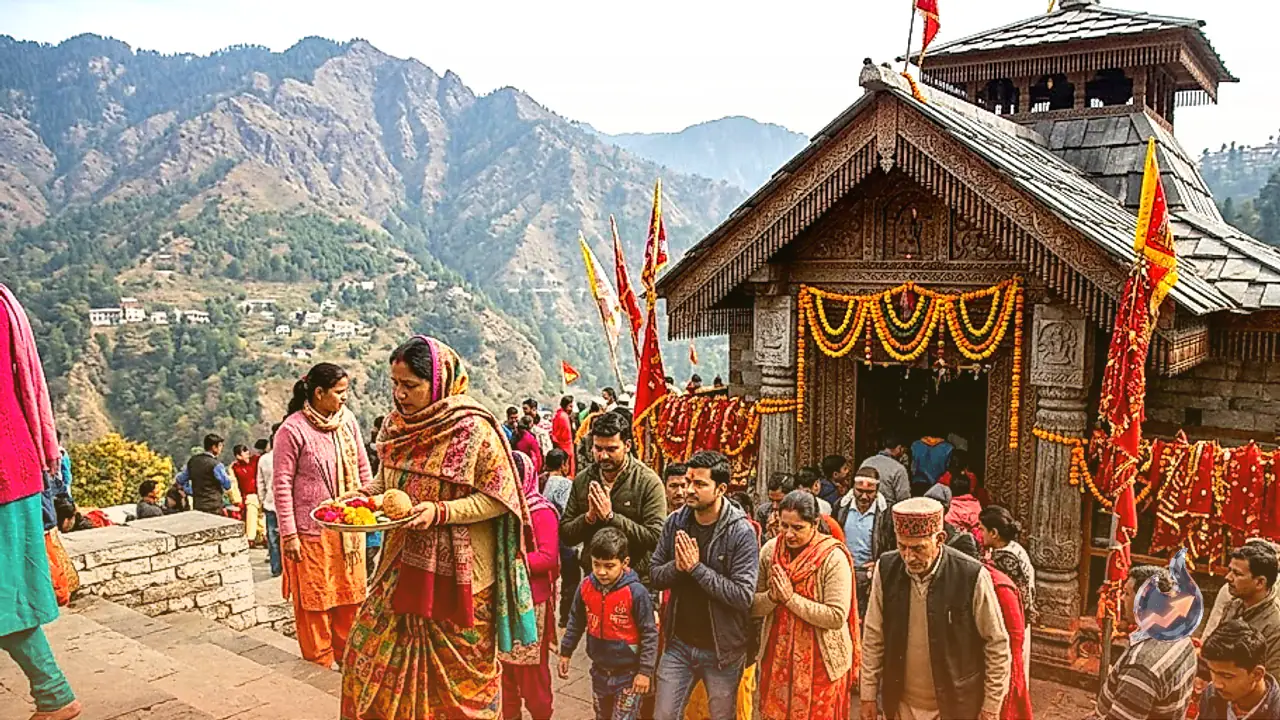















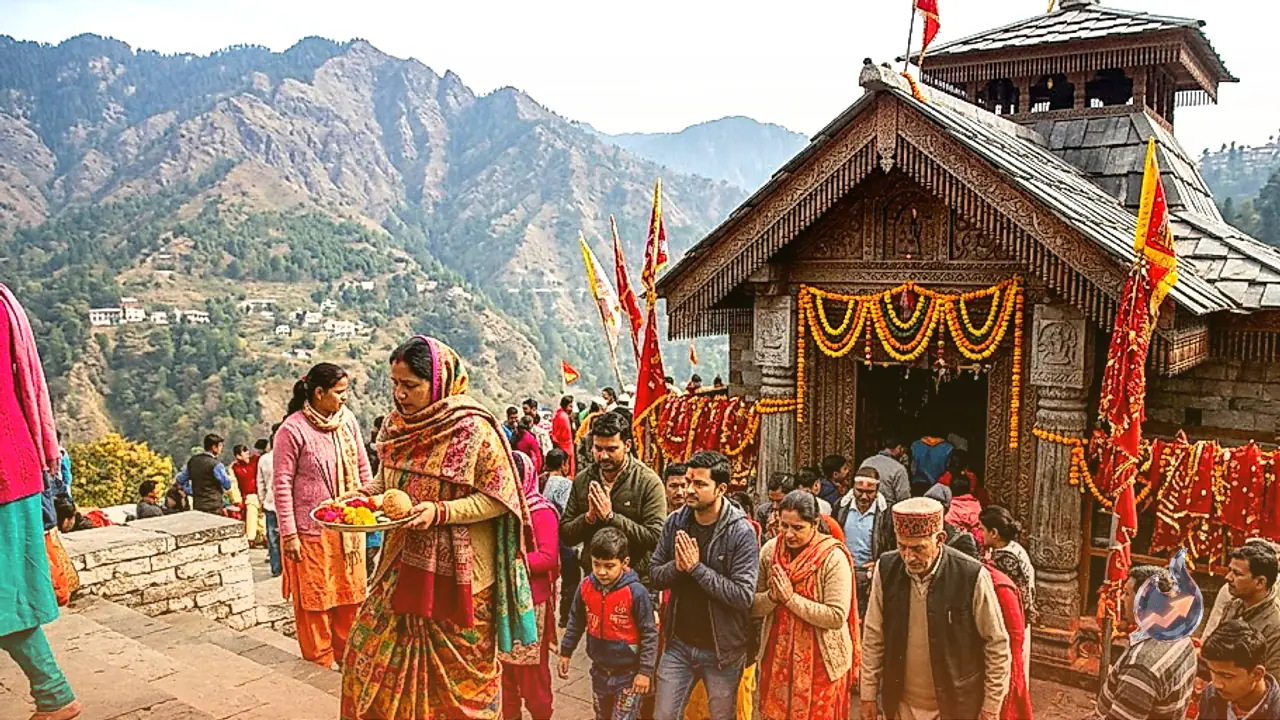

The Himalayan sanctuary of Uttarakhand has long been revered for its potent spiritual geography, where towering mountain ranges cradle sacred traditions preserved across generations. Among the state's deep spiritual traditions, the reverence of divine feminine energy holds prime importance, especially during the festive period of Navratri. Devotees journey into both regional cultural zones, Kumaon and Garhwal, seeking fulfillment of prayers across twenty-four legendary Shakti shrines nestled among mountain crests and river valleys.
Twelve Venerated Shrines Across the Kumaon Region
Within the Kumaon hills, the sanctuary of Mata Bhagwati Mahakalika is renowned for extraordinary spiritual grace. Devotional traditions affirm that whoever presents humble offerings at the feet of Mahakali with an honest heart finds their ailments, despair, poverty, and perils systematically dissolved.
Another revered landmark among the foremost sanctuaries is the temple of Maa Purnagiri, positioned approximately 21 km from the plains of Tanakpur. The festive cycle of Navratri draws vast multitudes of pilgrims who undertake the mountain climb to seek her blessings.
At Devidhura within Champawat district, the temple courtyard of Maa Varahi Devi hosts a distinctive historical tradition. Every year on the day of Shravani Purnima during Raksha Bandhan, villagers gather to participate in the traditional stone-pelting celebration known locally as Bagwal.
Positioned near Garjia in Nainital district, the Garjia Devi temple serves as a principal seat of Mata Parvati. Beyond its profound spiritual importance, the destination is celebrated for its scenic natural surroundings, tranquil climate, and picturesque charm.
Approximately 9 km from Thal in Pithoragarh, the temple of Kotgari (Kokila) Devi stands as a prominent pilgrimage point. Popular belief regards this shrine as the ultimate divine court of justice, where overlooked seekers place their prayers for divine intervention and the resolution of unresolved wishes.
Deep within Kumaon's cultural core, the Nanda Devi temple preserves a rich legacy stretching over 1,000 years. Built in traditional Kumaoni architectural craftsmanship, this sanctuary honors the patron family deity of the historical Chand dynasty.
Situated around 14 km outside Dwarahat, the prominent Maa Dunagiri temple worships the goddess under her Vaishnavi aspect, welcoming devoted travelers through picturesque mountain slopes.
Perched upon Kasar hill near Almora, Kasar Devi temple is distinguished for exceptional magnetic vibrations and subtle environmental power. Spiritual traditions maintain that Goddess Durga manifested directly in physical form at this unique mountain point.
Roughly 3 km from Baijnath, near Dangoli, rests the temple of Kot Bhramari, equally recognized by local inhabitants as Bhramari Devi temple and Kot Mai.
In Kashipur, the temple of Mata Chaiti (Bal Sundari) draws widespread devotion. A grand annual fair called the Chaiti Mela takes place here during the month of Chaitra. Because the primordial divine power is worshipped in her youthful form, the shrine is reverently termed the Bal Sundari temple.
Situated upon the northern margin of Naini Lake in Nainital, the Naina Devi temple reveres Sati's primal power. Inside the inner sanctuary, two distinct eyes symbolically portray Naina Devi. Historical records trace the temple's consecration to the eighth century by Adi Shankaracharya.
Near Lohaghat in Champawat district, surrounded by thick stands of green deodar trees, lies the Akhiltarani temple, regarded as a secondary Shakti center. According to mythological lore, the Pandavas prayed to Goddess Bhagwati at this exact forest site to acquire the severed head of Ghatotkacha.
Twelve Ancient Shrines Across the Garhwal Region
Overlooking the Alaknanda river, the venerable sanctuary of Dhari Devi remains one of Garhwal's most revered landmarks. The deity is traditionally worshipped as the divine protector of Uttarakhand's mountain lands.
Located in the Jasoli sector of Rudraprayag district, the Hariyali Devi temple ranks among the prominent sacred centers. Worshipers identify this deity through multiple sacred titles, including Sita Mata, Bala Devi, and Vaishno Devi.
In the Pauri district outpost of Bironkhal, Kalinka Mata temple represents a fierce manifestation of Goddess Kali. A celebrated winter festival convenes on the temple grounds once every 3 years, bringing widespread local participation.
High above the village of Kurud in Chamoli district, situated at the Devasari Tok ridge, stands the Nanda Devi temple. Local inhabitants regularly refer to Kurud Nanda through the royal designation of Rajrajeshwari.
In the pilgrimage city of Haridwar, Maya Devi is venerated as the reigning guardian goddess and an embodiment of primordial Shakti. This protective role was so historically significant that Haridwar itself was originally known as Mayapuri.
Within Rudraprayag district, the Kalimath temple is celebrated as a unified spiritual center dedicated to Mahalakshmi, Mahasaraswati, and Mahakali. Verses in the ancient text Durga Saptashati explicitly highlight the sanctity of this location.
Situated alongside the flow of the Nayar (Nabalika) river, another revered goddess temple hosts special celebratory observances and continuous rituals throughout Navratri.
Perched high upon the slopes of Balkhila mountain, an ancient goddess shrine witnesses vast assemblies of pilgrims offering continuous prayers during festive periods.
Resting upon the heights of Chandrakoot mountain, another sacred site forms part of the fifty-two traditional Shakti Peethas associated with Goddess Sati.
Located on the Surkoot mountain near Kaddu Khal in the Tehri district, the Surkanda Devi temple is counted among the illustrious fifty-two Shakti Peethas.
Roughly 25 km away from Rishikesh, near Narendra Nagar, the Kunjapuri Devi temple marks another revered Shakti shrine. Legendary accounts indicate that the upper torso of Goddess Sati descended upon this mountain ridge.
Situated on the crest of Neel Parvat in Haridwar, the Chandi Devi temple represents one of the nation's premier places of worship. This famous Shakti center traces the installation of its sacred murti back to the 8th century by Adi Shankaracharya.