

















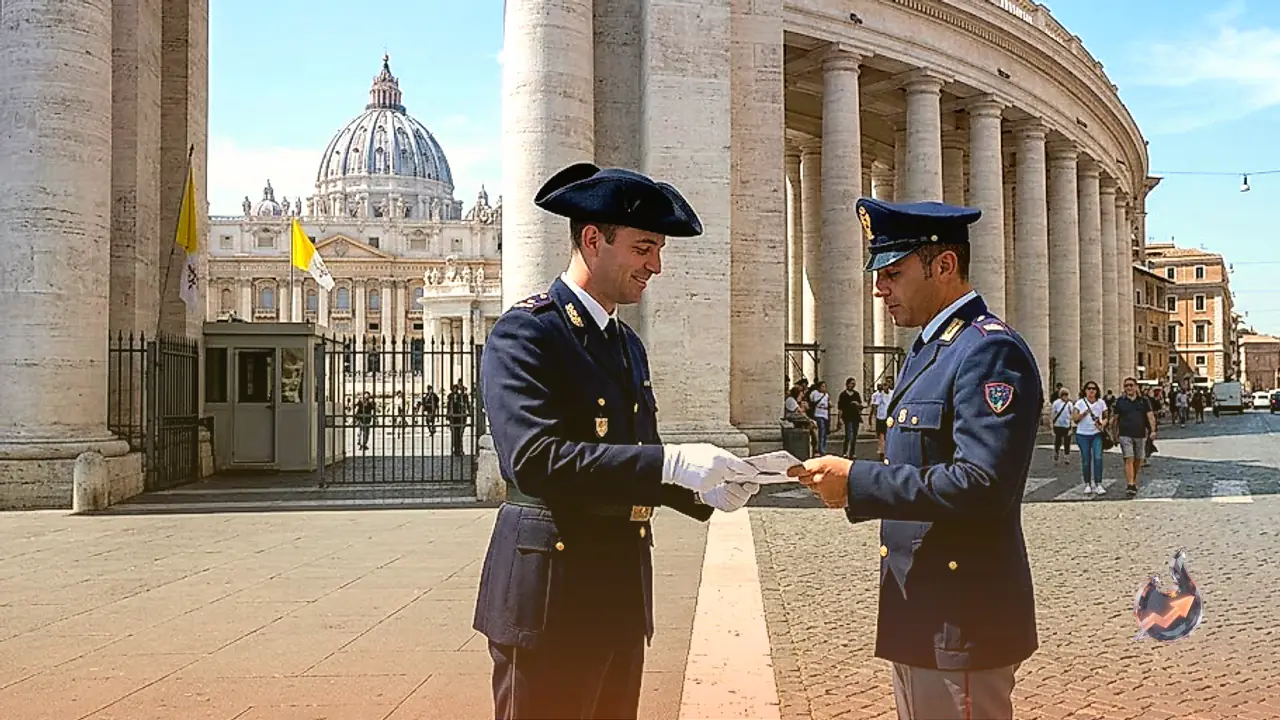

The global map contains several geographic and political anomalies that frequently intrigue travelers and scholars alike. Among these, Vatican City stands out as one of the most remarkable examples, operating as a fully sovereign independent nation situated entirely within the boundaries of Rome, the capital city of Italy. Anyone walking through the streets of Rome can find themselves stepping across an international border into a completely different country after traveling just a short distance.
The World's Smallest Sovereign Nation and Its Physical Scale
Vatican City holds the official distinction of being the smallest independent country on Earth, covering a total area of approximately 0.49 square kilometers. Despite its extremely compact geographical size, the nation commands massive historical and spiritual significance around the globe. It functions as the central seat of the Roman Catholic Church and serves as the official residence and workplace of the Pope, from where the highest spiritual leadership of the Catholic faith executes its administrative duties.
Sovereignty and Legal Status: The 1929 Lateran Treaty
A common point of confusion is whether Vatican City is a territory under Italian governance due to its location inside Rome. However, it is not part of Italy in any administrative or political sense, operating instead as an entirely independent state. Historically, the Papal States encompassed vast territories across the region, but their boundaries gradually diminished over centuries. The modern legal status of Vatican City was formally established through the historic Lateran Treaty of 1929, an agreement that recognized its complete independence and defined its current sovereign identity.
World-Renowned Heritage, Architecture, and Art Collections
Within its small perimeter, Vatican City houses some of the most celebrated religious and cultural landmarks in human history. Millions of tourists, art lovers, and religious pilgrims travel from every corner of the world each year to visit iconic sites such as St. Peter's Basilica, the Sistine Chapel, and the Vatican Museums. The Sistine Chapel is particularly famous for its magnificent ceiling frescoes painted by Michelangelo, which are widely regarded as masterpieces of artistic achievement. Additionally, the Vatican Museums maintain an extensive collection of priceless historical artifacts and artwork accumulated over centuries.
Technical Clarification: A Sovereign City-State
From a geographic and political standpoint, describing Vatican City simply as a capital city located inside another city is technically imprecise. Because Vatican City is a sovereign city-state, it represents a country and its own primary urban zone simultaneously. Rather than functioning as a standard capital embedded in a foreign municipality, it remains an autonomous sovereign entity that happens to be entirely enclosed by the urban landscape of Rome.