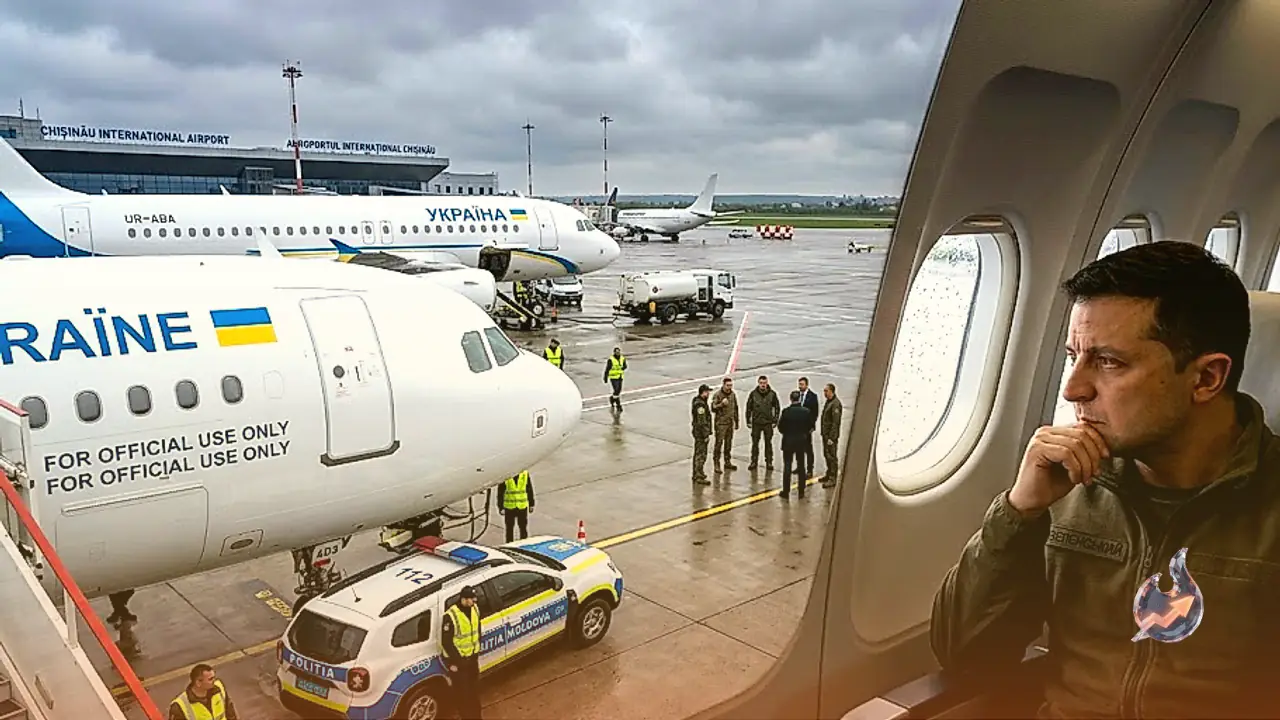





















Ukraine has brushed aside threats of retaliation from Tehran following a military strike that targeted an Iranian cargo vessel in the Caspian Sea. This maritime operation represents the first direct intersection between the ongoing conflicts in Ukraine and the Middle East. Ukrainian Foreign Minister Andrii Sybiha took to social media to state that Iran's warnings were entirely groundless and unjustified, intensifying diplomatic friction between Kyiv and the Iranian regime.
Deepening Military Ties Between Moscow and Tehran
Sybiha characterized the administration in Tehran as a direct accomplice to Russian aggression, noting that Iranian military hardware has sustained Moscow's war effort and claimed Ukrainian lives since the onset of the full-scale invasion in 2022. President Volodymyr Zelensky announced that Ukrainian forces had secured significant outcomes through long-range strikes in the Caspian region, specifically targeting watercraft utilized for military shipments linked to Iran. The Security Service of Ukraine confirmed that its drones successfully hit an offshore oil platform in the northern Caspian Sea, alongside a Russian missile corvette and cargo vessels operating under international sanctions.
Kazem Jalali, the Iranian ambassador to Russia, informed state media that the vessel named Anna was anchored approximately five kilometers from the Volga River outlet when the strike occurred. Meanwhile, Ukraine's ambassador to Israel, Yevgen Korniychuk, asserted that the targeted ship was transporting critical components for drones and missiles rather than commercial goods. Speaking to foreign media, he maintained that both nations are confronting a shared axis of evil across different geopolitical theaters. Military cooperation between Moscow and Tehran has remained robust, marked by the supply of Shahed loitering munitions that Russian forces have modified to strike Ukrainian urban centers.
Escalating Rhetoric and International Reactions
In a recent broadcast interview, Zelensky warned that Tehran was preparing to transfer ballistic missiles to Russian forces, building upon earlier deliveries of short-range weaponry that reportedly commenced in 2024. The Caspian basin serves as an indispensable supply corridor connecting Russia and Iran. While Kyiv has repeatedly accused Iranian leadership of complicity in drone attacks that have killed numerous civilians, the recent operation marks the first time Ukrainian assets have directly engaged an Iranian vessel.
Tehran reacted with severe condemnation, reporting that one crew member was killed and several others sustained injuries during the assault. The Iranian foreign ministry maintained that it had never intervened in the European conflict. Iranian Foreign Minister Abbas Araghchi labeled the strike a flagrant violation of the United Nations Charter, alleging it was executed at the behest of Israel to pull European powers into the broader regional war. Araghchi posted that the incident could not go unanswered, prompting Sybiha to counter by dismissing the statements as falsehoods.
Economic Pressure and Expert Perspectives
Ukrainian officials further accused Tehran of attempting to deflect attention away from Russian strikes targeting grain carriers departing from Ukrainian ports, which continue to threaten international food security. Concurrently, Kyiv has pursued a relentless campaign against the Russian shadow fleet of petroleum tankers to constrict vital revenue streams feeding the Kremlin's budget. These long-range economic restriction efforts, encompassing drone attacks on fuel depots and retail distribution infrastructure, are exerting measurable pressure on the Russian economy.
Nevertheless, geopolitical analysts hold mixed views regarding the wisdom of engaging Tehran directly. Former intelligence official Ivan Stupak noted that while the primary objective is to disrupt logistical supply lines and inflict maximum damage, opening a secondary adversarial front with Iran carries inherent risks. Conversely, researcher Olha Polishchuk from the Armed Conflict Location and Event Data Project suggested that the Caspian operation functions less as the initiation of a dedicated anti-Tehran campaign and more as an extension of efforts to dismantle the logistics network sustaining Russian military operations.