



















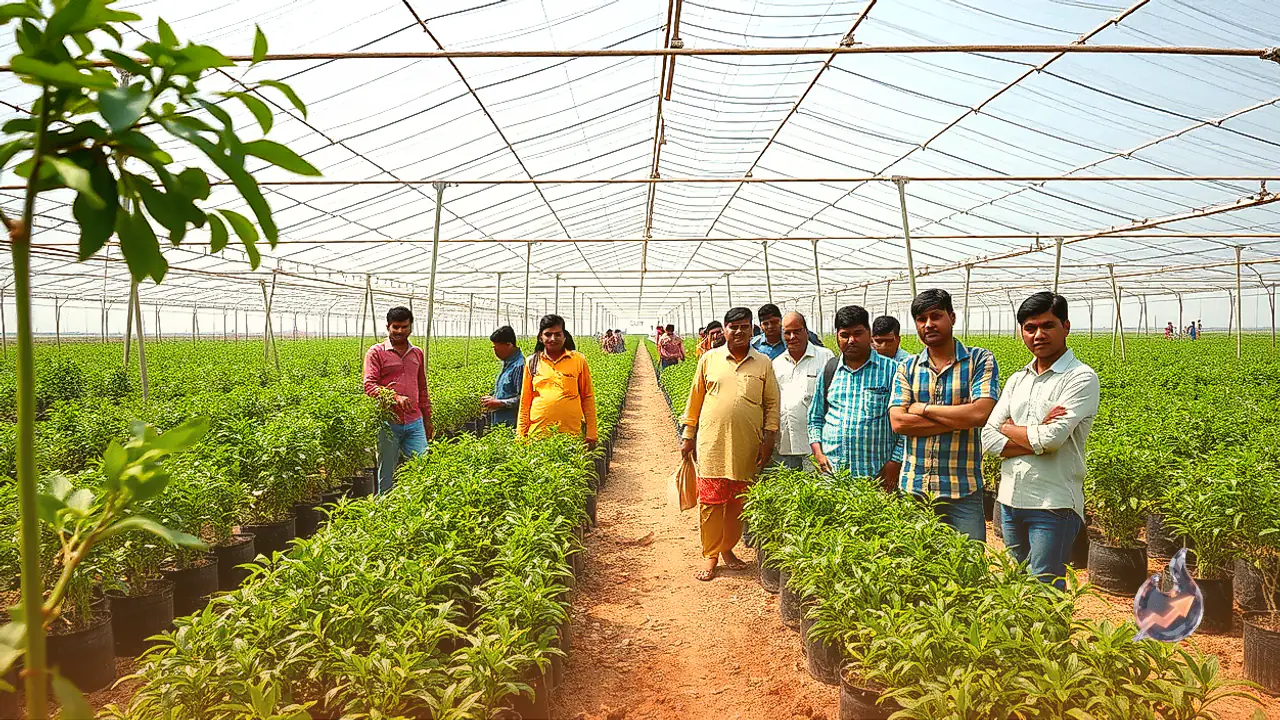

Tucked close to Rajamahendravaram in the East Godavari district of Andhra Pradesh, Kadiyam has earned a nationwide reputation as India's premier nursery hub and plant capital. The region functions not merely as an isolated marketplace, but as an expansive horticultural cluster stretching across multiple agrarian settlements. Villages such as Kadiyapulanka, Burrilanka, and Veeravaram form the backbone of this massive cultivation belt, where local farmers and nursery operators manage horticultural operations spanning roughly 10,000 acres. Across this sprawling expanse, hundreds of commercial nurseries produce an unbroken landscape of vibrant flowering flora, ornamental vegetation, and mature canopy trees.
Alluvial Soil and a Century of Propagation Skills
The core advantage sustaining this thriving trade lies in the nutrient-dense alluvial soil deposited by the Godavari River, complemented by an abundant and steady water supply. About 100 years ago, local cultivators ventured into grafting and ornamental gardening alongside their regular agricultural practices. Over decades, this specialized pursuit evolved into a well-organized commercial enterprise. Today, the belt cultivates thousands of diverse plant varieties, ranging from common orchard trees and exotic indoor foliage to delicate orchids, desert cacti, intricate bonsai, and substantial avenue trees intended for street shading. Nursery worker Ranga Gulkanti noted that the hallmark of Kadiyam lies in its sheer price range, offering small saplings priced between 10 and 20 rupees as well as rare bonsai and aged ornamental specimens worth several lakh rupees.
Landscaping Modern Infrastructure and Expanding into Gulf Markets
Large-scale infrastructure developments across metropolitan India regularly rely on Kadiyam to fulfill their comprehensive landscaping and greening requirements. Consignments of nursery stock are frequently transported to newly constructed airports, urban metro rail corridors, national highway dividers, expansive corporate campuses, and luxury hospitality venues. Beyond meeting broad domestic demand across Indian states, the horticultural hub exports substantial volumes of flora to various Gulf nations, establishing an international footprint for locally grown varieties.
Livelihoods for Over 50,000 Local Workers
In addition to propagating plant life, this network serves as an economic engine for the surrounding countryside. More than 50,000 people are engaged in field tasks such as vegetative propagation and grafting, irrigation management, daily plant care, nursery maintenance, and shipping logistics. The steady demand for live plants has simultaneously fostered thriving ancillary businesses within the cluster, including pot manufacturing, organic fertilizer production, soil mixing, and specialized packaging materials, turning Kadiyam into an exemplary model of coordinated rural enterprise and natural resource utilization.