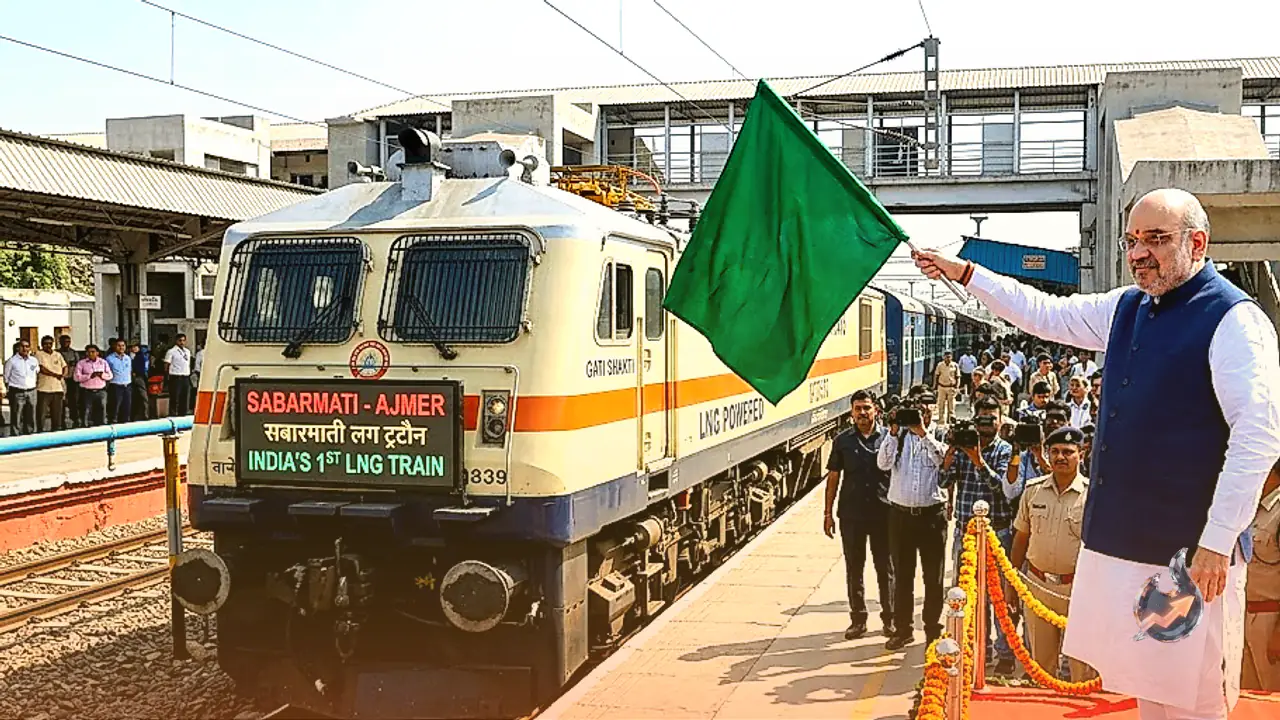





















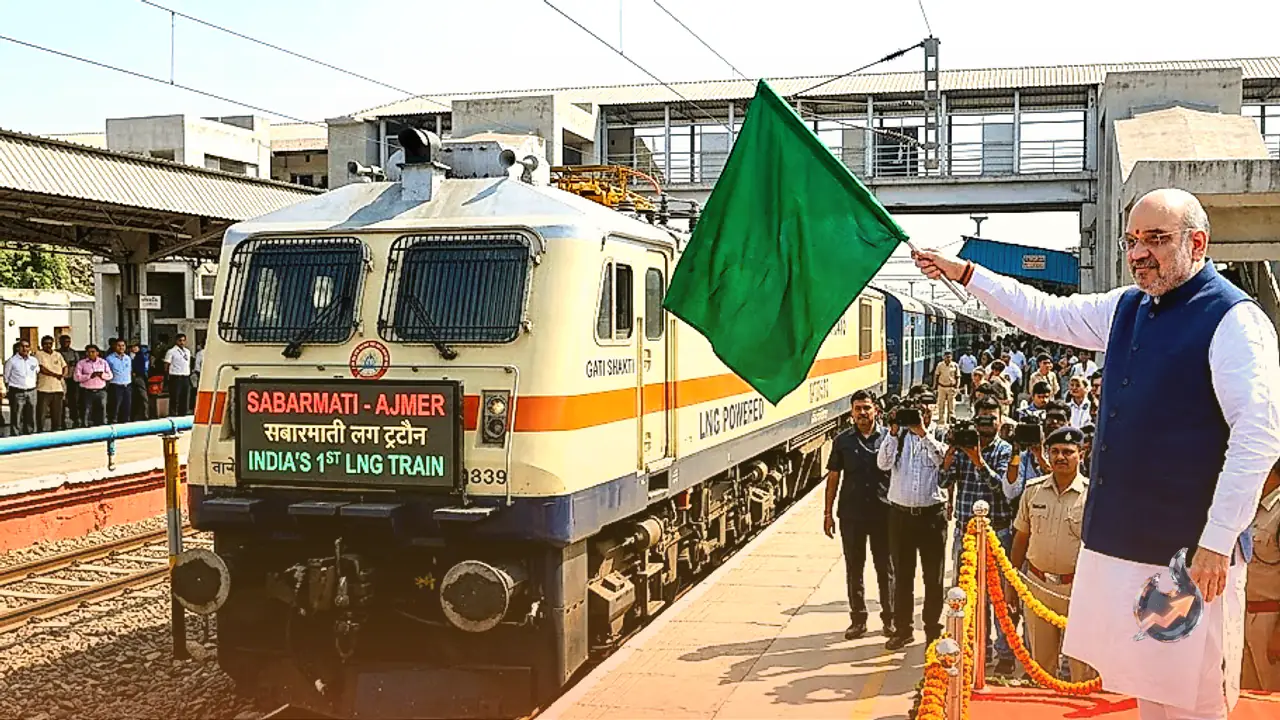

Following years of diesel and electric train operations, the railway sector is now preparing to run trains on Liquefied Natural Gas. The country's very first LNG train is scheduled to flag off from Sabarmati station in Gujarat. Union Home Minister Amit Shah will flag off this pioneering service on Sunday, September 27. This initiative marks a crucial step toward promoting alternative fuels and significantly reducing the nation's reliance on imported diesel.
A Historic Launch From Sabarmati
According to the Ahmedabad railway division, the national transporter is utilizing an LNG-based fuel system within the driving power cars of a train for the very first time. The newly introduced dual-fuel technology enables a single engine to operate on both LNG and diesel, depending on fuel availability. The implementation of this engine setup will curb diesel consumption and generate a yearly saving of approximately twenty-four lakh rupees on a single engine.
Upgraded Power Cars and Rigorous Trials
Under this specific project, the railway authorities have modified two driving power units to run on both diesel and LNG simultaneously. Both of these engines boast a capacity of fourteen hundred horsepower. Prior to this rollout, the engines underwent successful trial runs covering two thousand kilometers to test the strength and reliability of the new technology, passing every benchmark with flying colors. Integrating LNG into these propulsion units reduces diesel consumption by up to forty percent.
Rather than relying exclusively on LNG, the system is engineered to function on a dual framework where the engine can automatically switch between diesel and LNG. This ensures that if LNG supplies are unavailable along the route, the engine can seamlessly transition to diesel. This capability ensures uninterrupted operations over long-distance journeys without operational halts. Beyond financial savings, this hybrid system substantially lowers carbon emissions along with nitrogen and other hazardous exhaust gases. Given that LNG is priced lower than diesel, operating engines on this dual system translates to an annual saving of eleven lakh ninety thousand rupees per engine, totaling nearly twenty-three lakh ninety thousand rupees overall. This specialized engine setup will be deployed to haul an eight-coach train.