



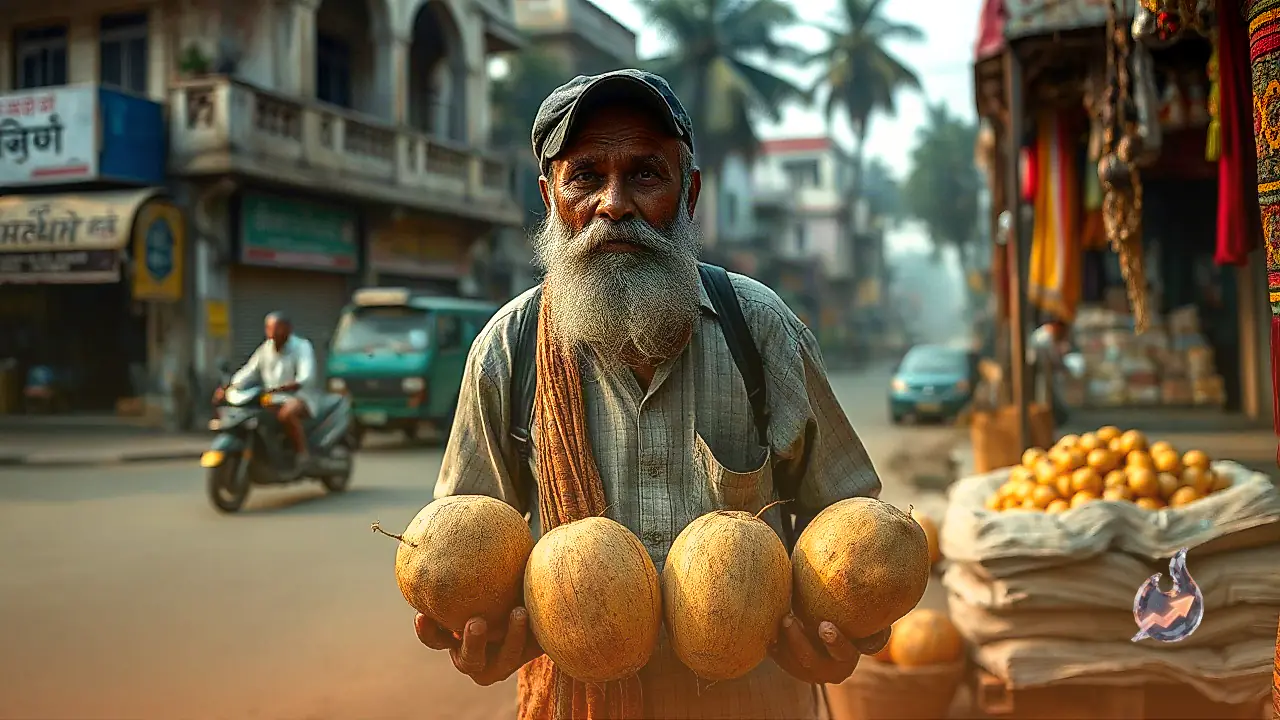














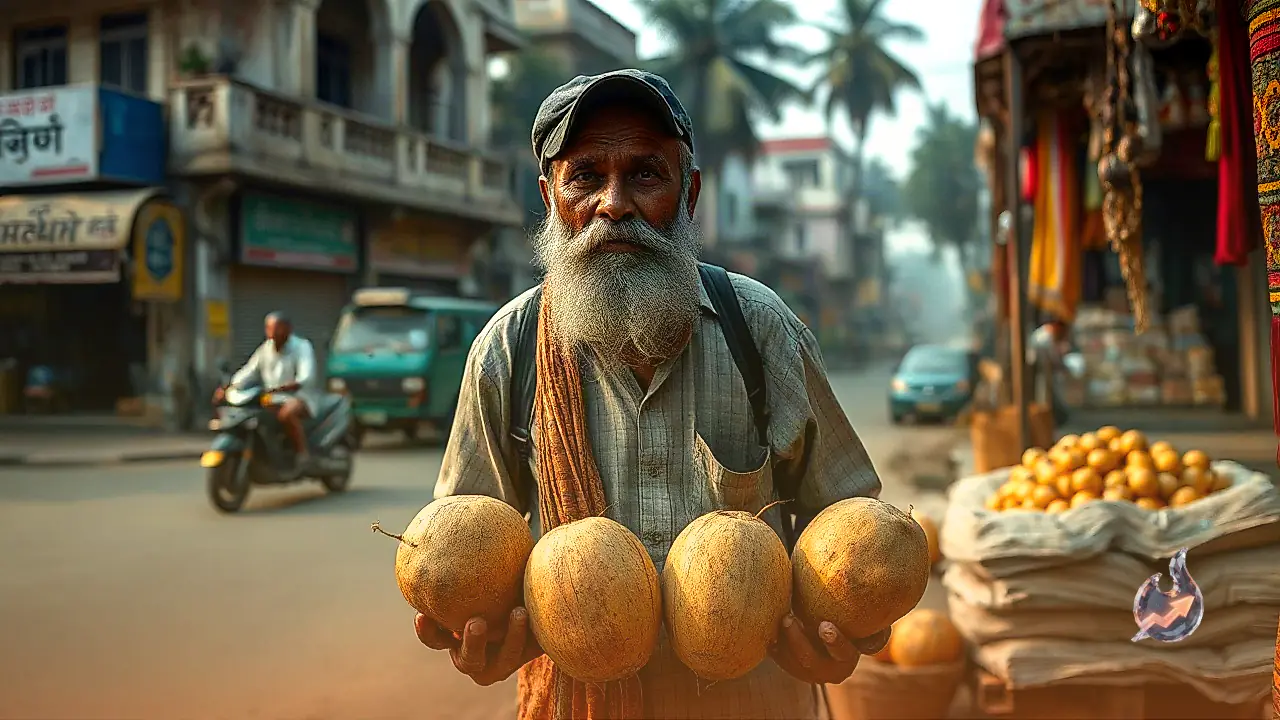

Across city streets and outside busy office complexes, numerous small-scale vendors can be spotted plying their trades, but for a few, the work is more than just a livelihood. In Bilaspur, a vendor named Ramkumar Dewangan has spent nearly thirty years carrying a basket of fresh coconuts on his head and walking through the city streets. While modern times have witnessed a steady decline in individuals pursuing such traditional occupations, Ramkumar continues to sustain his family through this very venture.
Learning the Trade From His Father
Ramkumar Dewangan notes that he inherited the coconut-selling profession from his family. His father and other relatives were previously engaged in the same business, prompting him to adopt it as his own path and carry it forward for the past three decades. For him, this occupation serves as a primary channel to fulfill the daily necessities of his household rather than just a commercial enterprise.
Prices Rising From 5 Rupees to 30 Rupees
Reflecting on the passage of time, Ramkumar recalls that when he initially entered the business, a single coconut cost roughly 5 rupees. During those years, people would often purchase a severed piece of the fruit for about 1 rupee. Over the years, market rates escalated, pushing the price of a full coconut to between 20 and 30 rupees. To accommodate his regular buyers, Ramkumar still offers portions of the fruit for approximately 10 rupees.
Daily Sales and a Shifting Customer Base
According to Ramkumar, the volume of buyers has diminished significantly compared to earlier years. While hundreds of customers once frequented his makeshift stall, only about 30 to 40 regular buyers now make purchases. Even so, he manages to pull in daily sales ranging between 800 and 1000 rupees, yielding a net earning of roughly 300 to 500 rupees.
Finding Customers Near Office Complexes
Ramkumar steps out of his home every morning around 11 o'clock, navigating different areas of the city to sell his goods. He frequently finds receptive buyers stationed around corporate and government offices, where people purchase 10-rupee slices of coconut to snack on. Additionally, coconuts remain in demand for traditional religious ceremonies and prayers, helping keep the trade alive.
A Fading Tradition Among Street Vendors
Ramkumar mentions that when he first commenced this work, roughly three other people operated as coconut vendors in his vicinity. As years passed, the number of individuals practicing this traditional trade dwindled considerably. Despite the shrinking customer base and changing market dynamics, he remains steadfast in his commitment to the profession.
Continuing the Journey as Long As Demand Lasts
Ramkumar asserts that the income generated from this modest business has successfully supported his household through the years. He maintains that as long as coconuts remain marketable, he will keep selling them. Typically wrapping up his day between 4 and 5 in the evening, he heads back home with his empty basket. This three-decade-long journey stands as a testament to perseverance within the realm of small-scale traditional trades.