





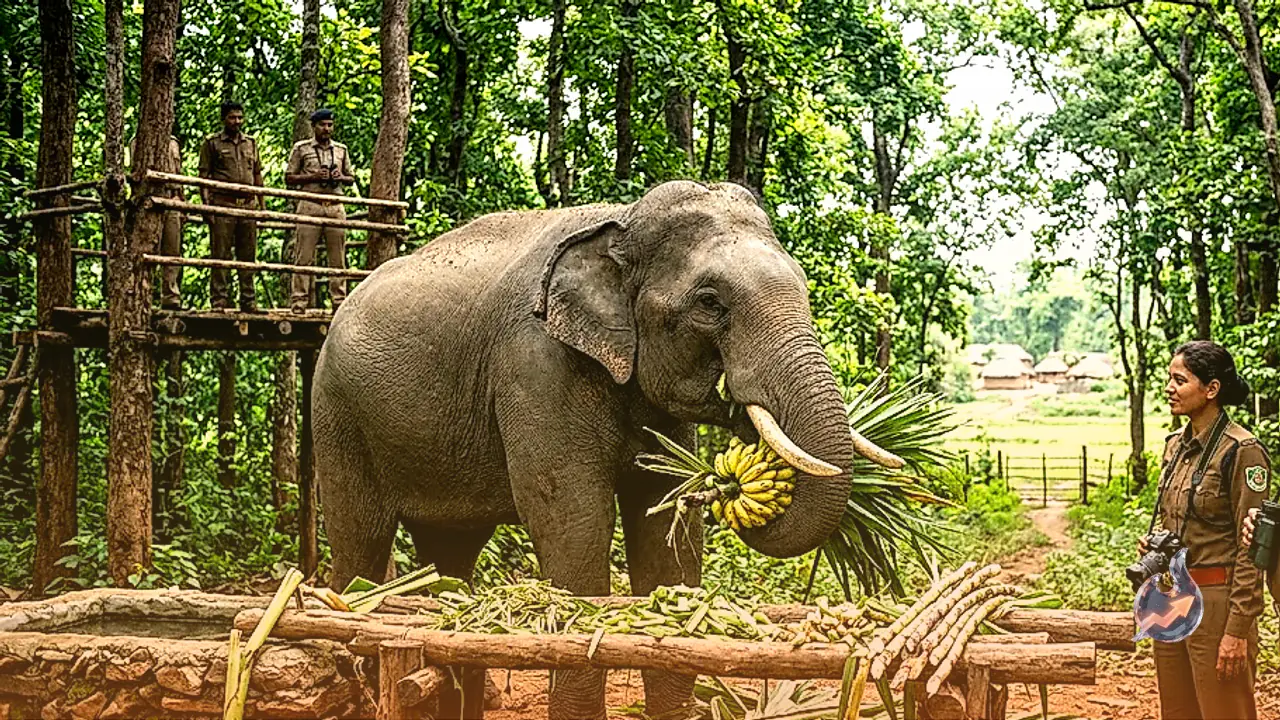


















To address the prolonged human and elephant conflict in the Raigarh district of Chhattisgarh, the forest department has initiated a major project aimed at stopping wild pachyderms from straying into residential neighborhoods. Due to a shortage of natural sustenance and depleting resources in their habitat, elephants frequently wander into villages in search of food and water, leading to destroyed crops, damaged houses, and loss of life. To tackle this challenge, a dedicated elephant feeding zone is being developed deep inside the forest under the fruit-bearing Lemru project. As part of this strategy, eight thousand fruit-bearing and multi-utility saplings were planted across a twenty-hectare area in the Kapu range of the Dharamjaigarh forest division in July.
Strategic Plantation Across Compartments
The plantation drive has been divided across specific forest compartments to maximize future food availability. According to departmental records, four thousand saplings were planted over a ten-hectare area in compartment number thirteen RF, featuring species like jamun, harra, banyan, peepal, kekat, and kachnar. Similarly, another four thousand saplings were planted across a ten-hectare plot in compartment number forty-two RF, consisting of jamun, bahera, banyan, peepal, and kekat. Forest officials anticipate that within the next two to three years, these saplings will grow into full-fledged trees, providing elephants with an abundant supply of leaves, fruits, and bark directly within the forest canopy.
Protection Measures and Expert Views
To safeguard the newly planted saplings from being grazed or destroyed by animals during their initial growth years, the entire perimeter has been secured with CPT fencing. Once these plants mature into sturdy trees, the protective barrier will be removed, and this natural foraging zone will be made accessible to the wildlife. Commenting on the initiative, Raipur-based wildlife expert Dr Rajendra Mishra stated that adequate food, water, and a secure environment are the basic requirements of elephants. Planting their preferred food sources inside the forest is a commendable initiative that will largely succeed in keeping elephants confined to their natural habitat.
Current Elephant Population and Incidents
Meanwhile, the Dharamjaigarh forest division continues to witness frequent movement and foraging by wild herds. At present, a total of one hundred eleven elephants are roaming across the division in separate groups, comprising thirty-five males, forty-seven females, and twenty-nine calves. Just on Wednesday night, a herd raided various nearby villages and trampled through the crops of forty-three villagers, causing widespread panic and anxiety among the local residents who fear for their safety and livelihoods.