


















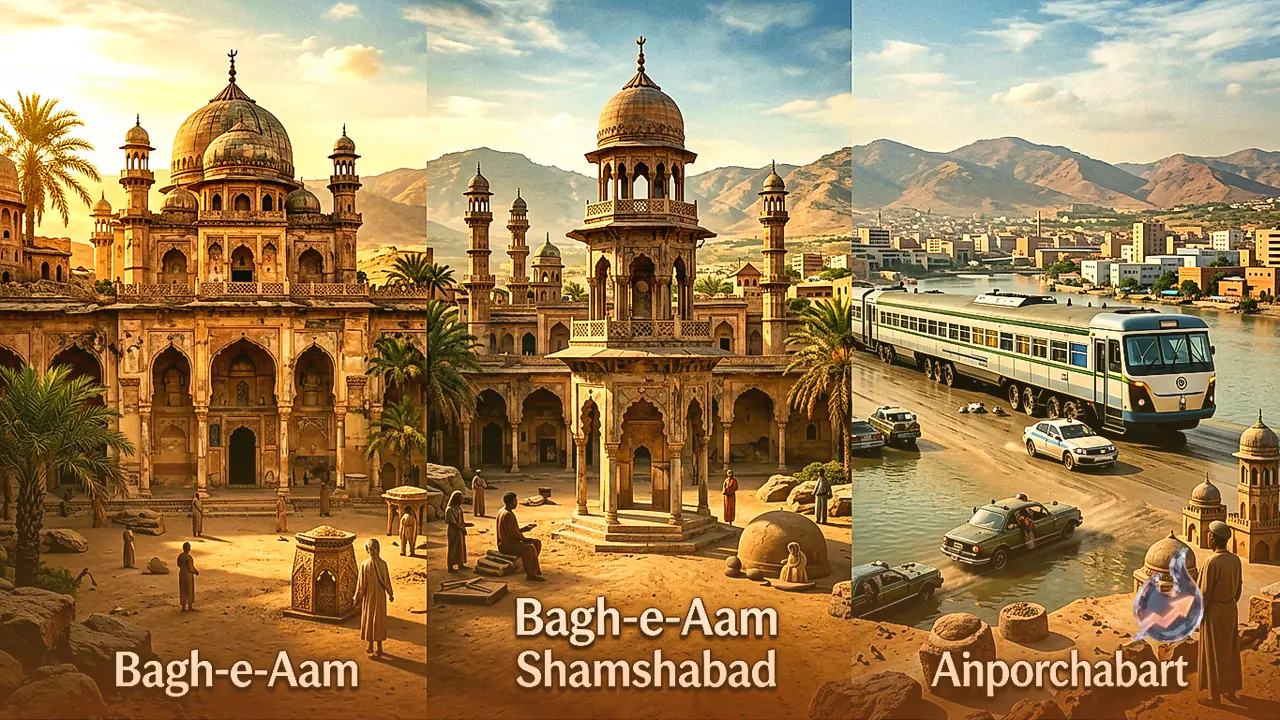

The identity of Hyderabad extends far beyond its ancient fortresses, palaces, and architectural wonders. It is deeply rooted in the everyday names whispered and spoken by generations of residents. Over time, the original names of many historical landmarks faded into the background, replaced by colloquial terms shaped by local speech patterns. Today, people often recognize these locations more by their popular names than their official ones. From Bagh-e-Aam transforming into Public Gardens to quarantine hospitals becoming Koranti Dawakhana, these shifts reflect a fascinating blend of history, culture, and linguistics that defines the city's unique character.
The Evolution From Bagh-e-Aam to Public Gardens
The prominent public park located in the heart of Hyderabad originally bore the name Bagh-e-Aam. Constructed between 1864 and 1872, the garden served a unique purpose during an era when most green spaces were restricted exclusively to royalty and nobility. Unlike other estates, Bagh-e-Aam was specifically opened to the general public. As decades passed, a literal English translation of the name gained widespread popularity, gradually turning Bagh-e-Aam into Public Gardens. Today, the English name is so deeply ingrained in daily conversation that very few residents realize its original designation, which commemorates a time when public spaces were first made accessible to ordinary citizens.
How Quarantine Hospital Became Koranti Dawakhana
Medical history in Hyderabad holds a distinct place for an institution established during a severe cholera outbreak in 1915. When the epidemic struck the city, authorities set up a specialized facility to isolate infected patients and curb the spread of the disease, naming it the Quarantine Hospital. However, local linguistic influences reshaped the foreign word to fit native speech patterns. Over time, quarantine morphed into koranti, and residents began referring to the facility as Koranti Dawakhana. This colloquial term gained such immense popularity that locals still use it today. Although the official name of this historical institution is now the Ronald Ross Institute, the enduring legacy of Koranti Dawakhana highlights how foreign terms easily blend into the local vernacular.
The Journey of Numaish From Its Full Title
The famous annual industrial exhibition of Hyderabad carries the formal historical title of Numaish-e-Masnuat-e-Mulki. In Urdu, this translates directly to an exhibition of local manufactured goods. While modern residents refer to the massive event simply as Numaish, its origins lie in a concerted effort to promote indigenous products and local craftsmanship. In 1938, students of Osmania University initiated the exhibition to encourage native artisans and businesses. The ruler of the erstwhile Hyderabad State, Mir Osman Ali Khan, inaugurated the inaugural event. As the scale of the exhibition expanded over the decades, the long formal title shortened organically into the simple word Numaish, which remains a cornerstone of the city's cultural identity today.
Rajiv Gandhi International Airport and the Shamshabad Identity
The premier international aviation hub serving the city is officially named Rajiv Gandhi International Airport. Operationalized in 2008 to replace the aging Begumpet Airport, the facility was named in honor of the former Prime Minister of India. Despite its official government documentation, the location of the airport in the Shamshabad region prompted locals and travelers alike to continue calling it Shamshabad Airport. This regional moniker became so ubiquitous that even visitors from outside the city readily identify the aviation hub by its geographical location rather than its formal designation.
The Story Behind Shairan Market and Shahran Bazar
Situated near Charminar, Shahran Bazar stands as one of the oldest commercial markets in Hyderabad, with its original name translating roughly to urban market. Over the years, local dialect transformed the name into Shairan Market. Historical accounts indicate that during the 1960s, vendors in this area sold imported fabrics and cosmetics by displaying them in portable boxes. To evade sudden municipal or police crackdowns during those times, merchants frequently had to pack up their goods and flee in a hurry. Amidst this bustling commercial activity and shifting local pronunciations, the word shahran gradually morphed into shairan. Official records still preserve the original title, but daily trade and local recognition firmly belong to Shairan Market.