




















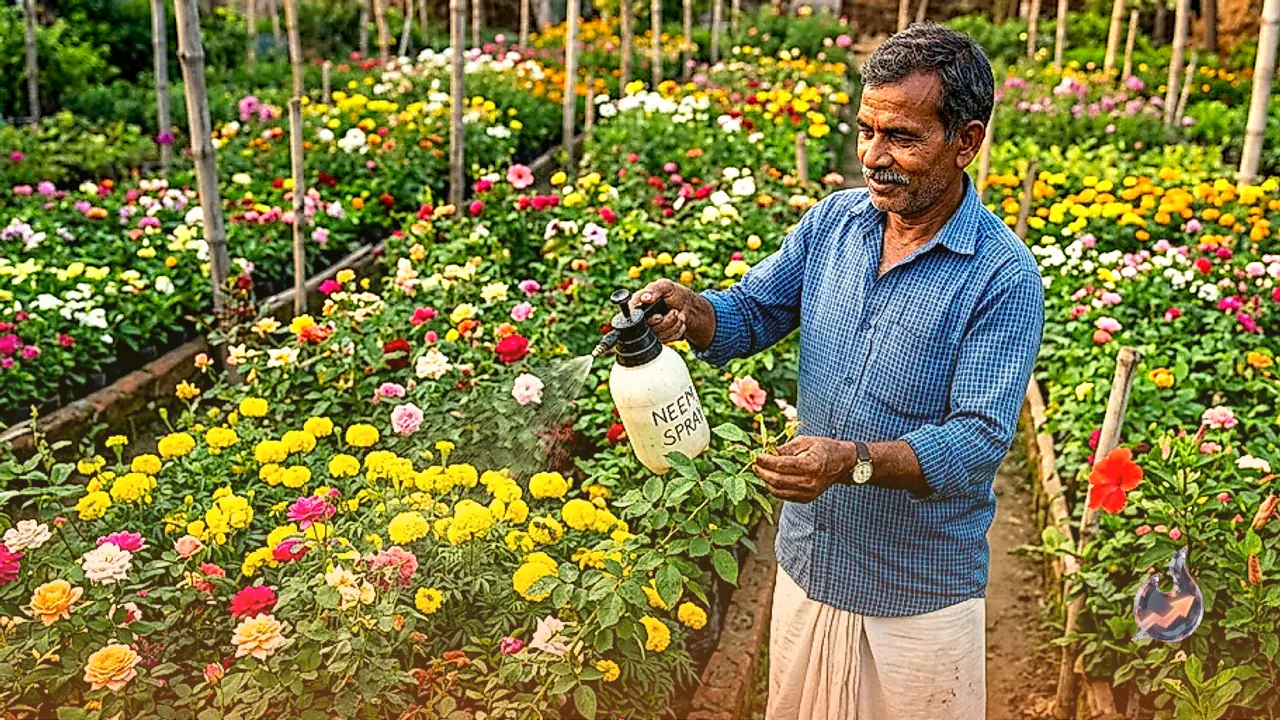

Beautiful plants and vibrant flowers in a home garden or balcony bring joy to any nature lover. However, pest attacks often cause plants to wither, leaving gardening enthusiasts distressed. While many people resort to expensive chemical pesticides from the market, these products can harm both the environment and human health. Narendra Singh, a resident of Ami village in the Dighwara block of Saran district, has developed a simple, low-cost homemade solution to this common problem. For the past 10 years, he has been successfully protecting his expansive garden from pests using an eco-friendly mixture of boiled neem leaves and shampoo.
A Chemical-Free Homemade Pesticide
Instead of relying on commercial chemical sprays, Narendra Singh prepares an effective pest repellent right at home using readily available ingredients. The preparation method involves boiling fresh neem leaves in water to extract their medicinal properties. Once the liquid cools down, it is strained to remove the leaf residue. A small quantity of shampoo is then mixed into this neem water. This mixture works remarkably well in repelling harmful insects without introducing toxic chemicals into the garden environment. Apart from the basic compounds present in shampoo, the solution contains no harmful ingredients, making it safe for surrounding air and soil.
Protecting Over 2,000 Flower Varieties
Narendra Singh is an avid flower enthusiast who nurtures more than 2,000 distinct varieties of flowering plants in his garden. Managing such a vast collection requires constant care, especially when pest infestations occur. Whenever insects affect any of his plants, he sprays them with his custom-made organic solution. He notes that this home remedy effectively eliminates insects without damaging the delicate leaves or blossoms, allowing his garden to remain healthy and vibrant throughout the year.
Tackling White Spot Disease on Hibiscus
Pests and fungal infections frequently cause severe damage to ornamental plants. In particular, hibiscus flowers often suffer from a white spot disease that causes leaves and buds to dry up and fall off. Narendra Singh highlights that spraying the boiled neem water and shampoo solution on affected plants quickly resolves this issue. The treatment stops the spread of infection, restores plant health, and preserves the natural brightness of the flowers.
An Eco-Friendly and Cost-Effective Solution
Repeated application of synthetic pesticides can degrade soil quality and pose health risks to family members and pets. In contrast, this homemade neem and shampoo spray costs almost nothing to prepare and utilizes everyday household items. Having successfully used this technique for a decade, Narendra Singh demonstrates how simple, natural practices can safeguard garden plants while promoting sustainable living.