























As festival preparations gain momentum across households, thorough deep cleaning of living spaces becomes a top priority. While scrubbing painted walls, wooden tables, and hard furniture surfaces remains relatively straightforward, removing stubborn grime and dark spots from fabric sofa cushions often presents a tough challenge. Many homeowners assume that restoring stained upholstery requires expensive professional dry cleaning services. However, creating a budget-friendly homemade cleaning formula using ordinary items found in your kitchen can thoroughly refresh your sofa cushions, stripping away accumulated dust while restoring their original cleanliness.
Formulating the Ideal Homemade Cleaning Solution
To begin the cleaning process, you will need a large mixing bowl or vessel filled with approximately one liter of room-temperature or cold water. Add two teaspoons of mild shampoo or baby shampoo into the water and stir thoroughly until well blended. It is crucial to strictly adhere to this measurement and avoid over-adding shampoo, as generating excessive suds or foam makes the cleaning and rinsing process significantly harder to manage. Once the shampoo is completely dissolved, add one tablespoon of fresh lemon juice into the mixture and stir once more. Lemon juice acts as a natural cleaning agent that targets surface grime while neutralizing mild foul odors. If available in your pantry, adding a small quantity of white vinegar into the liquid further enhances its stain-fighting power.
Choosing the Right Cleaning Tool Based on Sofa Fabric
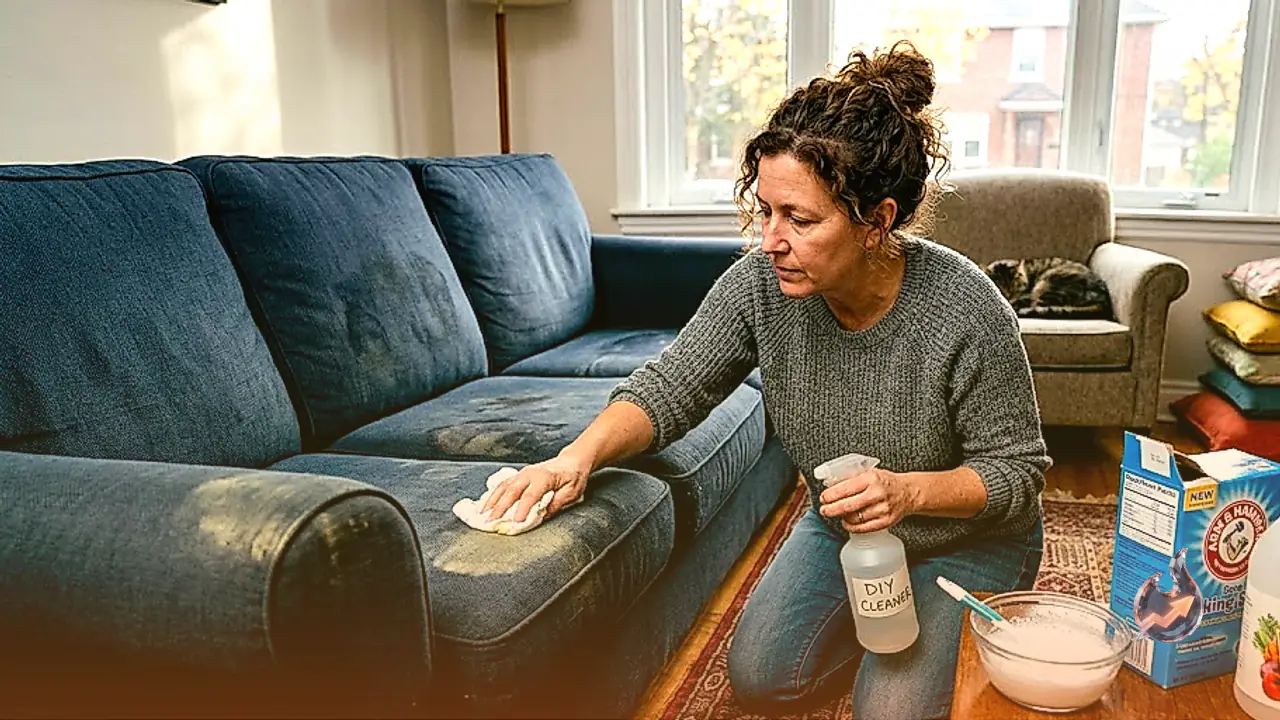
Before applying the cleaning solution, evaluate the texture and thickness of your sofa material to select an appropriate tool. For upholstery made from synthetic fabric, a soft, clean sponge provides the gentlest and most effective cleaning surface. On the other hand, if your sofa features heavy, thick woven fabric with deeply embedded dirt, a standard scotch brush may be utilized to loosen stubborn particles. Regardless of the tool chosen, exercise extreme caution when scrubbing, applying light and gentle pressure to prevent fraying or damaging the fabric fibers. Immerse the sponge into the prepared liquid mix and squeeze it firmly to remove all excess water, ensuring the applicator remains damp rather than soaking wet.
Step-by-Step Spot Cleaning and Proper Drying Precautions
Focus your cleaning efforts on high-contact zones that collect the most oils and dirt, including sofa armrests, head support areas, edges around seating cushions, and any visible stain patches. Work the damp sponge across these surfaces using gentle, circular motions to lift away grime. Immediately after wiping down a section, follow up with a clean, dry cloth to absorb lingering surface dampness. After finishing the entire piece, allow the sofa to air out completely in a well-ventilated space. Avoid saturating the sofa fabric with excessive liquid at all costs, as trapped moisture inside the inner cushion padding will trigger persistent damp smells and fabric deterioration over time.
Deodorizing Practices and Room Air Quality
While the natural scent of lemon brings a pleasant and fresh atmosphere to your living room, you must never pour or squeeze raw lemon juice directly onto sofa fabric, as its acid content can cause permanent discoloration or leave dark spots. Instead, place leftover lemon peels around the room to naturally refresh the indoor environment. It is also important to understand that fragrant air fresheners only mask surface smells; if unpleasant odors stem from deep moisture or trapped dirt inside the cushion padding, thorough physical cleaning remains essential to eliminate the root cause.
Monsoon Moisture Care and Mold Prevention Strategies
Humid conditions during the rainy season pose the greatest threat to fabric furniture. Stagnant indoor air allows dampness to settle deep within sofa cushions and fabric layers, quickly creating foul odors and promoting mold or fungal growth. To safeguard your sofa during monsoon months, open doors and windows whenever the weather clears to encourage air circulation. Keep ceiling fans running continuously to maintain steady airflow across the furniture. If indoor humidity levels remain exceptionally high, operating a home dehumidifier can effectively pull moisture from the air and protect your upholstery from damage.