






















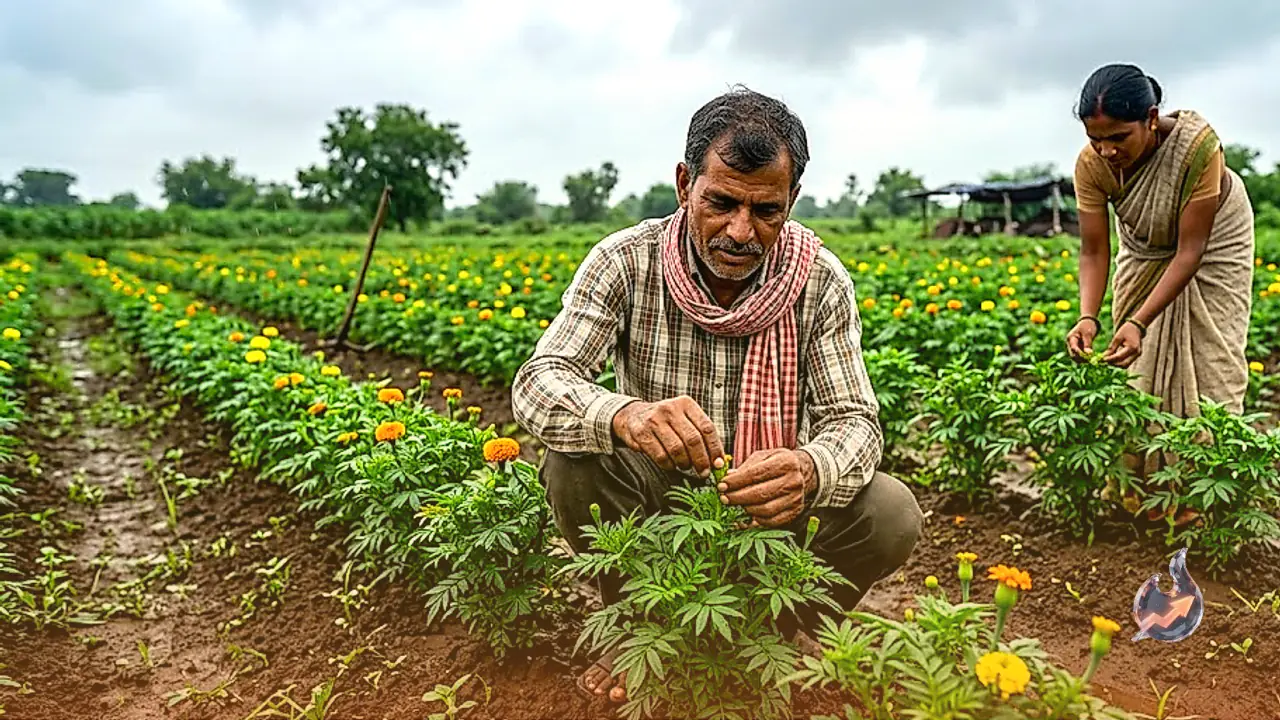

Farmers planning to grow marigold during the monsoon need to get one thing right before anything else: choosing the right plot of land, because waterlogging in the rainy season can wreck an entire crop within days.
Picking The Right Soil And Preparing The Field
Land that does not hold standing water works best for marigold, and loam or sandy loam soil is considered the most suitable for it. Once the field is ploughed thoroughly, well-rotted cow dung manure should be mixed in to boost nutrients and give young plants a strong start. Planting should always be done on raised beds so that excess rainwater drains away quickly instead of pooling around the roots.
Best Time To Transplant And Spacing Between Plants
July to August is considered the ideal window for transplanting marigold during the monsoon. Only healthy, disease-free saplings should be chosen, since weak plants tend to fail quickly in humid, rain-soaked conditions. A spacing of 40 to 45 centimetres between plants works best, as it keeps air circulating between them and lowers the risk of fungal infections.
Managing Fertilizer And Nutrients
Using organic manure while preparing the field is essential for healthy growth. Nitrogen, phosphorus and potash should be applied in a balanced ratio based on a soil test. Giving the full dose of nitrogen in one go is less effective than splitting it into two or three applications, which helps plants grow better and produces a larger number of flowers.
Why Drainage And Weeding Cannot Be Ignored
According to Prof. Ashok Kumar Singh, head of the Soil Science and Agricultural Chemistry department at Shri Murli Manohar Town Post Graduate College, Ballia, standing water in the field during the rainy season can rot the roots and cause the plants to deteriorate. That is why proper drainage must always be maintained. Weeds should also be removed regularly, since they compete with the plants for nutrients and often become breeding grounds for pests and diseases.
Handling Pests And Diseases
High humidity during the monsoon raises the risk of leaf spot disease, root rot and other fungal problems in marigold. Pests like aphids and thrips also cause damage to the crop. Farmers are advised to inspect the field regularly and, as soon as early symptoms appear, use organic or recommended pesticides on the advice of an agriculture expert. Infected plants or leaves should be removed and destroyed right away so the problem does not spread further.
Pinching Boosts Flower Output
Prof. Ashok Kumar Singh further explained that around 30 to 35 days after transplanting, the top growth of the plants should be pinched off. This technique encourages plants to grow more branches, which in turn increases the number of flowers. Pinching is widely regarded among farmers as a highly effective way to raise marigold yields.
When And How To Pluck The Flowers
Once the flowers have bloomed fully, they should be plucked only in the early morning or evening. Doing so preserves flower quality and improves the chances of fetching a better price in the market. After plucking, the flowers should be kept in a shaded spot and taken to the market as quickly as possible to retain their freshness.
Varieties That Pay Off Best In The Rains
Among the marigold varieties considered the highest-yielding for the monsoon season are Pusa Narangi, Pusa Basanti, Indus Tennis Ball (both the yellow and orange types), Rashi Supreme Yellow and Pyramid UKI Lemon. Some of these varieties can withstand heavy rainfall well and can bring farmers good profits.