






















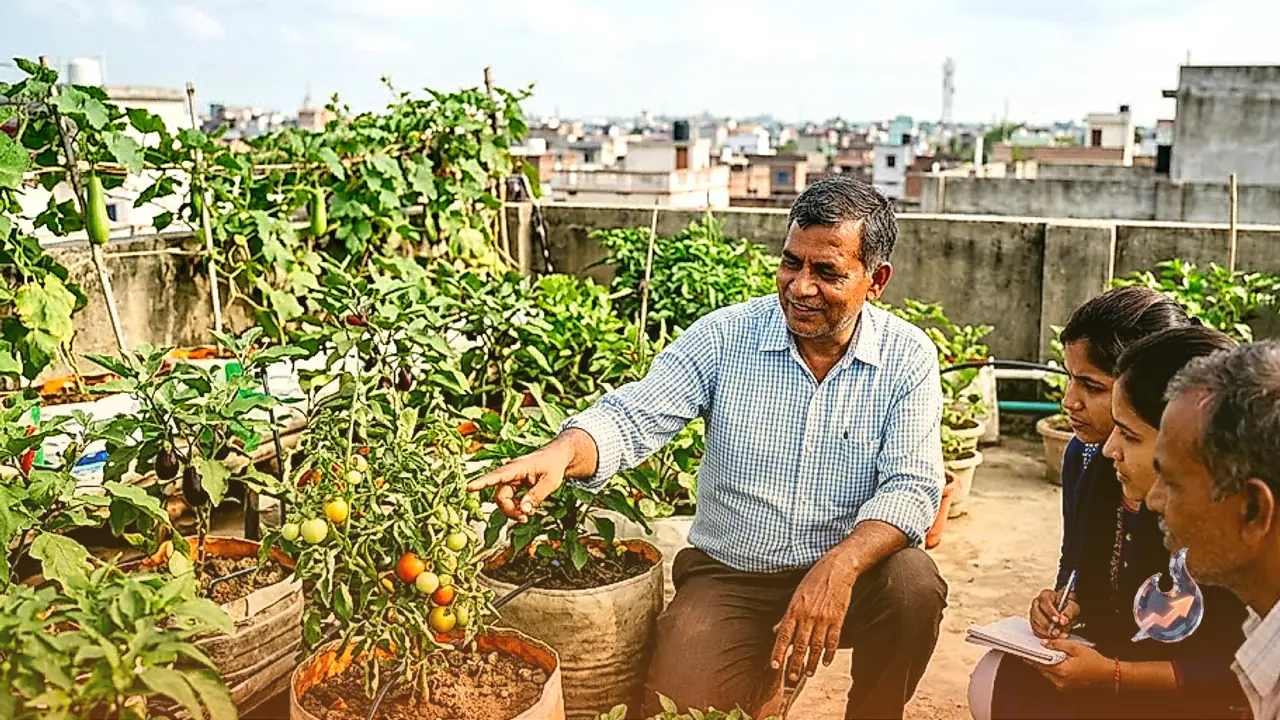

As health consciousness grows among urban residents, the demand for fresh, chemical-free, and organic produce has skyrocketed. With limited ground space in crowded cities, a significant number of people have turned their attention upward, converting their empty rooftops into vibrant spaces for growing flowers and vegetables. However, many enthusiastic urban gardeners face a common, frustrating hurdle: despite their best efforts, the plants often fail to bear fruit or yield a proper harvest. This usually happens due to a lack of accurate gardening techniques tailored specifically for elevated spaces. To solve this widespread issue, terrace farming expert Deepak Kumar from Bhagalpur has shared his proven methodology for achieving a bumper crop right on your roof.
Creating the Perfect Potting Mix
The foundation of any successful rooftop garden lies in what goes inside your containers. A frequent mistake beginners make is simply filling their pots or grow bags with standard garden soil topped with a minimal amount of compost. Kumar emphasizes that terrace gardening requires a fundamentally different approach, as ordinary soil alone cannot sustain heavy fruiting in confined containers. For optimal plant nutrition, he recommends preparing a specific, nutrient-dense base. Gardeners should create a blend consisting of exactly 40 percent soil and 60 percent vermicompost or cow dung manure. To this rich base, an additional 10 percent of mustard cake must be thoroughly mixed in. The crucial next step is patience: this complete mixture must be left untouched for seven days. This resting period allows the elements to break down and integrate, resulting in a highly potent potting mix that practically guarantees tremendous fruiting.
Protecting Creepers from Summer Heat
Another major challenge in terrace farming is temperature control, particularly during the harsh summer months. Concrete roof surfaces absorb and radiate intense heat. If creeping or vining vegetables are allowed to spread directly across the hot floor, the severe temperatures will inevitably scorch and destroy the delicate plants. To counter this, Kumar strongly advises installing a trellis or support system, locally known as an 'alan'. By training the vines to climb upwards rather than sprawl on the ground, gardeners can keep the foliage away from the baking concrete. This simple structural addition not only protects the crop from heat damage but also improves air circulation, leading to significantly higher vegetable yields.
Essential Pest Control and Ongoing Nutrition
Plants grown on rooftops are uniquely vulnerable to various pests and insect attacks, requiring a proactive defense strategy. For effective and organic pest control, the Bhagalpur-based expert recommends the regular spraying of neem oil over the foliage, which acts as a powerful natural deterrent against infestations.
Furthermore, maintaining soil fertility is an ongoing process. To ensure the plants never run out of vital nutrients, a strict feeding schedule should be maintained. Once every month, gardeners must soak mustard cake in water and apply this liquid fertilizer directly to the root zone of the plants. This regular nutritional boost keeps the soil enriched, ensuring that the vegetables continue to thrive and produce a steady, high-quality harvest throughout the growing season.