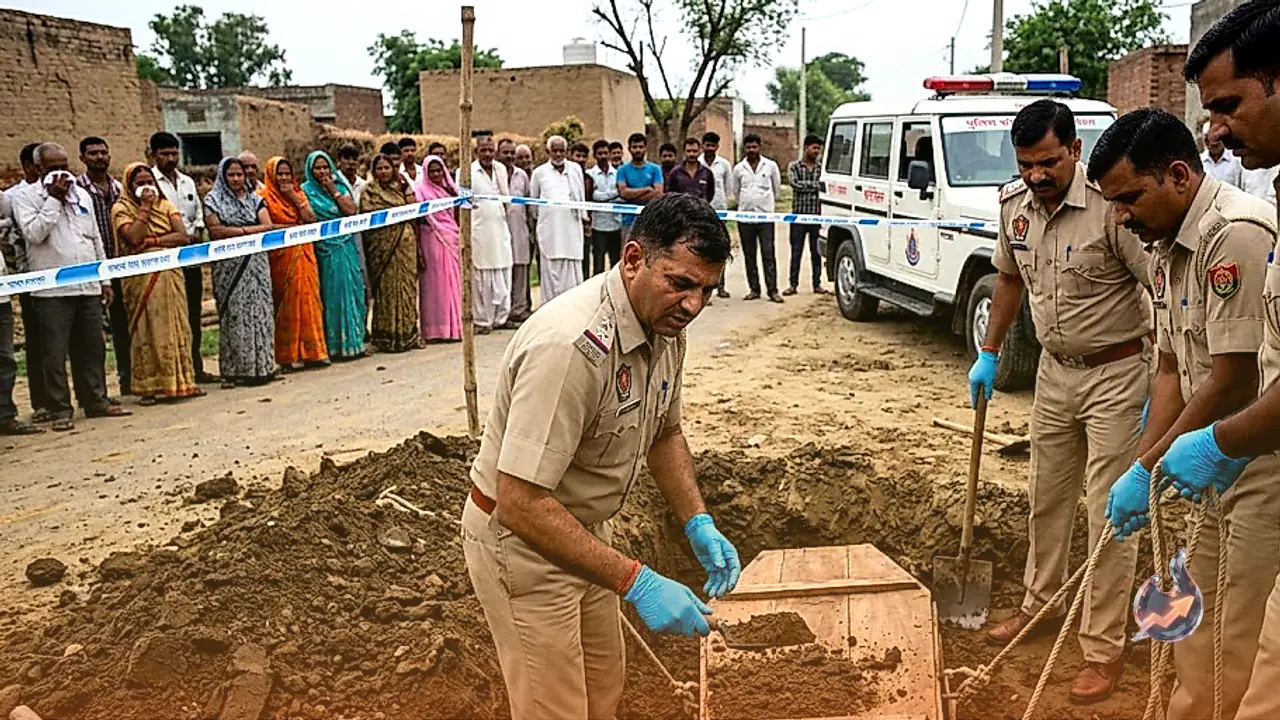

























The Punjab and Haryana High Court has delivered a significant ruling reinforcing the personal liberty of young couples, stating that under Muslim Personal Law, any individual who has attained puberty is legally free to marry a partner of their choice. The ruling came during a hearing for a protective petition filed by a young Muslim couple who married against their families' wishes, emphasizing that constitutional protections under Article 21 override societal or familial opposition. The court clarified that in the absence of contrary medical or documentary proof, the attainment of 15 years of age serves as the legal threshold for assuming puberty has been reached.
The Legal Definition and Presumption of Puberty
The High Court’s ruling heavily relied on established legal treatises, specifically citing Article 195 of Sir Dinshah Fardunji Mulla’s book, 'Principles of Mahomedon Law'. Under this framework, the legal concept of attaining puberty is treated as synonymous with achieving the age of majority regarding the capacity to contract a marriage. The bench outlined three core principles to define this legal space.
First, the court recognized the principle of free will, asserting that any Muslim boy or girl who has attained puberty possesses the complete legal right to marry a partner of their own choosing. Second, the court ruled out any parental veto, stating that parents, guardians, or close family members hold no legal authority to intervene in, disrupt, or declare invalid a marriage contracted by individuals who have reached this threshold. Third, the court established a clear legal presumption regarding age, declaring that once an individual completes 15 years of age, they are legally presumed to have attained puberty, unless concrete medical or documentary evidence is presented to prove otherwise. This creates a solid legal shield for young couples, preventing families from raising arbitrary objections to their union.
Constitutional Safeguards and Article 21
The legal debate escalated to the High Court after a young Muslim couple sought judicial intervention and security, claiming they faced severe threats to their lives and safety from their own relatives who opposed their marriage. In response, the court invoked Article 21 of the Constitution of India, which guarantees the fundamental right to life and personal liberty to all citizens. The court observed that the judiciary cannot remain a passive spectator when citizens face credible threats to their lives and physical safety. Even if the marriage lacks the consent or approval of the family, the court emphasized that no one can be deprived of their constitutional right to live securely. The fundamental duties of the state and the judiciary to protect individual lives remain paramount, regardless of societal norms or domestic disputes over marital choices.
The Interplay Between Personal and General Laws
This judicial decision spotlights a persistent and complex legal debate in India, where personal laws frequently intersect with stringent statutory regulations like the Protection of Children from Sexual Offences (POCSO) Act and the Prohibition of Child Marriage Act (PCMA). Under the standard secular laws of India, the minimum legal age for marriage is set at 18 years for women and 21 years for men. However, when eloping couples face grave dangers from hostile family members, various High Courts have repeatedly stepped in to prioritize the safety of the individuals. By recognizing the puberty provisions within personal laws, the courts have consistently extended police protection to vulnerable couples, prioritizing their immediate safety and constitutional rights over administrative age limits in times of physical peril.