


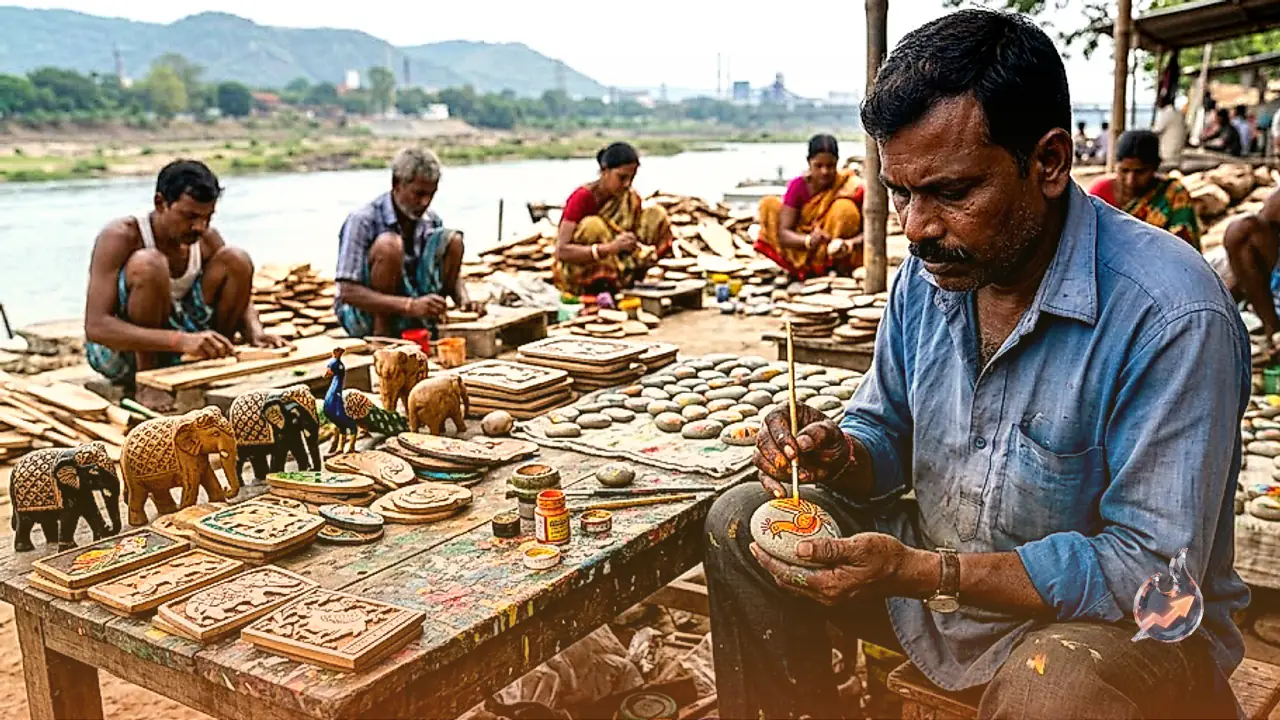















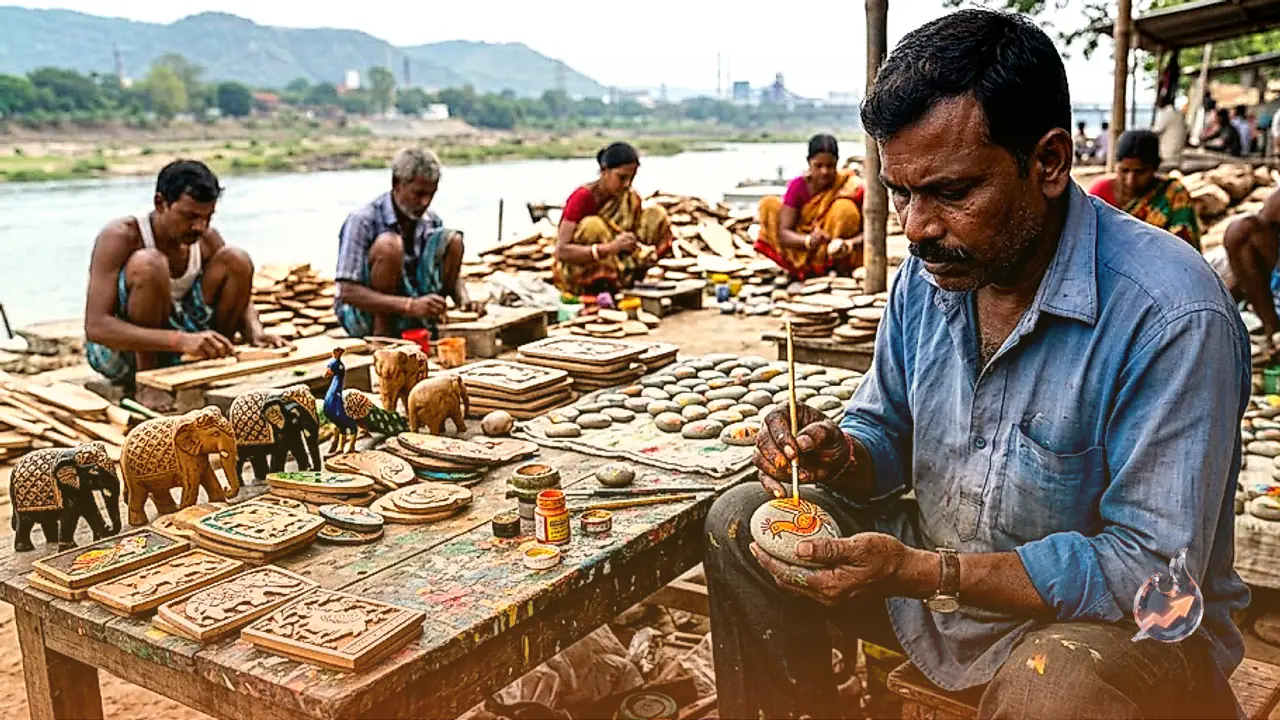

Handicrafts and indigenous art forms continue to serve as viable pathways to self-reliance, demonstrating that skilled craftsmanship can thrive alongside contemporary commerce. In Jamshedpur, artist Raja Poddar has carved out a distinct identity by turning timber and raw riverbed stones into ornate decorative merchandise. His hallmark is an intricate single-stroke painting method, in which vibrant patterns take shape in a solitary, continuous sweep of the brush without retracing or layering lines.
Blending Heritage Designs with Everyday Wooden Utility
Poddar works extensively with wood to fashion items that merge cultural heritage with contemporary interior decor. His creative line includes traditionally patterned vermilion combs, stylized cup trays, and softly lit decorative wooden lamps. By balancing timeless motifs with clean, modern aesthetics, these pieces appeal broadly to homeowners looking for distinct, non-industrial decor accents. Each piece retains the warmth of handmade timber craft while meeting the expectations of urban living spaces.
Turning Smooth Shore Stones into Elegant Decor
His palette extends well beyond woodwork to naturally weathered stones sourced from shorelines. These naturally smoothed rocks, typically overlooked as mundane pebbles, are transformed through focused surface design into functional desk paperweights and ornamental accents. When the single-stroke technique is applied across the curving contours of the stone, ordinary geological fragments are elevated into eye-catching artisanal statements that showcase texture and form.
Precision Demands Behind the Single-Stroke Method
Executing single-stroke artwork requires immense discipline and fine motor control. Unlike conventional painting that permits repeated blending, preliminary outlines, or incremental touch-ups, this technique requires the painter to finish an entire petal, curve, or motif in one unbroken movement. Controlling the angle, bristle load, and pressure across the wood or mineral surface demands hours of dedicated practice, a craft Poddar has systematically honed across diverse material formats.
Sustaining a Community of Twelve Craftsmen
Beyond personal artistic expression, Poddar has organized his workshop into a broader livelihood engine. Approximately 12 local artisans work alongside him, earning consistent incomes that support their respective families. Poddar maintains that traditional Indian artisan crafts do not need to become obsolete in a world dominated by mass factory production; instead, pairing heritage skills with contemporary product forms creates durable market opportunities. His collective enterprise stands as proof that manual dedication and community-driven skill can secure both commercial viability and cultural preservation.