






















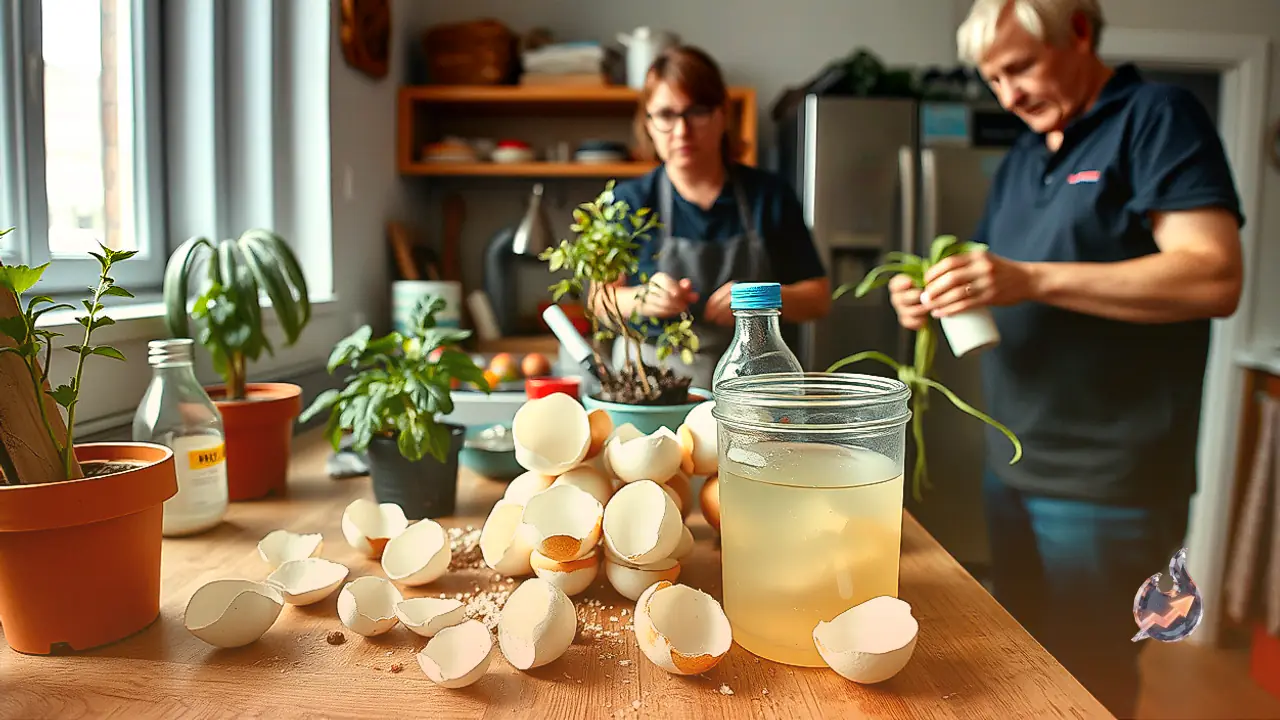

In household kitchens, eggshells are routinely tossed straight into the garbage after cooking. Yet for anyone maintaining container gardens, balcony planters, or terrace greenery, this everyday food waste holds significant value as a homemade plant nutrient. The hard outer layer of an egg consists primarily of calcium carbonate. Calcium plays a foundational structural role in plant growth, strengthening cell walls and supporting overall tissue development. With a straightforward chemical technique using household supplies, these discarded shells can be transformed into a practical liquid supplement for home gardens.
Gardening expert Mahendra Rewa Pati points out that simply crushing raw eggshells and scattering them onto potting soil rarely produces noticeable short-term benefits. Because eggshells are naturally dense, rigid, and water-insoluble, breaking down naturally in garden soil takes an extensive period. Plant roots cannot directly absorb solid minerals unless those nutrients are dissolved into the moisture they draw up. By combining powdered shells with household vinegar, the mild acid helps draw calcium into a soluble liquid state that plants can actually take up.
The Biological Role of Calcium and Balanced Garden Nutrition
Calcium carbonate accounts for the vast majority of an eggshell's composition. In botanical physiology, calcium is indispensable for cell division, root elongation, and the formation of sturdy new stems and foliage. When plants suffer from a deficit of this secondary nutrient, emerging leaves often appear distorted, and blossom development suffers. In fruiting vegetables such as tomatoes, peppers, and eggplants, severe calcium shortages frequently correlate with physiological disorders like blossom end rot.
Nevertheless, Mahendra Rewa Pati cautions against regarding this homemade concoction as an instant panacea that will single-handedly cover every plant in flowers and fruit. Strong vegetative health and productive yields depend on comprehensive care. If a potted plant lacks appropriate sunlight exposure, suffers from waterlogged or parched soil, or struggles without essential macronutrients like nitrogen, phosphorus, and potassium, introducing supplementary calcium will not solve the underlying distress. Homemade fertilizers should be treated as minor supportive additions rather than total replacements for complete soil fertility.
Preparation Steps: Cleaning, Drying, and Grinding Shells
To begin making this liquid fertilizer at home, gather the shells of approximately 5 to 6 eggs. Thorough hygiene during the initial stage is vital. The shells must be washed rigorously under clean running water to remove any lingering egg white, yolk, or organic membrane clinging to the interior curves. Allowing raw organic residue to remain on the shells introduces unpleasant odors and risks introducing harmful fungal or bacterial pathogens into the potting medium.
Once thoroughly rinsed, the shells should be set out to dry completely. Placing them under direct sunlight helps evaporate all residual moisture and renders the material brittle. After the shells have dried into a crisp state, break them by hand into small fragments and transfer them into a dry blender or spice grinder. Pulverizing them into a fine, powdery consistency maximizes the total surface area exposed to the acidic solution. A finer powder ensures a substantially faster and more thorough reaction with the vinegar.
The Chemical Interaction Between Powdered Shells and Vinegar
Once the fine powder is ready, place roughly one teaspoon of the eggshell dust into a clean glass or plastic jar. Add approximately one teaspoon of ordinary white vinegar directly over the powder. The instant the vinegar makes contact with the shell dust, a vigorous fizzing reaction will erupt, producing dense bubbling and foam inside the container.
This effervescence occurs because the acetic acid in the vinegar reacts vigorously with the alkaline calcium carbonate of the eggshells, releasing carbon dioxide gas as a byproduct. Because gas is rapidly generated during this phase, never seal the jar tightly with an airtight lid right away. Fastening a lid during the initial surge could lead to excessive internal pressure buildup. Instead, leave the container completely open or loosely draped with a breathable cover until the vigorous bubbling subsides and the mixture settles.
Resting for 48 Hours and Essential Dilution Ratios
To allow the chemical extraction to proceed fully at home, let the open mixture rest undisturbed for around 48 hours. Across these two days, the vinegar continuously interacts with the crushed shell material, pulling a portion of the calcium into the surrounding liquid. Once the 48-hour period concludes, pass the entire concoction through a fine mesh strainer or clean cloth to separate and discard the unreacted grit.
The strained liquid extract that remains must never be poured undiluted directly onto garden soil or plant parts. Extreme dilution with plain water is mandatory before application. A safe, standard guideline for home gardeners is to stir approximately one teaspoon of the strained concentrate into one full liter of water. When using the mixture for the very first time, test it cautiously on just one or two plants rather than applying it to an entire garden collection. Observe the plants over several days to confirm their tolerance. Individual plant varieties vary widely in nutrient sensitivity, so applying excessive amounts must always be avoided.
Hazards of Undiluted Application and Soil Precautions
Applying raw, concentrated vinegar mixtures directly to vegetation can cause severe physical harm. Vinegar carries strong acidity that can scorch delicate leaf surfaces and chemically burn root hairs if introduced without adequate water. Concentrated acid disrupts root function and can send a vulnerable potted plant into rapid shock.
Furthermore, gardeners must evaluate the existing condition of their potting soil before introducing acidic solutions. If the soil in a container is already naturally acidic, repeatedly pouring vinegar-derived supplements into the pot can drop the pH level even further, locking out other essential soil minerals. If a plant is currently deteriorating due to pest attacks, root rot, or poor drainage, relying purely on homemade kitchen fertilizers will not resolve the problem. Diagnosing the specific needs of the plant and understanding soil chemistry remain fundamental requirements for healthy gardening.
Sustainable Kitchen Waste Recycling for Balcony Gardens
Repurposing leftover eggshells into liquid plant food represents a simple, low-cost method of closing the nutrient loop in urban and suburban households. By diverting kitchen scraps away from the trash, gardeners can generate a no-cost mineral boost for their container plants while practicing sustainable organic waste management.
Whether growing flowering roses or edible crops like tomatoes, chili peppers, and eggplants in outdoor containers, this homemade extraction offers a practical, budget-conscious experiment. When paired with proper sunlight, disciplined watering routines, well-aerated soil, and balanced primary nutrients, this vinegar-eggshell method can provide a beneficial supplementary boost to keep domestic plants thriving.