






















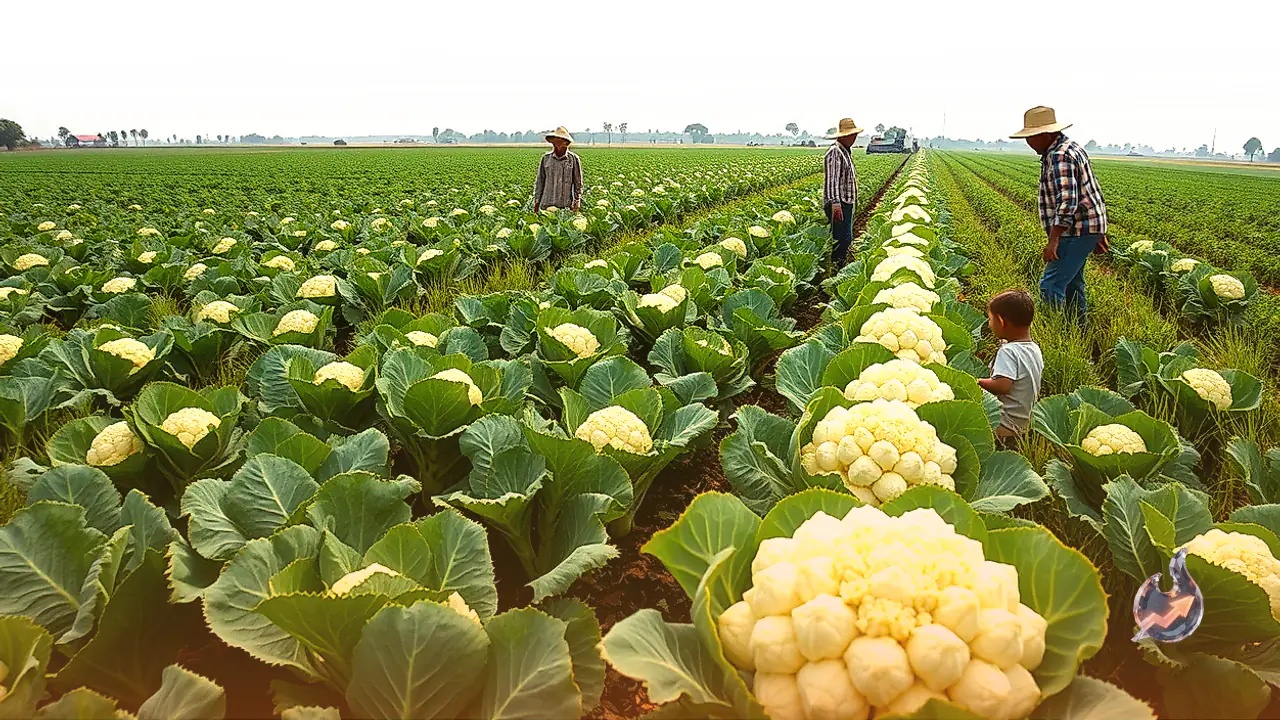

Agricultural producers are steadily shifting their focus away from conventional grain crops like wheat and maize in favor of vegetable farming. A primary driver behind this transition is immediate cash realization right from the harvest stage, providing growers with quick earnings and significantly healthier profit margins than standard grain cycles. However, cauliflower cultivation often suffers from avoidable agronomic errors during the early planting phases. When management falters, cauliflower curds fail to develop their full potential, remaining undersized and ultimately commanding low selling prices in commercial markets. The foundation of a lucrative harvest rests almost entirely on how thoroughly the seedbed is prepared before planting begins.
Foundation Soil Preparation for Cauliflower
Achieving superior curd size begins with deep, fine tilling that renders the topsoil completely loose and aerated. Once fine tilth is established, incorporating well-rotted farmyard manure, mustard seed cake, and appropriate soil pesticides ensures nutritional availability and safeguards against subterranean insect damage. After these inputs are thoroughly blended into the soil, the land must be left undisturbed for approximately one week to stabilize the microbial environment and soil blend before any transplanting occurs.
Planting Adjustments in Flood-Prone Terrains
A distinctly different timeline applies to agricultural plots situated within flood plains or areas prone to temporary waterlogging. In these locations, spending time on pre-season soil amendments is unnecessary and counterproductive. The moment standing floodwaters recede, growers should immediately transplant the cauliflower saplings into the moist earth. Delaying transplantation to dry and prepare the field risks missing optimal seasonal windows and setting back the cropping schedule. All essential nutrients, including decomposed manure, mustard cake, and pest controls, must instead be applied directly around the root zones of the established seedlings after planting.
Transplanting Approaches and Preventing Root Decay
Two distinct transplanting methods are widely utilized once the plot is ready. The first strategy involves irrigating the entire field lightly beforehand and inserting the seedlings directly into the damp earth. The alternate method involves planting the saplings into dry soil and watering them immediately afterward. When watering post-transplant, flooding the entire plot must be strictly avoided. Water should only be directed around the individual root collar of each sapling for the first week. Saturating the whole field at this fragile stage leads to rapid root rot and heavy plant mortality. Once root systems anchor firmly into the soil bed, uniform field-wide irrigation can commence safely, resulting in noticeably larger and denser cauliflower heads.