




















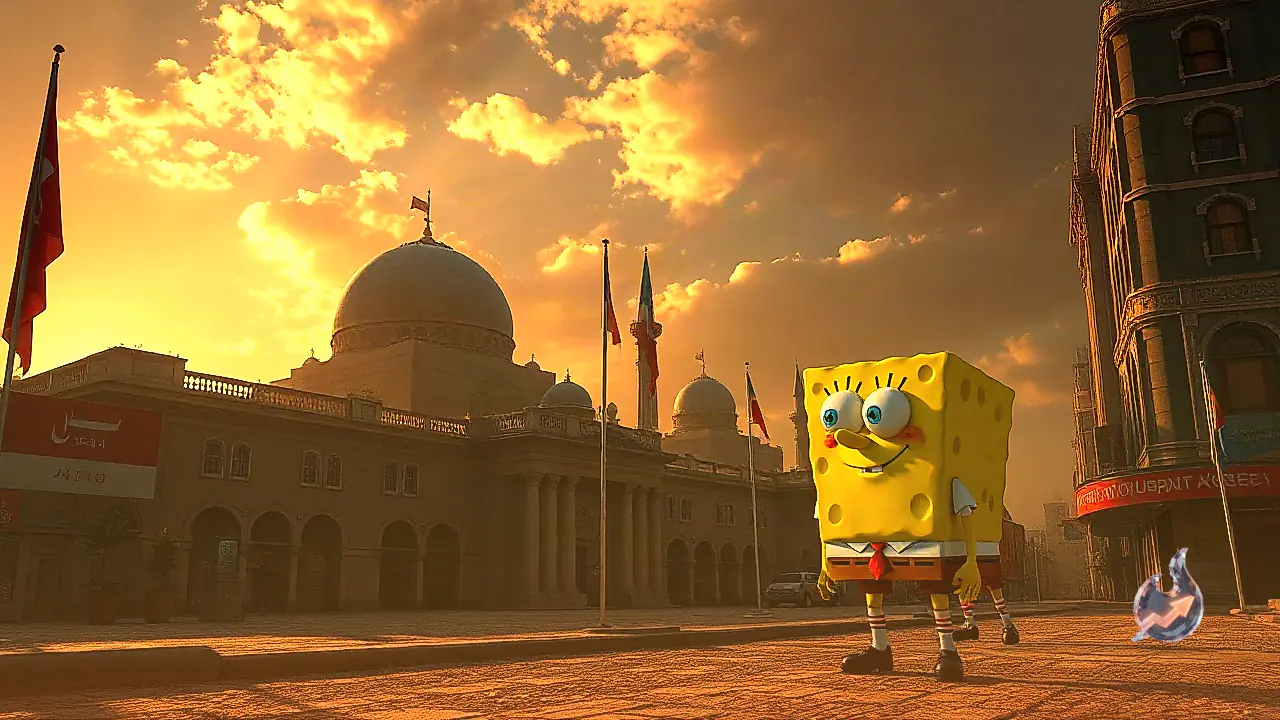

In an unusual intersection of popular culture and political satire, an artificial intelligence version of the American animated figure SpongeBob SquarePants has turned into the centrepiece of an online movement challenging living standards in Egypt. Against a backdrop of severe constraints on political opposition, ordinary citizens turned to undersea metaphors to vent their frustrations over escalating economic hardships, decaying public services, and authoritarian governance. What started as an ironic social media experiment rapidly expanded into a mass digital outlet, ultimately catching the attention of state monitors and pro-establishment commentators.
Undersea Caricatures Mirroring Ground Realities
The wave of satirical content gained momentum last month following the launch of a dedicated Facebook group titled 'Complaints of the Residents of al-Hamour Bottom'. The name cleverly borrows the Arabic adaptation of Bikini Bottom, the fictional underwater habitat created by Nickelodeon. Through digital art tools, members began repurposing familiar aquatic personalities to sketch biting commentary on Egypt's domestic crises.
Among the widely shared creations, Egyptian President Abdul Fattah al-Sisi was reimagined as the miserly business owner Mr Krabs, obsessed with hoarding cash. Other visuals illustrated the ocean floor clogged with tuk-tuks, the automated three-wheeled rickshaws common across Egyptian towns. In another poignant scene, young female fish on their way to school were depicted being harassed by male fish, a direct reflection of street-level sexual harassment. Within the discussion sections, users voiced intense grievances regarding alleged ministerial corruption, extortionate apartment rents, and dilapidated healthcare and educational infrastructure.
Surging Audience and swift Retaliation
The digital forum achieved immense popularity in an exceptionally brief window, amassing 1.8 million followers in roughly a fortnight. The escalating tension was captured in a widely circulated cartoon showing interior ministry operatives submerged under water alongside the stark warning to be careful. Shortly thereafter, amid mounting scrutiny from security authorities, the platform was taken down.
Following the shutdown, a teenage girl presenting herself as the founder and administrator published a video statement. She argued that neither she nor the original creators should bear blame for the overtly political content uploaded by participants in splinter forums. Nevertheless, state-aligned media figures were quick to frame the phenomenon as an orchestrated attack by the banned Islamist Muslim Brotherhood. The military had removed Brotherhood-backed President Mohammed Morsi from office in 2013 on the heels of mass demonstrations against his single year of rule. Prominent television host Tamer Abdel Monaim devoted an entire broadcast to denouncing the meme wave, insisting that the al-Hamour Bottom trend belonged to the Brotherhood and was aimed purely at sowing public confusion.
Laughter as an Outlet for Despair
Even though administrators wiped many of the sharpest political contributions, the core meme formats continued to proliferate across digital channels. High-profile Egyptian celebrities, prominent influencers, and commercial companies tapped into the cultural moment, sharing their own AI-generated al-Hamour Bottom material.
Egyptian radio broadcaster Rabab Kamal offered an explanation for why the trend resonated so deeply with ordinary citizens facing mounting stress. Addressing her large Facebook audience, Kamal observed that the amusement surrounding Bikini Bottom was not an expression of joy, but rather a coping mechanism in which conditions had turned so completely absurd that laughter remained the only accessible reaction.
With a population exceeding 110 million residents, Egypt represents the Arab world's most populous nation. Ever since the 2011 Arab Spring, the country has endured protracted rounds of political, economic, and social upheaval. Working-class families remain caught in the grip of sharp inflation spurred by consecutive currency devaluations, which severely diminished purchasing power. Regional conflicts have further battered vital revenue streams, including Suez Canal transit fees, international tourism, and financial remittances sent by Egyptian expatriates stationed in the Gulf region. Energy prices have climbed steadily, and the administration implemented a 12 percent rise in specific household electricity tariffs this summer.
Stifled Dissent and Legal Jeopardy
Since the military establishment under Sisi regained authority, institutional tolerance toward open political criticism has deteriorated significantly. Fearing widespread unrest and challenges to state leadership, the administration maintains a tight grip on public assembly. For younger demographics, particularly Millennials and Generation Z, the surreal realm of SpongeBob provided an indirect workaround to articulate dissent without immediately confronting official red lines.
Mahmoud Shalaby, a regional researcher working with Amnesty International, outlined the scale of ongoing digital repression. Shalaby explained that state authorities have maintained a prolonged offensive against digital speech, leaving thousands of detainees trapped in pretrial custody simply for expressing unapproved opinions on the internet. He added that the suppression reaches well past orthodox political rivals, targeting religious minorities, non-believers, individuals perceived as LGBTI, and women publishing content online who are frequently prosecuted under vaguely formulated morality statutes.
While President Sisi publicly maintains that his administration supports free speech and that citizens are entirely free to voice their thoughts, widespread public skepticism remains. Addressing public forums late last month, the president appeared to make an indirect reference to the meme craze by warning against online disorder, remarking that digital chatter failed to appreciate the scale of national challenges. State security agencies routinely encourage citizens to report suspicious or anti-state conduct. In line with this atmosphere, local news outlet Cairo 24 reported that a practicing attorney has filed a formal judicial complaint targeting the administrators, managers, financiers, and contributors connected to al-Hamour Bottom pages. The filing demands a judicial review into how economic policies and conditions were satirized in a manner that allegedly risks disrupting public safety and social order, casting doubt over how much longer the cartoon satire can survive.