























Israel's announcement to open tenders for constructing approximately 1,200 settlement units in a strategically sensitive zone of the occupied West Bank has drawn sharp condemnation from key Western allies. International powers warned that advancing construction in the area known as E1 threatens to derail future peace efforts and further damages Israel's international standing. All Israeli settlements in occupied territories are considered illegal under international law, and Israel had deferred building plans in the E1 zone east of Jerusalem for decades due to sustained global diplomatic pressure.
Joint Western Statement and Diplomatic Pushback
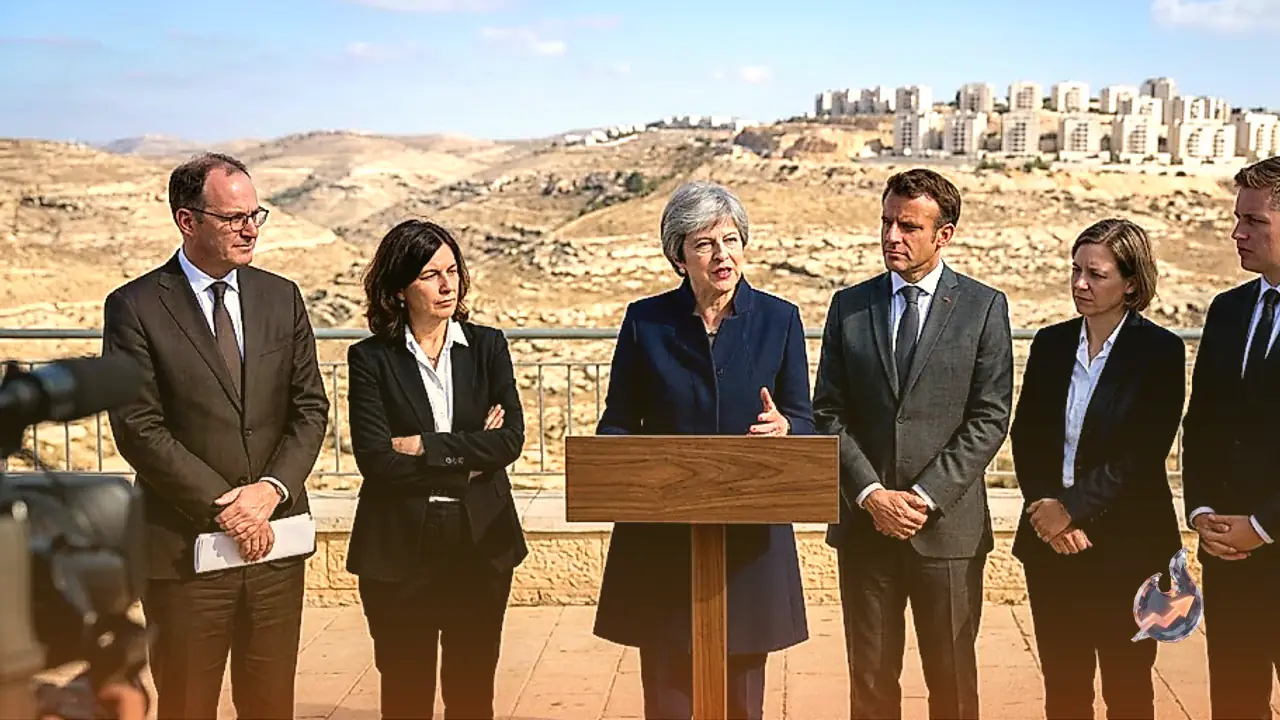
In a joint official statement published on Thursday, the governments of the UK, France, Germany, Italy, and Canada expressed severe concern over the tender rollout. The allied nations highlighted that the decision comes during a period of grave instability in the West Bank, marked by unprecedented violence by settlers against civilians and heavy restrictions placed on the Palestinian economy. The allies stated that these plans not only push the region further from a peaceful settlement but also undermine Israel's standing on the global stage.
Adding to the diplomatic pushback, the UN Secretary-General and Belgium's foreign minister issued separate statements declaring that the E1 development poses an existential threat to a contiguous Palestinian state. Earlier on Thursday, UK Foreign Secretary Ed Miliband voiced strong opposition to the housing plan, a critique that was outright rejected by Israel's foreign minister.
Strategic Location of the E1 Project and Geographical Impact
The E1 development covers an area of roughly 12 square kilometres (4.6 square miles) situated between East Jerusalem and the major Israeli settlement of Maale Adumim. At the time the expansion details were unveiled, Israeli Finance Minister Bezalel Smotrich, an ultranationalist and settlement proponent, openly remarked that the prospect of a Palestinian state was being erased.
Opponents of the E1 initiative emphasize that establishing a settlement block in this corridor would effectively slice the West Bank into separate northern and southern sections. This territorial division would prevent the development of a continuous Palestinian urban area linking Ramallah, East Jerusalem, and Bethlehem, creating an insurmountable obstacle to a geographically viable Palestinian state.
Historical Background on Settlement Expansion
Since seizing the West Bank and East Jerusalem during the 1967 Middle East war, Israel has established roughly 160 settlements housing about 700,000 Jewish residents. An estimated 3.3 million Palestinians live alongside these settlement communities in territory intended for a future Palestinian state alongside Gaza.
Despite widespread international opposition over several decades, successive Israeli administrations have permitted settlement growth. However, the pace of construction has accelerated dramatically since Prime Minister Benjamin Netanyahu returned to office in late 2022 at the helm of a right-wing, pro-settler coalition, further intensifying amid the ongoing conflict sparked by the 7 October 2023 attack on Israel by Hamas.