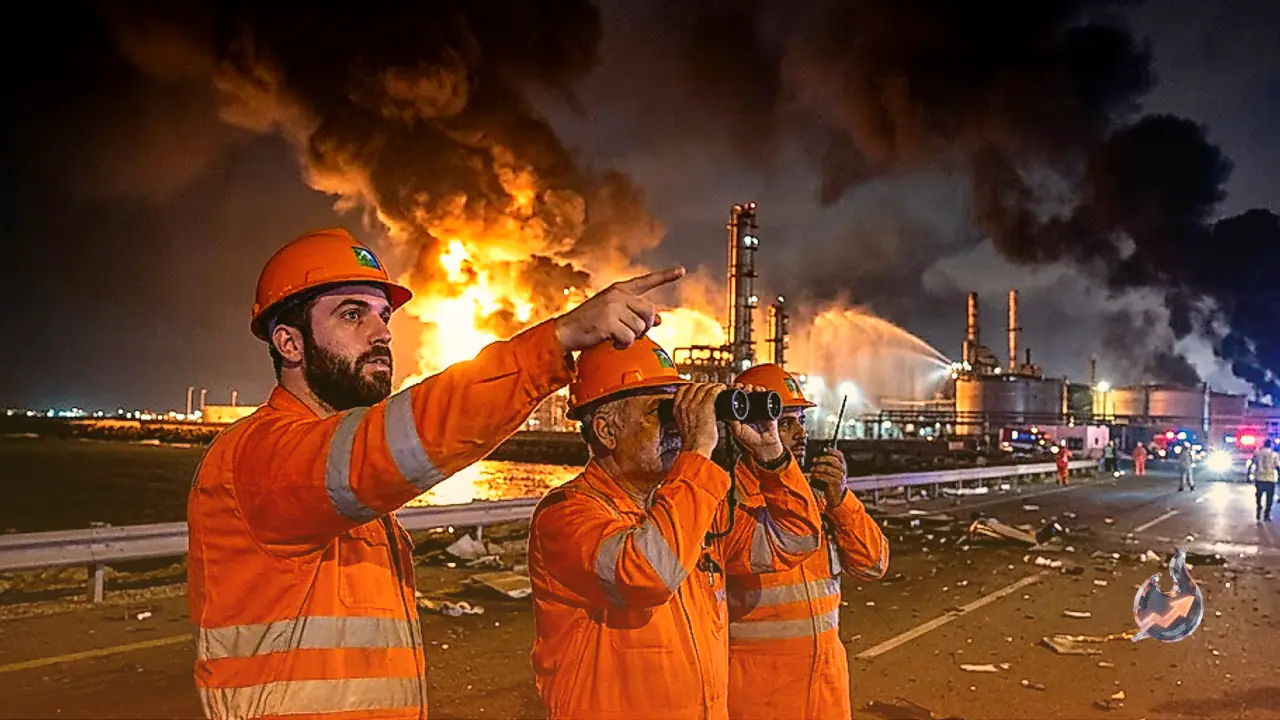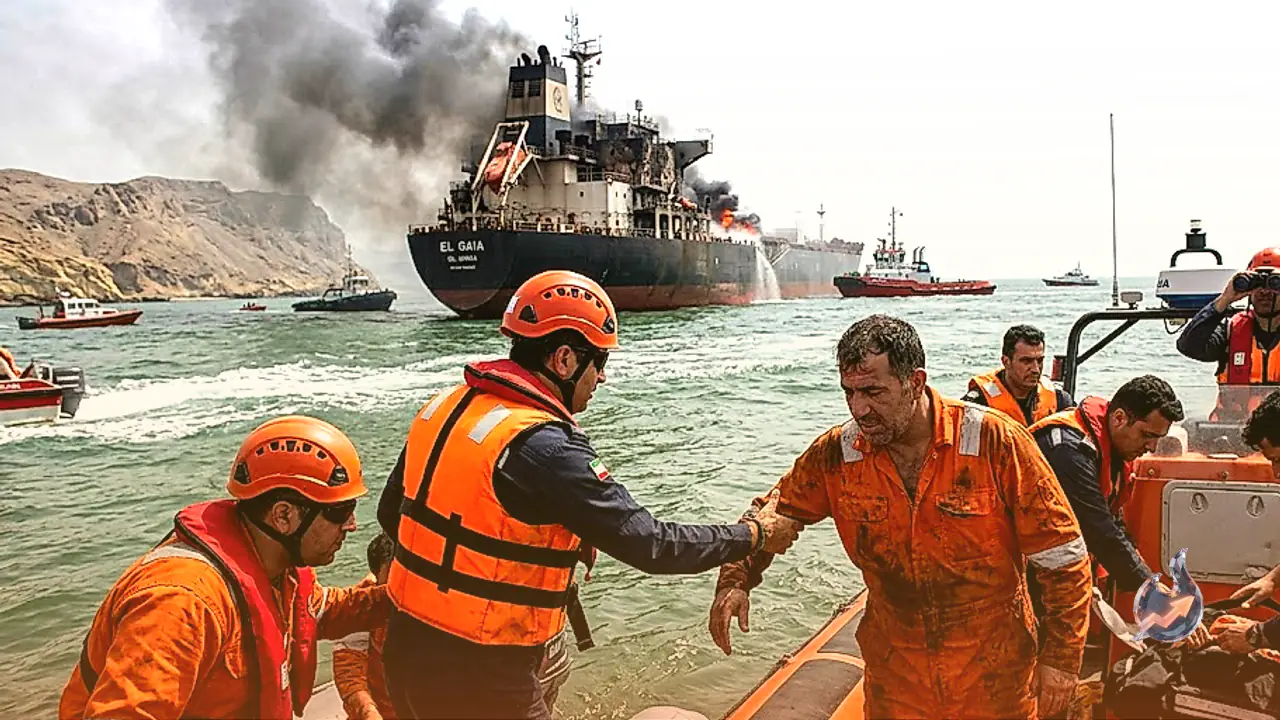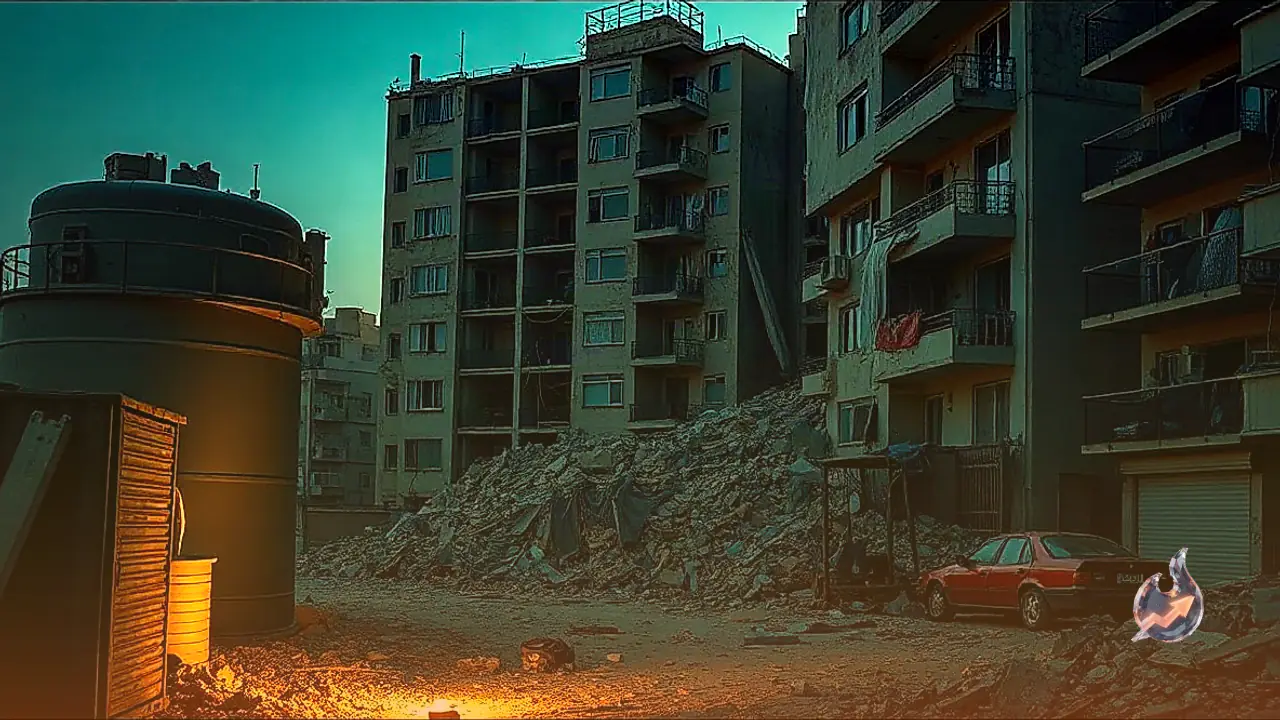























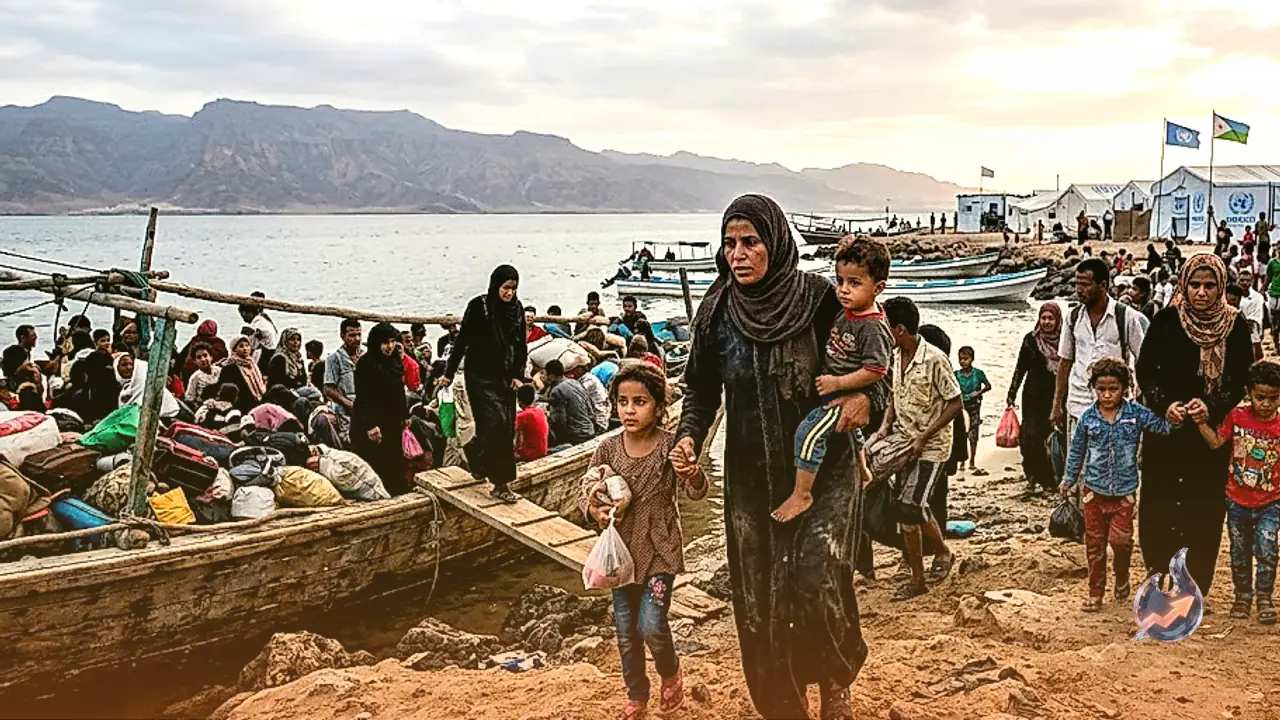

A sharp intensification of airstrikes and ground clashes along Yemen's western coast has triggered a desperate wave of maritime displacement, driving vulnerable families across the narrow waters to safety in Djibouti. Among those who have escaped the war zone is 50-year-old Ibrahim Issa, a native of the frontline coastal town of Dhubab. His home region has turned into a ferocious battleground pitting Houthi fighters against Saudi-backed pro-government units. Terrified by the unrelenting drone of combat aircraft and detonations shaking the shoreline, Issa organized a hazardous crossing over the Bab al-Mandab strait aboard his fishing craft, eventually arriving at the Markazi refugee facility in northern Djibouti's Obock district.
Daily Realities Inside the Markazi Refugee Facility
Within the cavernous interior of an open-sided warehouse at the Markazi camp, Ibrahim Issa and his family now sit gathered on a simple tarpaulin laid over the sand. Managed jointly by the government of Djibouti and the United Nations, the facility has become the primary destination for waves of refugees arriving by sea before making their way north via utility trucks or on foot. Issa possessed a vessel of sufficient capacity to transport his household across the international water boundary. Along with his relatives, he managed to salvage several family goats, which now forage for vegetation between spent cooking gas canisters and plastic refuse littering the compound.
Material conditions among the arrivals vary widely depending on the circumstances of their departure. While a handful of households were able to rescue modest bundles of personal effects, including items like a traditional metal jeraak water pipe, many others reached the African shore completely empty-handed, possessing only the clothes they wore during their escape. Issa explained that staying behind became impossible once combat flights began overhead, leaving his young children shaking in fear and shouting in panic. For him, fleeing into exile across the sea was the only responsible way to preserve his family's lives.
Over 120,000 Uprooted as Air Raids and Projectile Strikes Surge
United Nations officials estimate that more than 120,000 individuals across Yemen have been forced from their communities by the abrupt flare-up in combat along the Red Sea coastline. The regional surge has pushed over 3,000 refugees into Obock across just the past few days, with complete family groups undertaking the sea voyage together. Acting in support of the internationally recognized, UN-recognized administration of Yemen, Saudi Arabia has conducted hundreds of aerial bombardments across the flat coastal plains where Houthi units have established fortified defensive lines. In parallel, Houthi forces have launched hundreds of missile and armed drone barrages targeting municipal areas and critical infrastructure throughout southwestern Saudi Arabia.
For those sheltering in Markazi, the ideological divides of the belligerents are entirely secondary to survival. Multiple refugees speaking in Arabic underlined that their flight was driven purely by the ordnance detonating around their doorsteps, without regard to which faction was firing. The sheer frequency of explosions eliminated any possibility of remaining in their coastal villages.
A Centenarian's Testimony and Djibouti's Strategic Stance
Among the elderly residents of the facility is Qassim Abraham Abssy, whose official identification papers confirm his age at 100 years. A former coastal fisherman like Issa, Abssy recounted that the relentless concussions of aircraft bombs drove his family into flight to protect their youngest generations. He noted that Houthi combatants have dispersed widely across regional mountain passes and roadways, drawing strikes from aircraft whose origins the terrified villagers could not determine amid the widespread destruction.
Djibouti, a compact republic that formerly operated as a French colony across the strait, has maintained a firm policy of non-involvement in the conflict between the Houthis and the Saudi-supported Yemeni government. Despite its small geographic footprint, the country functions as one of the most heavily garrisoned territories on the African continent. The United States has maintained Camp Lemonnier, a massive multinational military installation that previously housed the French Foreign Legion, inside the country since 2003. Simultaneously, China maintains a significant presence at an upgraded naval installation situated along the Indian Ocean corridor.
Protracted Exile: An Aden Native's Perspective Since 2015
Beyond the warehouse shelters, rows of tents erected by the UN refugee agency, UNHCR, endure harsh regional temperatures reaching 37 degrees Celsius. Outside these canvas quarters resides 63-year-old Mohammed Abdullarim, a former tour guide from Aden whose birth occurred when the city was administered as a British protectorate. Abdullarim represents an earlier wave of exile, having arrived in Djibouti in 2015 during the initial outbreak of warfare between Houthi units and the administration led by ousted President Abdrabbuh Mansour Hadi.
Reflecting on the ongoing destruction of his homeland, Abdullarim struggled to control his emotions while observing the difficulties facing newly arrived families. He described the conditions within the residential tents as exceptionally severe, expressing deep sorrow for his displaced compatriots. While voicing gratitude toward the Djiboutian authorities for providing sanctuary, he stressed the urgent need for international relief organizations to address the growing humanitarian crisis inside the facility.
Collapse of the 2022 Truce Leaves Lasting Human Toll
Yemen has endured catastrophic civil warfare since 2014, resulting in tens of thousands of deaths and displacing millions of residents across multiple governorates. A fragile, UN-brokered armistice established in 2022 between Saudi authorities and the Houthis has thoroughly unraveled in recent months, marked by renewed exchanges of aerial sorties, missile strikes, and drone salvos. While international attention often focuses primarily on threats to commercial oil shipments through the Bab al-Mandab passage, the severe civilian impact along the coastal front continues to mount.
Sheltered beside his wife on their simple groundsheet, Qassim Abssy indicated he has no desire to leave his present refuge while hostilities persist, citing the absolute priority of safety over returning to an active war zone. His wife, Aisha Abdulkadir Mohammed, emphasized that her family would gladly repatriate if real peace were restored to their homeland. She stated that her foremost concern remains ensuring basic security for the children, followed by access to nourishment, clean water, and regular schooling. Having fled without their belongings, she observed that until genuine stability returns to Yemen, exile in Djibouti remains their only viable option.