
















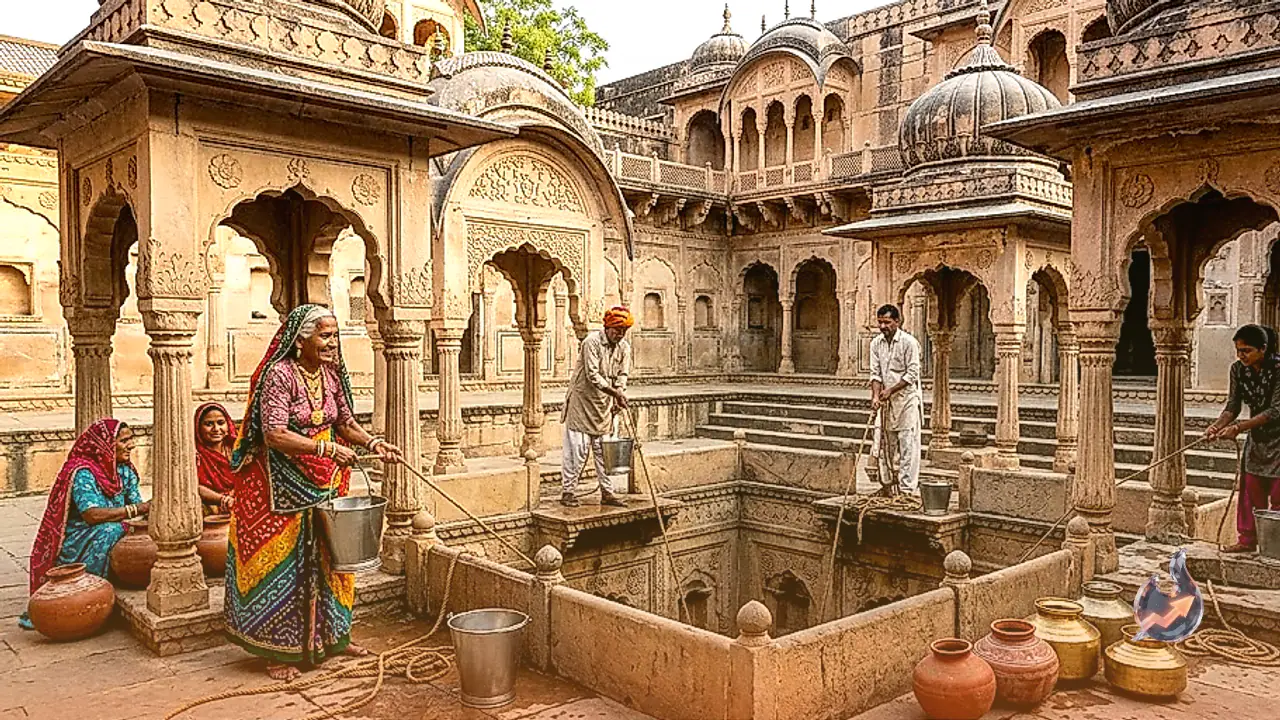

Rajasthan's Shekhawati belt is renowned worldwide for its frescoed mansions, but its rural landscape also preserves historic water harvesting structures that highlight centuries of architectural ingenuity. In Gila Ki Dhani, situated within the Bhorki gram panchayat of Jhunjhunu district's Gudhagorji area, a 250-year-old community well stands as a striking relic of this engineering heritage. Though the structure no longer holds water today, it once met the drinking and domestic requirements of three surrounding villages, and its unusual design continues to draw widespread admiration.
Settlement History Dating Back to Around 1772
According to village residents, the settlement of Gila Ki Dhani was established around the year 1772. Anticipating the critical need for drinking water in the arid terrain, local inhabitants had constructed this massive well even before the settlement fully took shape. Over the generations, the site evolved into the primary water lifeline for multiple neighboring settlements. In fact, villagers continued drawing water from this historic well until about 5 to 6 years ago, when dropping groundwater levels eventually left it completely dry.
Simultaneous Multi-Directional Water Extraction System
The defining highlight of the structure lies in its traditional mechanical water extraction system. Circular wooden pulleys, locally known as bhoon, were mounted around all four sides of the well. This arrangement allowed four people to draw water simultaneously from four different directions without interfering with one another. The distribution of water was organized with remarkable foresight: water drawn from two designated sides was reserved specifically for cattle and livestock, while the remaining two sides provided clean water for household chores and drinking.
Water extraction in those days relied on large traditional leather pouches called charas. Tied to heavy ropes and lowered deep into the well, these pouches were hauled up using bullock power. A single lift pulled up approximately 60 to 70 liters of water at a time. To ensure that animals drank comfortably without contaminating the main domestic source, dedicated water troughs and separate watering stations were built directly adjacent to the well perimeter.
Historic Restoration by a Merchant and Modern Preservation Efforts
Local lore recounts that a spell of heavy rainfall once caused severe structural damage to the upper part of the well. Recognizing its communal importance, a wealthy merchant from Gudhagorji stepped forward and financed its complete restoration. The four pulleys and sculpted architectural minarets surviving on the masonry platform continue to reflect the artistic craftsmanship of that bygone era.
As decades of weathering began to take a toll on the structure, a concerted effort was launched to prevent it from deteriorating into ruins. Under the leadership of village sarpanch Saroj Gill, roughly 5 lakh rupees was allocated from the gram panchayat fund to carry out extensive structural repairs. Furthermore, local philanthropists contributed approximately 1 lakh rupees to finance fresh paintwork and cosmetic preservation. Village elders emphasize that while the well no longer yields water, it represents their ancestors' foresight and community heritage, motivating the entire village to maintain it as a revered historical monument.