




















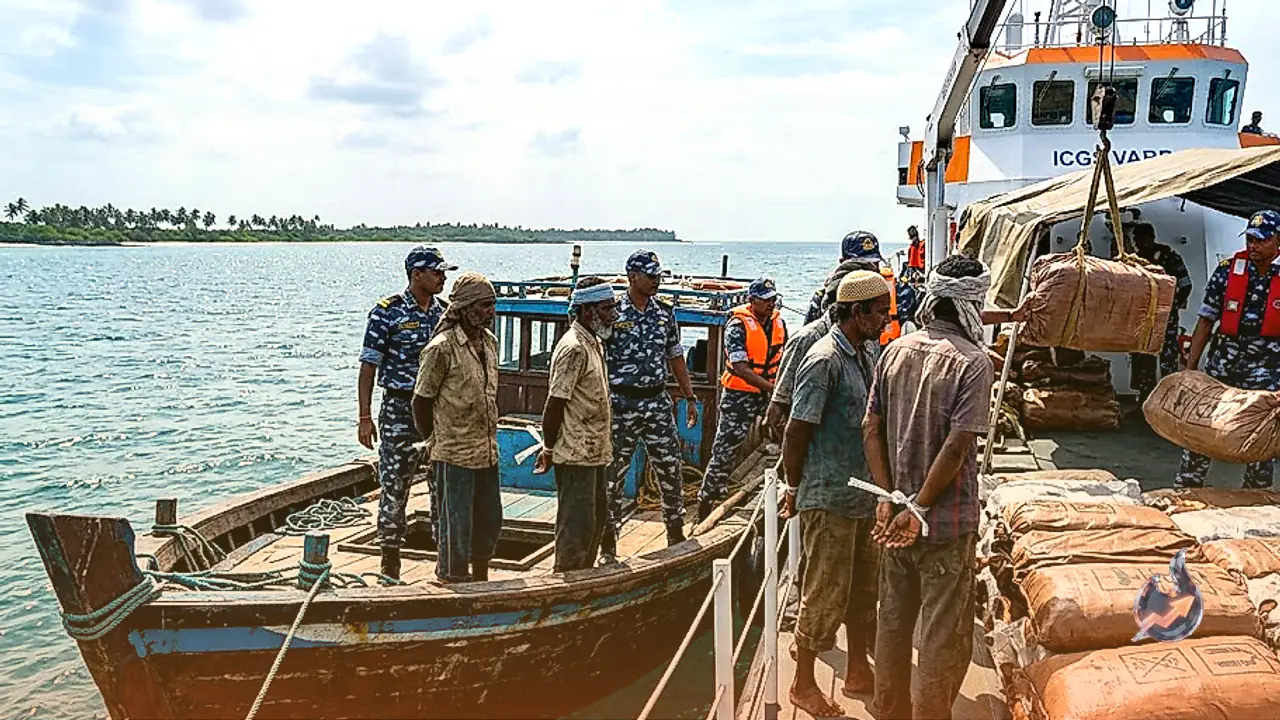

In a major high-seas counter-narcotics operation, Indian maritime security agencies intercepted a suspicious Iranian boat near the Lakshadweep archipelago, detaining five Pakistani nationals operating the vessel. A search yielded an illicit consignment of over 500 kilograms, specifically approximately 526 kilograms of high-grade contraband drugs, comprising heroin and methamphetamine. The intercepted narcotics carry an estimated international street value exceeding Rs 3,000 crore, and authorities revealed that the shipment was headed toward the coastal borders of Tamil Nadu.
Intelligence-Led Interception in the Arabian Sea
The coordinated interception was executed through a joint mission involving the Gujarat Anti-Terrorist Squad, the Indian Coast Guard, and central intelligence agencies. Acting on precise intelligence inputs regarding an active international smuggling syndicate, surveillance assets mounted a multi-layered vigil across air and maritime patrol zones. Following sustained tracking across the sea, security forces closed in on the suspect Iranian dhow on September 25, 2026, intercepting and taking tactical control of the vessel in open waters off Lakshadweep.
Contraband Headed for Coastal Tamil Nadu
A thorough inventory of the seized vessel uncovered roughly 526 kilograms of high-purity illicit substances identified as methamphetamine and heroin. Valued in excess of Rs 3,000 crore on the global illicit market, the contraband was part of an extensive international drug ring seeking to push narcotics into southern India, with Tamil Nadu designated as the delivery hub. The timely maritime interdiction successfully preempted what could have been one of the largest synthetic drug infusions into the regional distribution chain.
Custody Transfer to Mumbai Port for Multilateral Investigation
Following the deep-sea apprehension, Gujarat ATS personnel alongside Coast Guard units escorted the seized Iranian vessel, the confiscated contraband, and the five detained Pakistani crew members under heavy security cover to the Mumbai port. At the port facility, a multi-agency panel representing central and state enforcement wings has initiated joint custodial interrogation to trace the broader logistical network, mainland receivers, and the financial architecture supporting the syndicate.
Reinforced Coastal Vigilance and Zero-Tolerance Mandate
The successful operation reflects the strict zero-tolerance enforcement stance adopted under national initiatives such as the Drug-Free India campaign (Nasha Mukt Bharat Abhiyan). By integrating real-time intelligence feeds with aerial and naval assets, maritime enforcement agencies continue to maintain tight coastal surveillance across sensitive sea corridors, safeguarding maritime boundaries and preventing transnational trafficking networks from exploiting Indian waters.