


















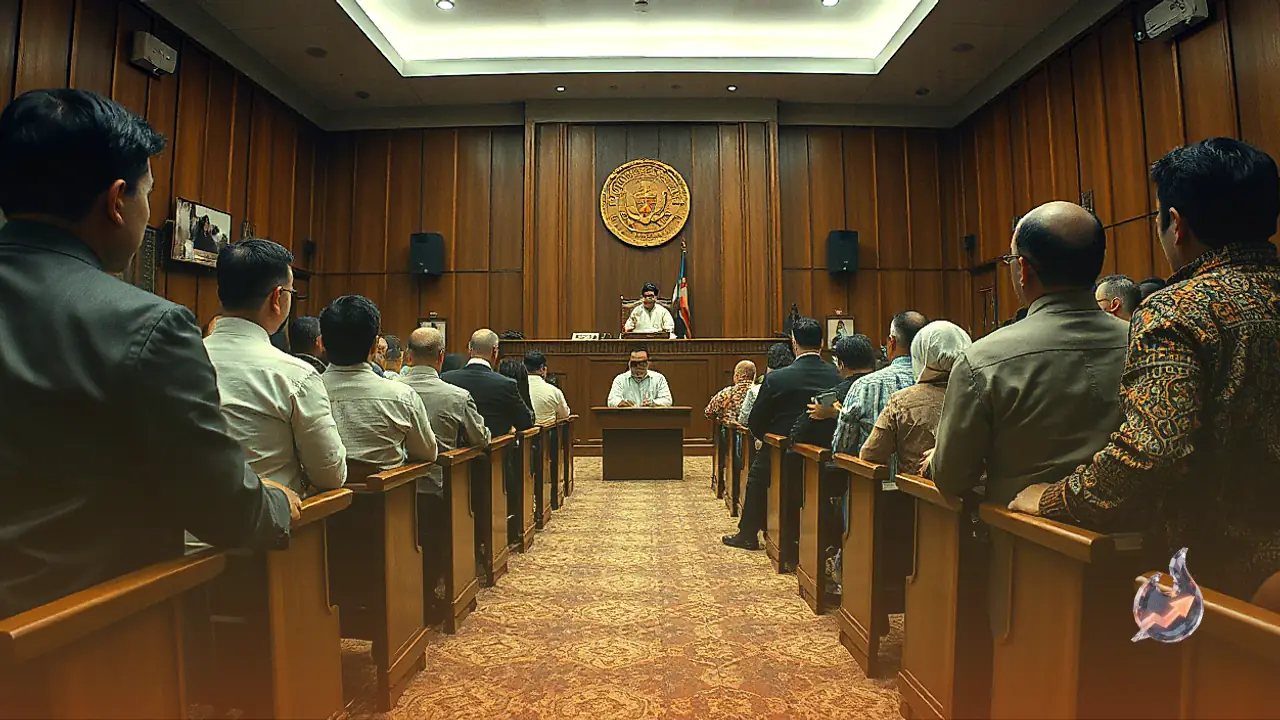

A judicial bid to mandate a rotational framework for parliamentary and assembly seats reserved for Scheduled Castes and Scheduled Tribes has met a firm refusal from the apex court. A division bench comprising Chief Justice Surya Kant and Justice Joymalya Bagchi declined to entertain a special leave petition seeking periodic rotation of reserved constituencies, maintaining that formulating electoral rules belongs strictly within the legislative realm rather than the courtroom.
Humorous Exchanges Across the Bench
As the proceedings got underway, Chief Justice Surya Kant greeted the petitioner's counsel with a witty observation, noting that the litigant had approached the wrong venue. Remarking in a lighthearted manner on the prevailing public climate, the Chief Justice pointed out that demonstrations and sloganeering are common across the country right now, suggesting the litigant could easily choose that path to press the cause.
The petitioner's lawyer responded with self-deprecating wit, stating that he held no appetite for protests and had a sore throat that prevented him from shouting slogans anyway. Chief Justice Surya Kant humorously replied that he could still raise his concerns before elected representatives and inform them that the hour has arrived for lawmakers to address the matter. The humorous dialogue underscored the court's core perspective: systemic changes to constituency reservations must come through political and statutory reform, not judicial decrees.
The Long-Standing Battle Over Kadipur Constituency
The legal challenge originated from Jagdish Singh, a voter registered in Uttar Pradesh's Sultanpur district within the 191-Kadipur legislative assembly segment. Singh approached the top court challenging an earlier verdict by the high court, presenting grievance over the historical status of his local seat. According to the petition, Kadipur has remained uninterruptedly reserved for Scheduled Caste candidates ever since the inaugural general elections of 1952.
The litigant argued that maintaining the seat under reserved status for over seven decades had created political stagnation, asserting that only three to five dominant families repeatedly secured electoral tickets. The plea contended that this protracted reservation severely narrowed candidate options for voters and deprived general aspirants of democratic participation, thereby infringing upon fundamental guarantees enshrined in Articles 14, 15, and 19 of the Constitution.
Local Body Rules Distinct From Parliamentary Mandates
To support the prayer for periodic reshuffling, counsel cited Articles 243D and 243T of the Constitution. These clauses explicitly establish a rotational quota mechanism across village panchayats and municipal bodies. The lawyer argued that the democratic logic applied at the grass-roots local governance level should naturally extend to state legislatures and parliament.
Justice Joymalya Bagchi firmly rejected this comparison, clarifying that the constitutional structure for municipal and panchayat institutions stands entirely separate from the constitutional design governing legislative assemblies and parliament. The bench explained that judges cannot rewrite constitutional clauses to graft in novel mechanisms such as mandatory seat rotation. Justice Bagchi underscored that the judiciary cannot function as a third chamber of parliament. The bench noted that courts assess legislation strictly for overt arbitrariness, and a policy cannot be struck down merely because an alternative arrangement might seem desirable.
Voter Franchise and Democratic Options
Addressing the petitioner's rights arguments, Justice Bagchi highlighted that having a reserved seat does not extinguish an elector's core right to vote. While the pool of contenders might be restricted to specific categories, the democratic franchise of local residents remains fully intact.
The judge pushed back against the assumption that electorate majorities vote purely along caste or community affiliations. In a competitive multi-party system, citizens routinely evaluate party platforms, developmental records, and differing political ideologies when choosing their representative, making it improper for courts to speculate on voter motivations. Furthermore, the bench pointed out that while an aspiring candidate from the general category cannot contest from that specific constituency, their right to run for public office remains intact in other open, unreserved constituencies nationwide.
Delimitation Act and Final Disposal
The challenge also targeted Section 9(1)(c) of the Delimitation Act, with the petitioner relying upon recommendations from the 2008 Delimitation Commission report that had favored exploring a rotational formula for reserved segments.
The Supreme Court clarified that commission guidelines served specific periodic redistribution exercises and did not create an enforceable continuous obligation to reshuffle reserved seats. Emphasizing that modifying constituency allocation rules lies exclusively with parliament and statutory commissions, the bench upheld the high court's stance and dismissed the appeal. It granted the petitioner complete liberty to lobby parliamentary representatives and pursue statutory amendments aligned with earlier Delimitation Commission observations.