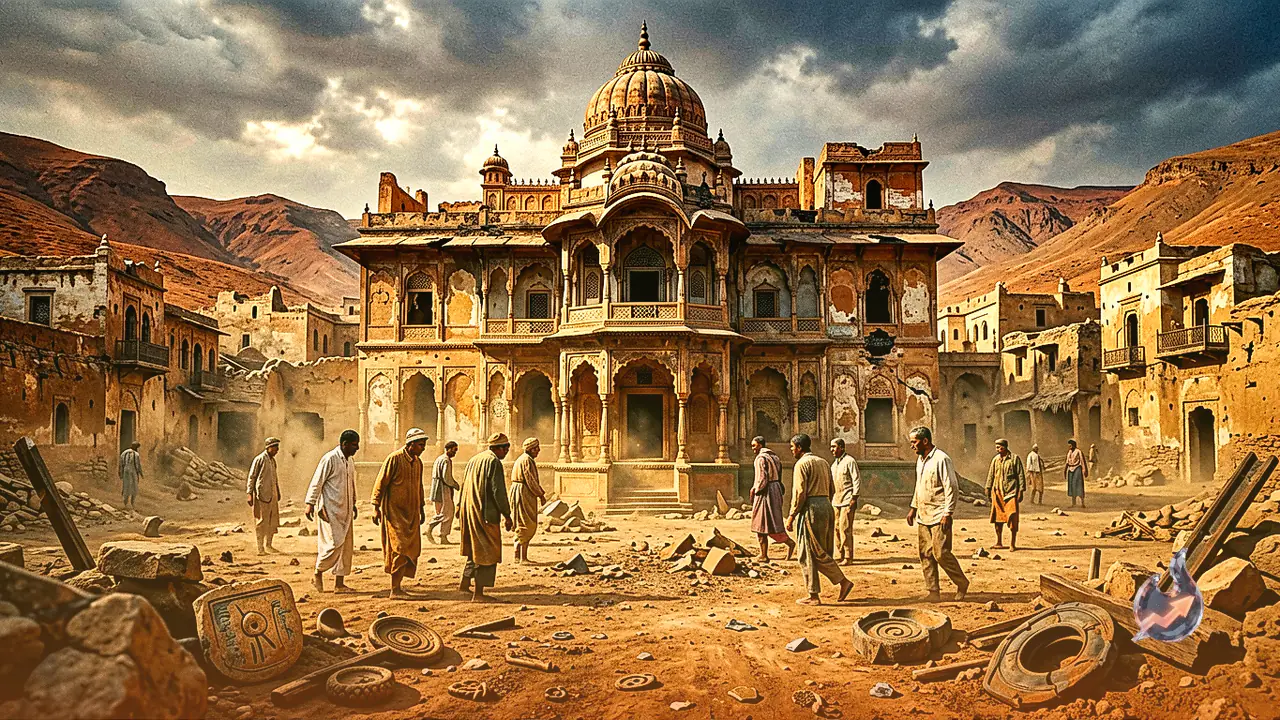




















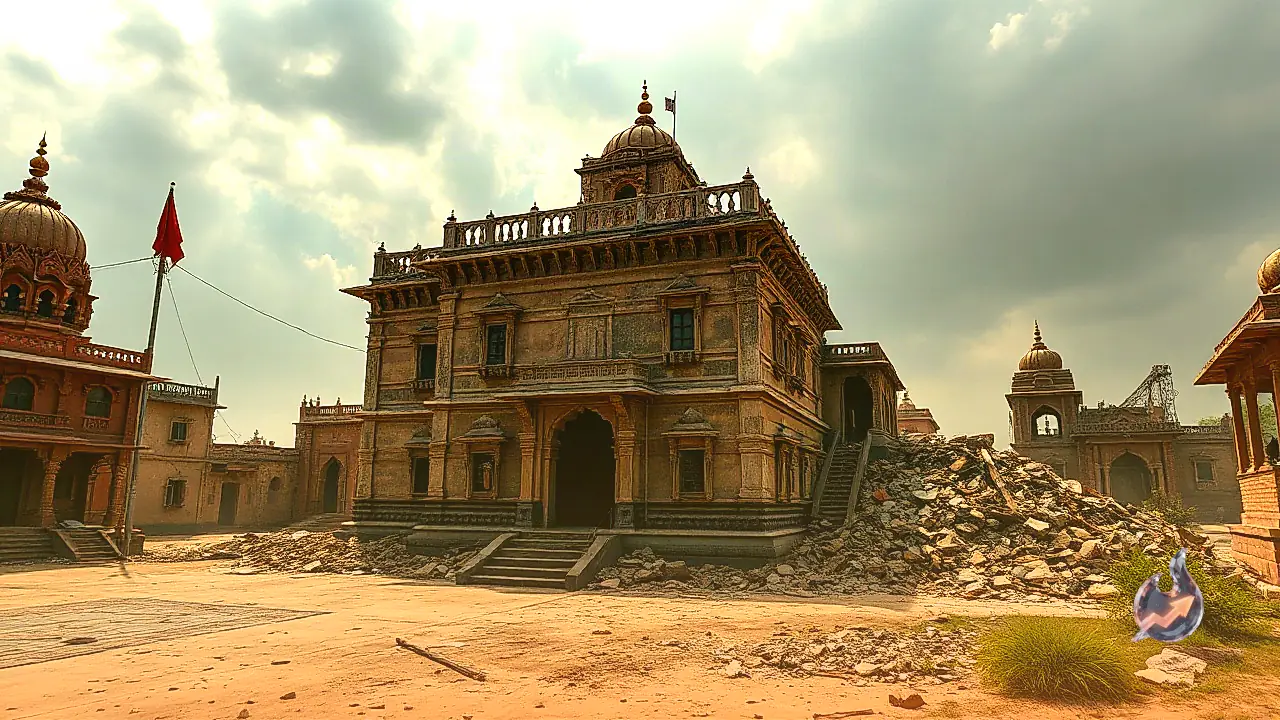

Concerns regarding the religious freedom of minorities and the protection of their ancient heritage sites in Pakistan have resurfaced following a distressing incident. A historic Hindu temple, standing for over a hundred years in Pakistan's Punjab province, has been reduced to rubble. The sudden emergence of this sensational case has sparked widespread anger and panic among the local Hindu community and various minority leaders. While local residents and community members allege that the temple was deliberately demolished under a calculated conspiracy to facilitate the expansion of a neighboring madrasa, Pakistani administrative officials have completely distanced themselves from the incident, attributing the destruction to heavy downpours and natural calamity.
Location of the Temple in Pakistan
The incident took place in Siraj village, situated in the Narowal district of Pakistan's Punjab province, approximately 130 kilometers away from Lahore. A historic Hindu temple, dating back 100 to 125 years, stood at this location, spread across a land area of about 1,000 square meters. According to reports from the news agency PTI, this ancient temple was suddenly brought down on August 21st. Local residents, political parties, and minority bodies allege that a group of extremists launched a planned attack using heavy weapons or bulldozers to destroy the structure, driven by the intent to absorb the valuable temple land into an adjoining operating madrasa.
Allegations Against Tehreek-e-Labbaik Pakistan
Minority leaders and local inhabitants stated that the individuals responsible for tearing down the temple were linked to the radical religious-political organization Tehreek-e-Labbaik Pakistan (TLP). It has been alleged that this group first damaged the framework of the temple and subsequently demolished it completely with the intention of seizing the land. Furthermore, valuable metal items, शिखर fittings, and old bricks were reportedly removed from the debris following the incident, indicating that this was not merely an accident but a planned loot and act of destruction.
The Administration's Peculiar Defense
As news of the temple's demolition spread, mounting pressure from media and minority organizations prompted the Pakistani administration to issue clarifications. Rana Iftikhar, a senior official of the Evacuee Trust Property Board (ETPB), categorically dismissed the claims that the temple was deliberately broken down. Rana Iftikhar stated that while the temple lacked a specific name in their official record books, it was indeed very old, approximately 100 to 125 years of age. He claimed that the temple was not demolished by anyone, but rather collapsed on its own due to heavy torrential rain in the area. Although the official acknowledged that land adjacent to the temple had been leased out for a religious madrasa, he maintained that the temple's own land was never leased to anyone. He added that higher officials of the ETPB would decide whether to reconstruct or renovate the collapsed structure.
Outrage Among Minority Leaders and Demands for Action
Minority leaders expressed strong objections to the administration's hesitant attitude and the weather-related excuse. Aslam Parvez Sahotra, president of the Pakistan Masiha Millat Party (PMMP), met with the additional home secretary of Punjab province and submitted a formal written application demanding strict action. Aslam Parvez Sahotra explained that the land adjoining the temple had previously been leased by the ETPB for a madrasa, but the lease was later cancelled due to years of unpaid rent. Despite the cancellation of the lease, several individuals maintained illegal occupation of the site. With the administration and the ETPB failing to remove those illegal encroachers, the temple was ultimately sacrificed. Sahotra demanded that the government immediately arrest the culprits, take stern action against officials who failed to protect the temple, and rebuild the structure without delay.
Fear and Terror Among the Hindu Community
Ratan Lal, a leader of Pakistan's Hindu community, strongly condemned the demolition of the temple and appealed to the government to restore the historic site to its original form. Expressing his anguish, Ratan Lal stated that the incident occurred due to the failure of the district administration and the ETPB, as they could neither protect the temple nor remove the illegal occupants, resulting in the complete erasure of the site. Highlighting the terrifying reality faced by Hindus living in Pakistan, he added that a madrasa continues to operate at the location, and the situation remains so dangerous that members of the Hindu community are now afraid to even visit the spot.
Questions Raised Over Minority Existence in Pakistan
Attacks, illegal occupations, and forced land grabs targeting Hindu temples are not new occurrences in Pakistan. At the time of partition, hundreds of historic and magnificent Hindu temples existed in the country, the majority of which have been destroyed over time due to neglect, illegal seizures, or the whims of extremists. The Narowal incident once again proves that the Pakistani government and its agencies are failing entirely to protect minorities and their religious sites. Reducing a century-old history to rubble under the guise of rain exposes Pakistan's duplicitous stance at diplomatic and administrative levels. It remains to be seen whether international pressure will compel the Pakistani government to reconstruct the temple or if the matter will remain unresolved.