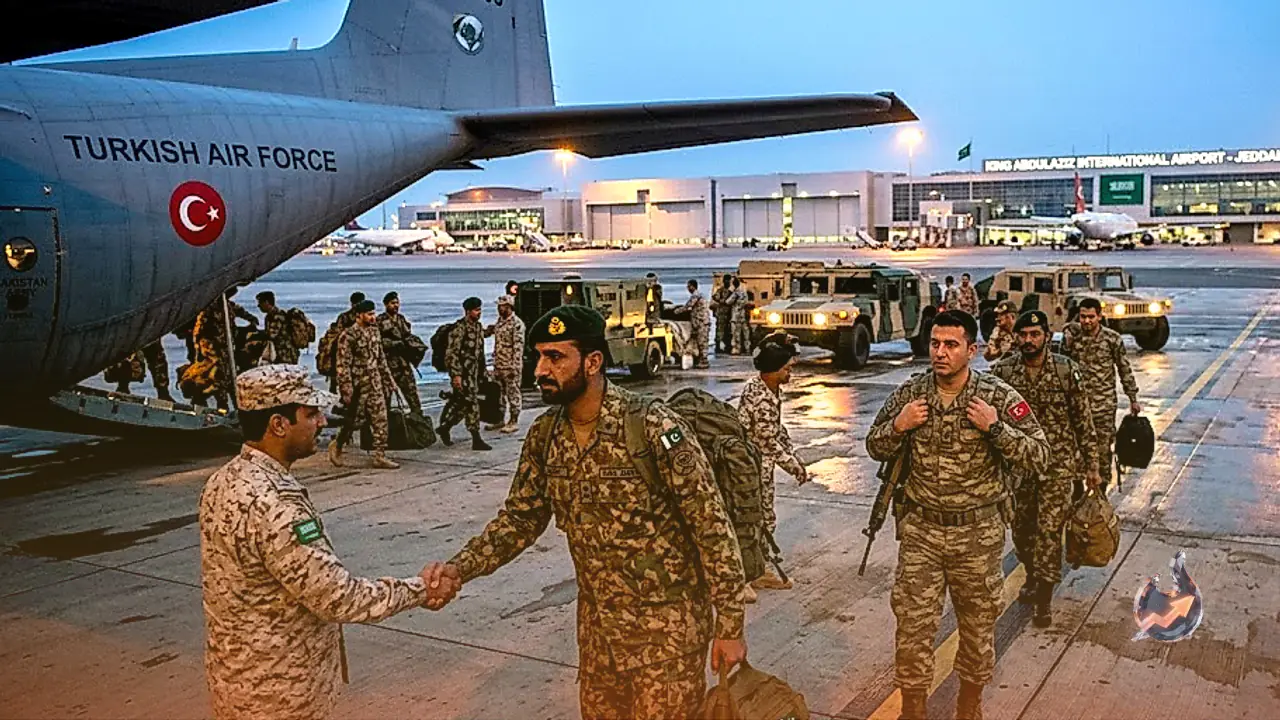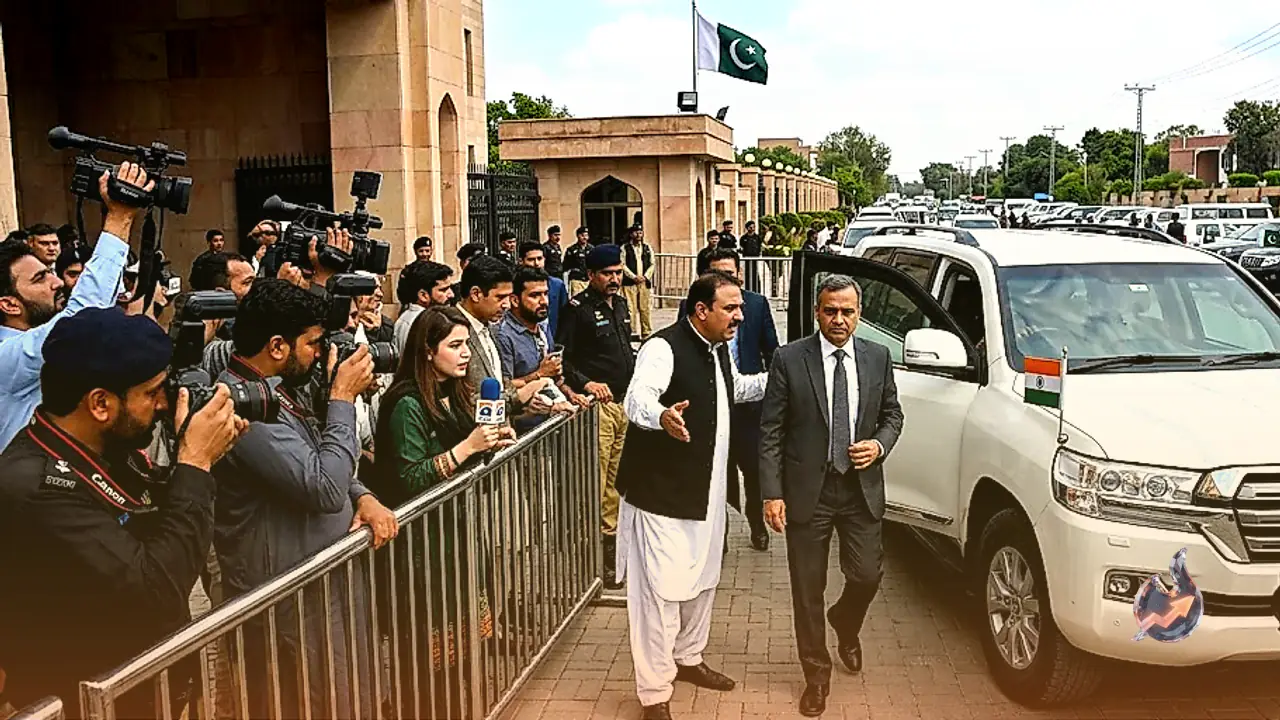























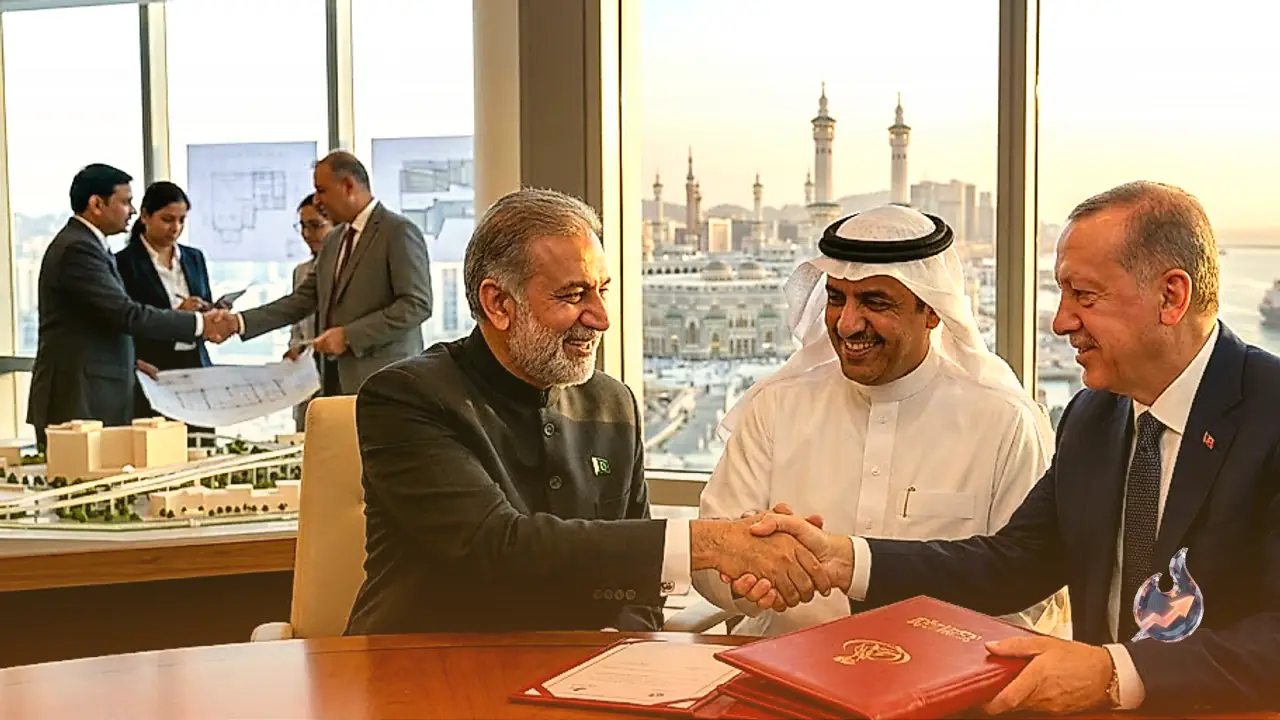

A permanent axiom of international diplomacy dictates that no sovereign nation spills the blood of its forces for another unless its own vital strategic and economic interests are directly at stake. Guided by this geopolitical reality, representatives from Pakistan, Saudi Arabia, and Turkey assembled in Mecca on 7 August 2026 to sign a landmark security pact designated as the Mecca Joint Defence Agreement. The most prominent and widely discussed clause of this accord establishes that an armed attack against any one of the three signatory nations shall be deemed an attack against all three. Turkish Foreign Minister Hakan Fidan explicitly compared this mutual defence commitment to NATO's famous 'Article 5', characterizing it as a cornerstone for regional stability. Nevertheless, military analysts emphasize that this agreement functions primarily as a psychological and diplomatic shield for Pakistan rather than a guaranteed commitment of battlefield intervention.
Core Framework of the Mecca Pact and NATO Article 5 Comparison
The signing of this tripartite agreement in Mecca has sparked extensive global analysis. Turkish Foreign Minister Hakan Fidan's comparison of the pact to NATO's 'Article 5' created an impression that all three countries now operate under a unified defence umbrella. However, defence experts point out a fundamental distinction between a theoretical security pact and a fully operational military alliance. While the treaty provides Islamabad with political confidence that it will not stand isolated on international platforms during a major crisis, assuming that Saudi Arabia and Turkey would immediately deploy their armed forces against India during a regional escalation represents a major strategic miscalculation.
Operation Sindoor 2.0 and the Absence of Operational Guidelines
In a potential future scenario involving an 'Operation Sindoor 2.0', wherein India conducts targeted military strikes against terrorist infrastructure inside Pakistan, a critical legal and operational question arises: Would Riyadh and Ankara classify such action as an 'armed attack' triggering mandatory military intervention against India? Currently, no detailed operational guidelines have been publicly established to govern such India-Pakistan contingencies under the Mecca framework. Without clear operational mechanics, declaring war based solely on abstract treaty clauses remains unfeasible for any sovereign nation.
The Escalation Ladder and Diplomatic Priorities
Faced with a regional security crisis, influential nations like Saudi Arabia and Turkey are bound to follow a structured ladder of escalation rather than rushing troops to the frontline. The initial and preferred stage involves mounting intense diplomatic pressure, offering international mediation, and advocating for an immediate ceasefire. The second tier could involve providing back-channel non-lethal support, financial assistance, military hardware, or technical cooperation to Pakistan. Direct military deployment of ground, naval, or air forces represents the final, most complex, and highest-risk option. Therefore, the collective defense clause does not automatically translate into immediate military involvement by all three nations.
Four Practical Strategic Advantages for Pakistan
Even in the absence of foreign boots on the ground, the Mecca Joint Defence Agreement delivers four highly practical and long-term strategic advantages for Pakistan
- Psychological and Diplomatic Leverage: During any military or diplomatic standoff with India, Pakistan can project to the international community that it enjoys the backing of major regional powers like Saudi Arabia and Turkey. This perception enhances Pakistan's bargaining position during post-conflict negotiations or ceasefire talks.
- Military and Technical Cooperation: Turkey and Pakistan already maintain a robust defense industrial and training partnership. Following Ankara's pro-Pakistan stance during 'Operation Sindoor' in May 2025, this new agreement paves the way for enhanced delivery of advanced Turkish drones, modern military technology, equipment, and specialized training.
- Western Border (Afghanistan) Security: Pakistan has long contended with severe security challenges along its western border with Afghanistan. Establishing intelligence sharing mechanisms with Turkey regarding Afghan developments provides crucial support for Pakistan's border management.
- Balochistan and Internal Security Management: Countering separatist violence and internal instability in Balochistan requires advanced intelligence gathering, real-time surveillance tech, and drone operator training. This assistance becomes particularly vital when Pakistan faces simultaneous dual-front security pressures on its eastern border with India and western border with Afghanistan.
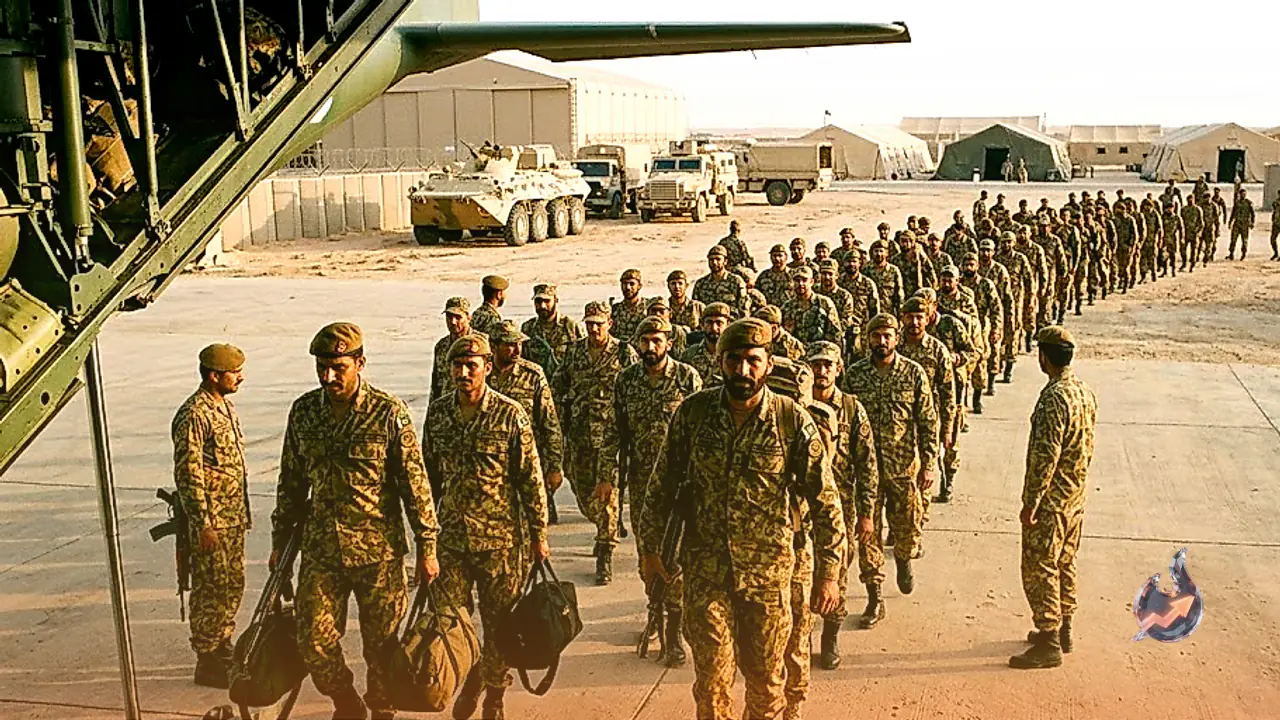
It remains crucial to distinguish between providing intelligence or drone technology and actively sending combat troops into conflict against India, Afghanistan, or Baloch insurgent groups.
Turkey's Economic Calculus: Defense Friendship Versus the Indian Market
Regardless of the historical ties between Turkey and Pakistan, Ankara maintains extensive economic interests in India that cannot be easily set aside. Official figures for FY 2025-26 indicate that bilateral trade between India and Turkey reached $6.88 billion, comprising $4.54 billion in Indian exports and $3.78 billion in imports. Following Turkey's pro-Pakistan political stance during 'Operation Sindoor' in 2025, Indian public sentiment triggered widespread calls to boycott Turkish products and tourism. Industry data from MakeMyTrip revealed sharp drops and massive cancellations in travel bookings for Turkey and Azerbaijan during that period. Consequently, leadership in Ankara must evaluate whether jeopardizing its multi-billion dollar trade relationship with India's rapidly growing economy serves its long-term national interest.
Saudi Arabia's Equation: $43 Billion Trade and Indian Energy Dependence
For Saudi Arabia, the strategic and economic stakes connected to India are even more substantial. In FY 2023-24, India imported $31.42 billion worth of goods from Saudi Arabia while exporting $11.56 billion, bringing total bilateral trade to approximately $43 billion. India relies heavily on Saudi Arabia for crude oil, LPG, fertilizers, and petrochemical products. Official data from India's Ministry of External Affairs (MEA) noted that Saudi Arabia served as India's third-largest crude oil supplier in FY 2023-24. Although Saudi Arabia and Pakistan signed a Strategic Mutual Defense Agreement in 2025 and share deep diplomatic history, Riyadh views India as an indispensable hub for energy exports, foreign investment, and trade. While issuing political statements in support of Pakistan is manageable for Riyadh, risking its $43 billion economic and energy relationship with India to engage in direct warfare remains virtually improbable.
Ground Realities and Practical Limits of a 'Muslim NATO'
Framing the Mecca Joint Defence Agreement as a 'Muslim NATO' makes for compelling diplomatic rhetoric, but vast structural differences separate NATO from this new tripartite arrangement. NATO benefits from a integrated command structure, permanent military bases, and refined operational procedures built over decades, whereas the Mecca pact lacks such operational infrastructure. Ultimately, both Saudi Arabia and Turkey recognize that sacrificing their extensive trade, economic, and energy partnerships with India for Pakistan's security disputes would directly contradict their own core national interests.