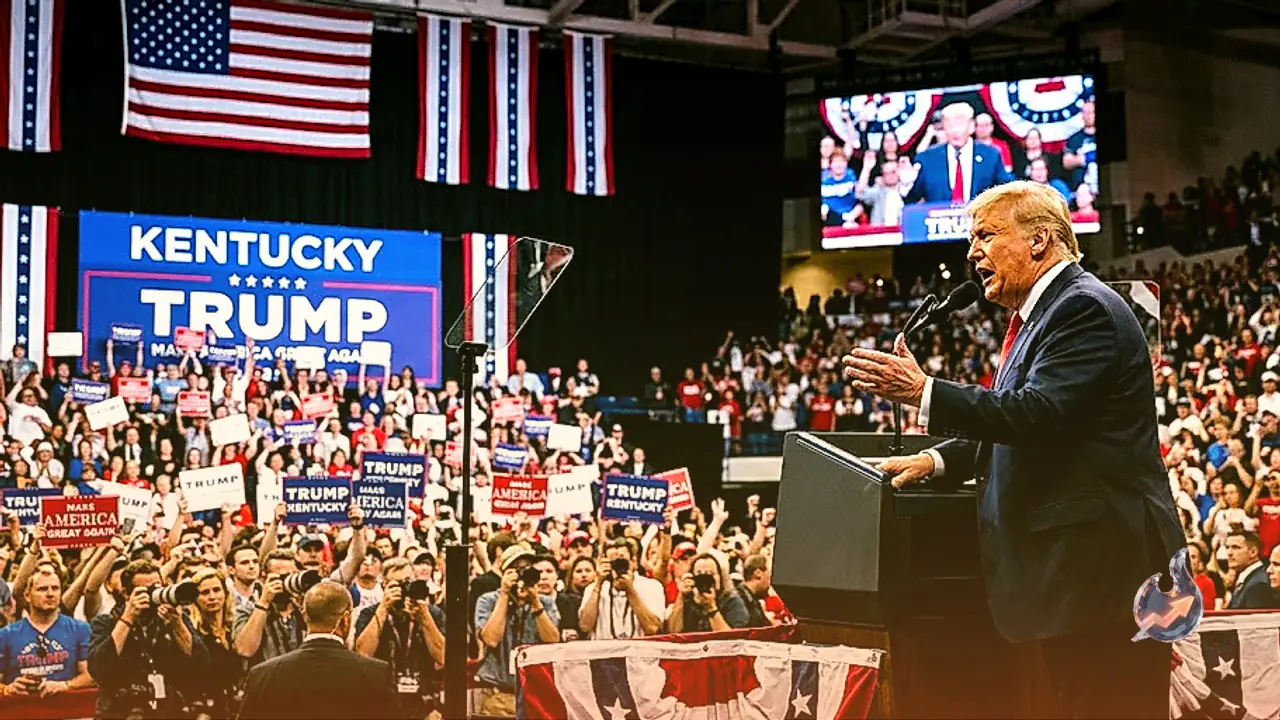

Donald Trump rallied supporters in Highland Heights, Kentucky, campaigning on behalf of Republican candidates while presenting an assertive vision of executive governance in a second presidential term. Addressing the gathering, Trump declared his ability to execute actions that many would consider unbelievable, using the platform to energize the conservative base ahead of critical midterm elections. His address ranged across diverse topics, touching on geographic naming conventions, federal authority, and predictions of plunging fuel prices across the country.
The High Stakes of Congressional Control
The political gathering unfolded against the backdrop of an intense national battle to decide control of both chambers of the United States Congress. Despite concerns voiced behind closed doors by some Republican strategists regarding the campaign narrative, Trump has remained the central figure of the party message. A victory by the Democratic Party in the House or Senate could clear the path for rigorous oversight and congressional inquiries into administration policies. Meanwhile, the political climate remains heavily influenced by public discontent over import tariffs, consumer inflation, and the ongoing armed conflict with Iran.
Claims of Authority and Dominance Over Tech Giants
In Kentucky, Trump campaigned for various Republican contenders, placing special emphasis on Ed Gallrein, who is running for a seat in the US House of Representatives. During his remarks, Trump revisited his recent directive regarding regional terminology, reiterating that federal agencies would now designate the Gulf of Mexico as the Gulf of America. He framed this relabeling as concrete evidence of expanded presidential command during his current tenure.
Drawing a sharp contrast between his previous administration and his current time in office, Trump argued that his leverage over massive corporations has fundamentally transformed. He stated, "I dont think I could have done this in my first term. This is a much more powerful term." Expanding on his dynamic with corporate powerhouses, he added, "Google wouldnt have taken my call in the first. Now, they kiss my ass."
Territorial Renaming and Governance Debates
Continuing with the theme of altering geographic nomenclature, Trump claimed authority over international waters, asserting that he had ordered changes to Canadian landmarks. He remarked, "Well, I also changed the name of a lake in Canada to the Lake America," referencing Lake Ontario in his speech. He characterized these unilateral actions as demonstrations of decisive executive authority under his leadership.
These sweeping declarations of personal power have emerged at a time when policy analysts and opponents are questioning the manner in which executive power is being exercised. Federal tariffs and military involvement in Iran have faced scrutiny as key contributors to higher retail prices. Furthermore, an increasing segment of the electorate has expressed skepticism, perceiving certain administrative actions as advancing individual interests rather than broader national priorities.
Controversial Appointments and Executive Actions
A series of high-profile decisions made during this presidential term have generated intense debate across the country. Trump selected his personal legal counsel for nomination as the attorney general of the United States. On the defense front, he directed armed military strikes targeting vessels suspected of involvement in illicit narcotics trafficking. Additionally, administrative initiatives have sought to place the Trump name on the historic Kennedy Center, alongside broader accusations regarding personal and family enrichment while serving in the nation's highest office.
Energy Forecasts and the Iran Conflict
Turning his focus to economic and foreign affairs, Trump addressed consumer energy burdens and military entanglements overseas. He told the audience that the conflict involving Iran would conclude in the near future. This assertion comes after multiple similar predictions delivered throughout the armed confrontation, which has now lasted nearly eight months. On domestic energy, he promised that automotive gasoline prices would fall beneath prior benchmark levels, a pledge that drew enthusiastic cheers from the crowd.
Direct Cash Payments and Local Economic Incentives
Trump also reiterated a sweeping economic proposal made contingent upon a decisive Republican victory in the congressional midterms. He claimed that if his party secures majorities in both the House of Representatives and the Senate, every adult American citizen would receive a payment of USD 5,000. Implementing such a widespread payout would demand official approval from Congress and carry an estimated fiscal cost exceeding USD 1 trillion. Such an expenditure would place significant additional pressure on the United States annual budget deficit, which currently stands near USD 1.8 trillion.
To appeal directly to local voters at the Saturday rally, Trump offered another geographically specific campaign promise. He stated that a Republican triumph in the midterm elections would prompt the Department of Defense to invest directly in revitalizing a pharmaceutical manufacturing plant located in Kentucky. The delivery of this federal funding was explicitly tied to election outcomes, exemplifying his strategy of blending executive promises with party electoral fortunes.