
























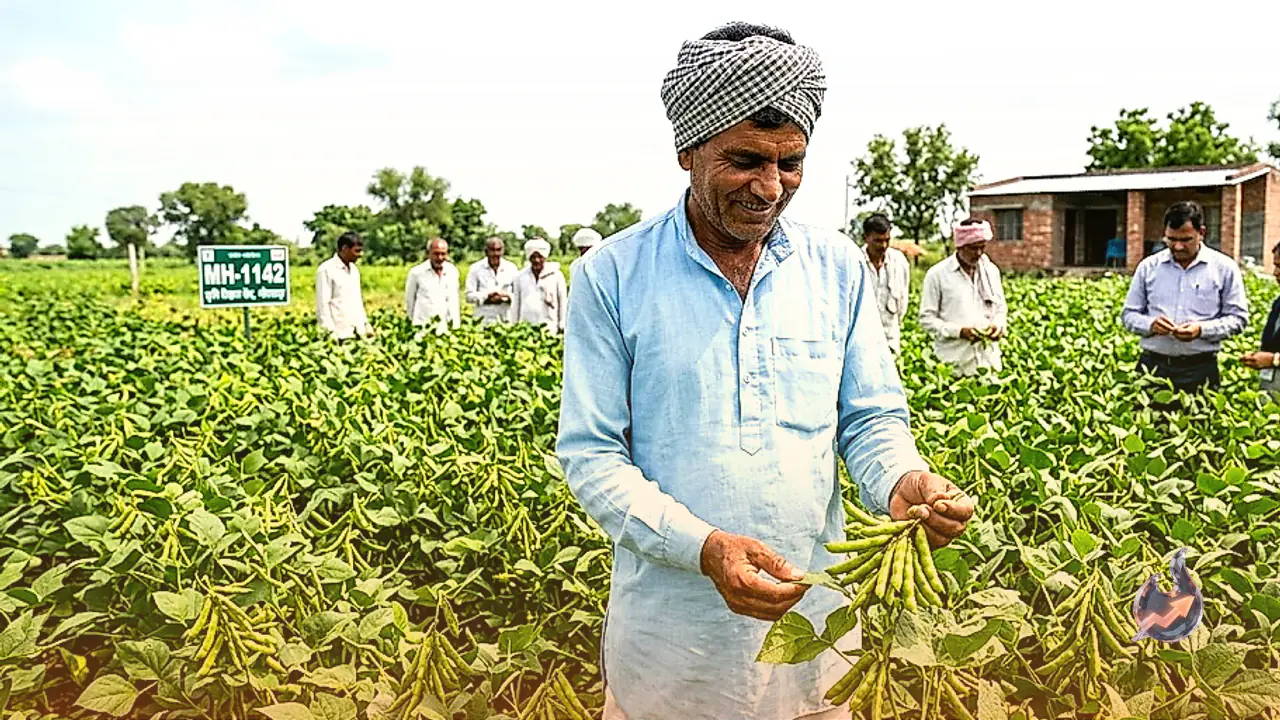

The Krishi Vigyan Kendra in Bhilwara organized a specialized Field Day focusing on the cultivation of mung bean crops in Pondras village under the Suwana Panchayat Samiti. The primary objective of this initiative was to educate local farmers about cutting-edge agricultural methodologies and foster self-reliance in farming operations. During the session, farmers were introduced to the superior qualities of the advanced MH-1142 mung bean variety through practical demonstrations. As part of the 'Self-Reliance in Pulses Mission' aimed at boosting domestic pulse production, demonstration plots were established across the fields of 37 selected farmers in the village. Each participating farmer was provided with 6 kilograms of high-quality seeds along with necessary bio-fertilizers and eco-friendly pesticides to facilitate optimal planting conditions.
Key Advantages and Features of the MH-1142 Variety
Highlighting the benefits of this advanced variety, Dr. C. M. Yadav, Senior Scientist and Head of the Krishi Vigyan Kendra, explained that the MH-1142 variety possesses a significantly higher production potential compared to other conventional crop varieties. One of the most critical characteristics of this variety is its short maturity duration. By maturing early, this crop allows farmers to harvest quickly and prepare their land in a timely manner for the sowing of subsequent crops without facing seasonal delays. Furthermore, the MH-1142 variety has shown remarkable resilience against the devastating Yellow Mosaic Virus, which frequently damages pulse crops. This built-in resistance ensures crop safety and reduces the need for expensive chemical interventions, making it a highly reliable option for maximizing agricultural output.
Fostering Self-Reliance in Seed Production
The program placed a strong emphasis on empowering farmers to produce high-quality seeds on their own. By learning scientific seed-saving techniques, local growers can transition from being mere buyers to self-sufficient seed producers. This approach not only secures high-grade seeds for their personal use but also enables them to supply premium seeds to fellow farmers in nearby villages, creating a localized seed-supply network. The experts urged the agricultural community to adopt practices that simultaneously reduce cultivation costs and boost yields. To achieve this, Dr. Yadav recommended essential agronomic strategies, including mandatory seed treatment before sowing, the selection of certified high-yielding varieties, the balanced application of fertilizers based on soil health cards, and the strict implementation of proper crop rotation cycles.
Transition to Natural Farming and Projected Crop Yield
In addition to standard crop management, farmers were given practical training in sustainable natural farming practices to reduce reliance on chemical inputs. Dr. Yadav detailed the preparation methods and application protocols for homemade organic inputs, such as Bijamrit, Jeevamrit, Ghan Jeevamrit, and Neemastra, which serve as natural soil conditioners and pest repellents. Given the declining water table, the scientists strongly encouraged farmers to opt for low-water-consuming crops like pulses. Based on the current growth patterns in the demonstration fields, the Krishi Vigyan Kendra expects a highly successful harvest. Scientists project that the MH-1142 crop fields will deliver a bumper yield ranging from 16 to 18 quintals per hectare, which could significantly enhance the profit margins of the local farmers.


