






















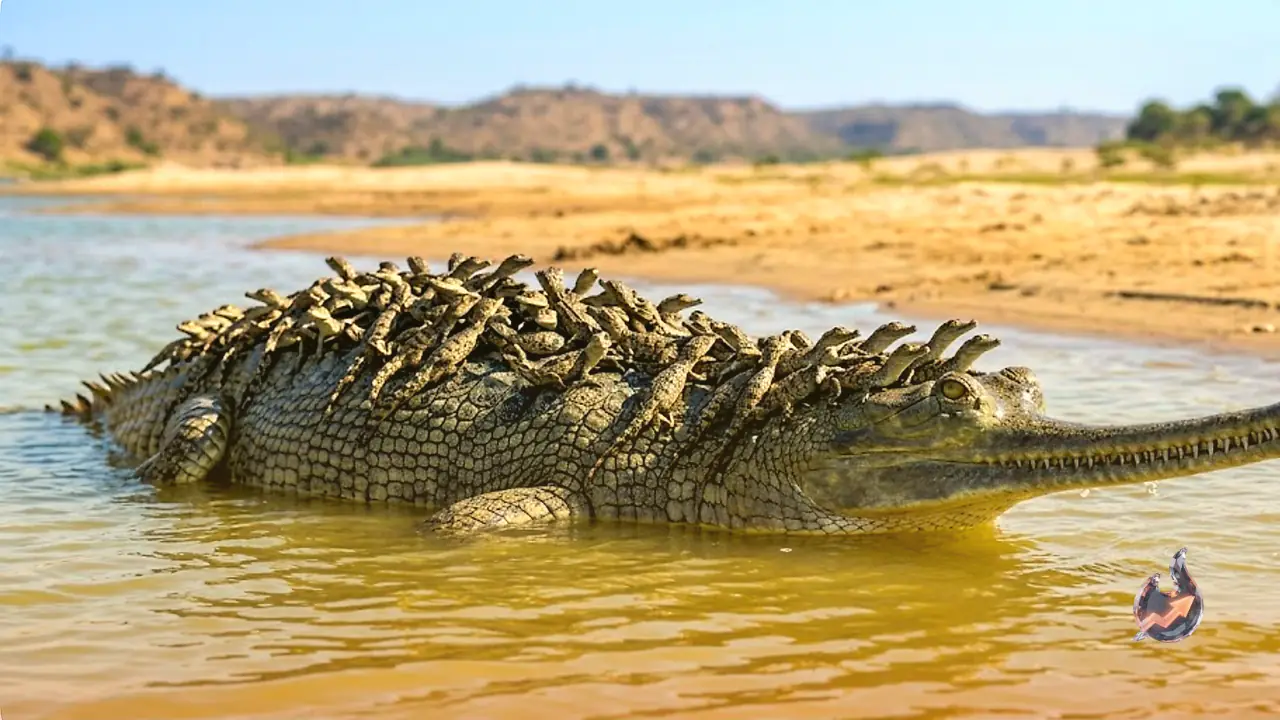

The Chambal River, which flows through the Dholpur district of Rajasthan, was once notorious for being a safe haven for dacoits and outlaws. Today, however, it has completely transformed into a breathtaking sanctuary showcasing the immense success of wildlife conservation. The riverbanks are currently buzzing with life, resembling a vibrant natural festival. Thousands of tiny gharial hatchlings have emerged safely from their eggs and can be seen playfully splashing around in the water with their mothers. The heartwarming sight of these delicate babies attempting their very first swims and hitching rides on their mothers' snouts and backs has captivated wildlife enthusiasts and travelers across the globe. This rare spectacle stands as a testament to the remarkable ecological restoration of the Chambal River ecosystem.
An Extraordinary Display of Community Parenting
Among the most fascinating and emotional observations recorded in the Chambal Wildlife Sanctuary is the unique cooperative behavior of the female gharials. These mothers do not just look after their own biological offspring; they show equal dedication in protecting and nurturing hatchlings belonging to other gharials in the river. Across various stretches of the river, a single female gharial can often be seen carrying dozens of small hatchlings piled onto her massive back, guiding them from one riverbank to another safe location. Because these tiny gharials are still too young to swim against the strong, treacherous river currents, their mothers' backs serve as a crucial shield. The mothers are also slowly teaching them essential survival skills, including how to swim and hunt for food. Consequently, during these initial weeks of life, the babies stay securely close to their maternal guardians.
Record Hatching Across Protected Nesting Sites in Dholpur
According to official data released by the Forest Department, the annual nesting and hatching season of gharials in the Dholpur region has entered its final phase. This year, various monitored nesting locations recorded a highly successful and historic hatch, with over 2,000 gharial babies emerging safely. This successful population boom in the National Chambal Sanctuary is the result of relentless, round-the-clock efforts by forest department teams over the past several months. The teams maintained a continuous vigil to protect the delicate nesting sites from potential threats like wild boars, wandering cattle, jackals, and illegal sand mining operators.
DFO Ashish Vyas on the Milestone Achievement
Detailing the intensive conservation operation, District Forest Officer (DFO) Ashish Vyas stated that highly sensitive nesting zones within the Rajasthan border, including Andwa Puraini, Kathumra, Basai Dang, and Shankarpura, had been specifically earmarked for protection. Female gharials had laid their eggs in massive numbers at these locations. DFO Ashish Vyas explained that the natural 'Mother Calling' process went off smoothly, enabling the babies to hatch safely. 'Mother Calling' is a fascinating natural phenomenon where the mother gharial hears the vocalizations of the babies from inside the buried eggs and digs them out of the sand. This successful hatching cycle is being hailed as a milestone for the Chambal conservation project.
The Ultimate Indicator of a Clean and Healthy River
Ecology experts point out that gharials are highly sensitive creatures and serve as the ultimate biological indicators of a freshwater river's health. The massive number of births and the high survival rate of hatchlings in Chambal clearly prove that the river's water and immediate surroundings are clean, unpolluted, and highly favorable for aquatic life. Forest department personnel continue to patrol the riverbanks diligently to monitor the young hatchlings until they grow large enough to defend themselves, promising an even larger gharial population in the years to come.