

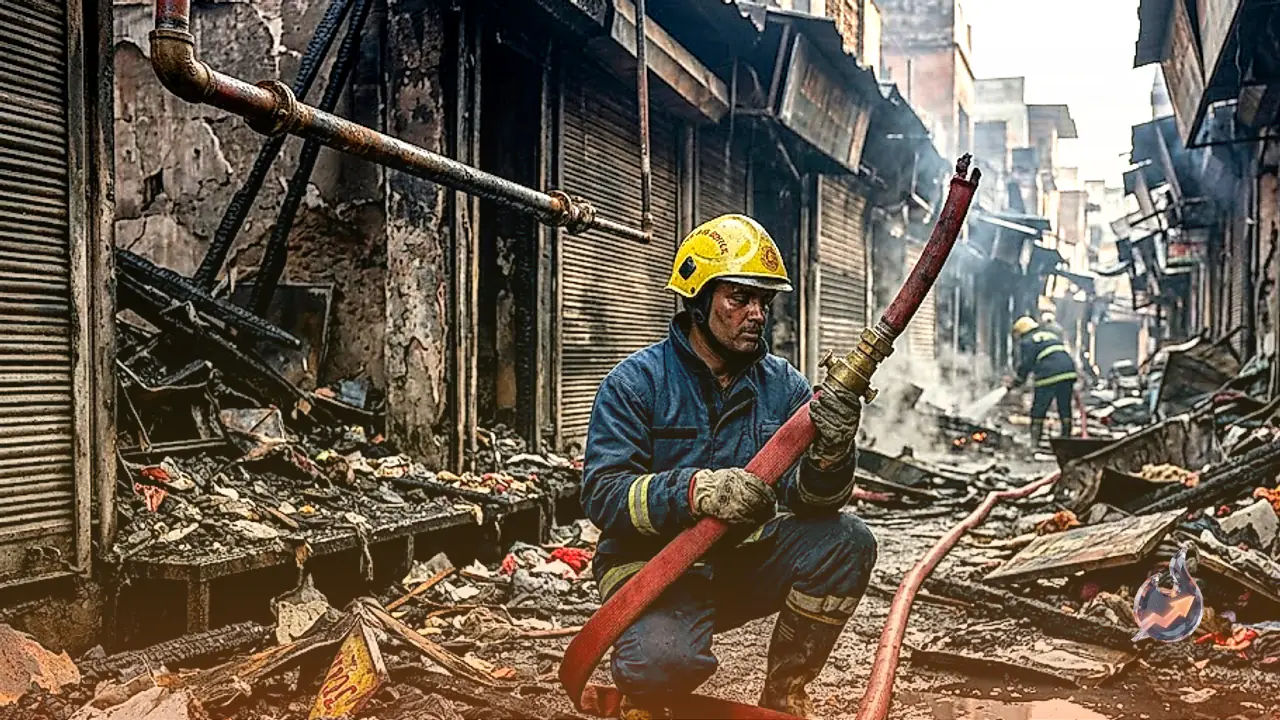


















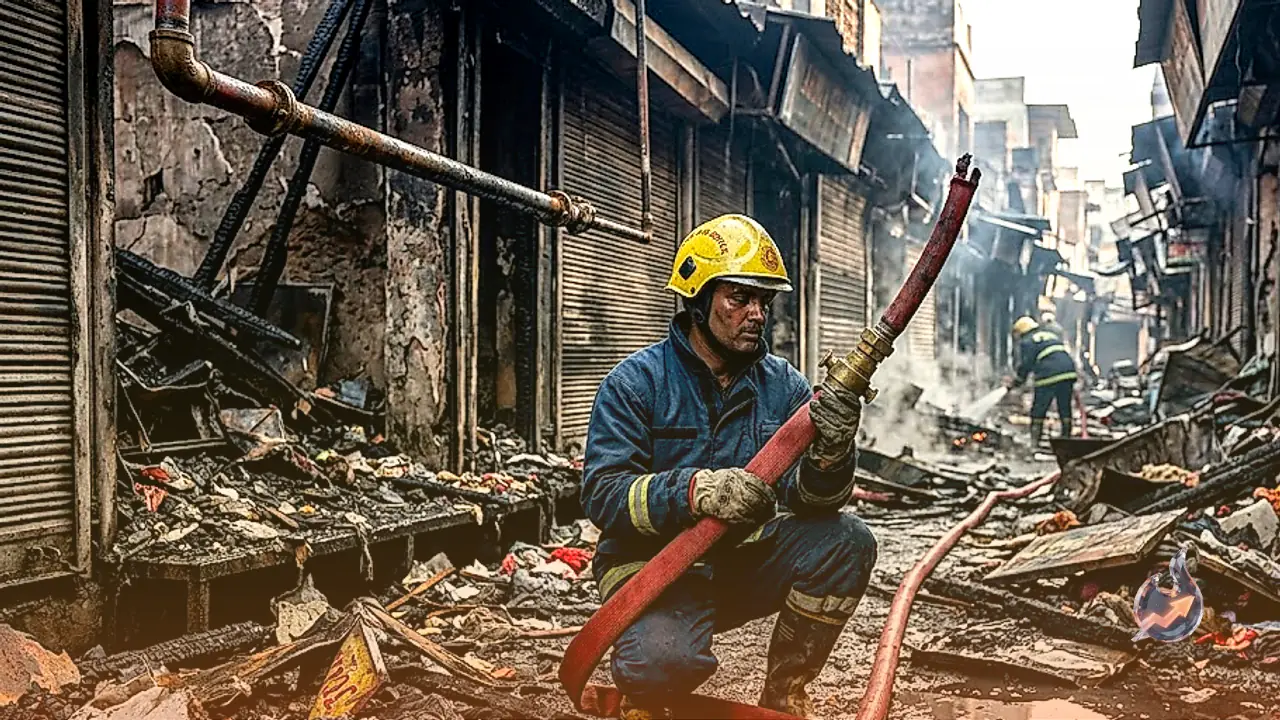

A massive fire broke out on Thursday morning at Purohit Ji Ka Katla, located in the heart of the walled city of Jaipur. This devastating blaze gutted more than twenty-five shops completely and inflicted crores of rupees in losses upon local traders. The incident has exposed the tall claims made under the smart city initiative. Burning continuously for roughly thirteen hours, the fire raised serious questions against the local administration regarding the misuse of public funds meant for the safety and protection of businessmen.
Four-Crore Fire System Proved Useless
Investigations and ground conditions revealed that the automatic firefighting system, installed about four years ago at a heavy cost of four crores, turned out to be completely useless. While smart city officials may have passed on paper, this system emerged as nothing more than a white elephant in reality. According to documents, six mock drills were shown as successful here over the past fourteen years. Small fire engines and fire tenders were purchased, but when an actual fire broke out, none of these small vehicles were visible anywhere. The fire station was merely one point seven kilometers away from the spot, but firefighters struggled immensely due to narrow lanes.
Waterless System Lacking Proper Testing
Reporting from the ground uncovered several major negligences. Although the four-crore fire system was installed, neither was its water connection active nor was it connected to hose pipes. No proper trial or testing of this system had been conducted over the past three years, leaving the water lines completely dry. Furthermore, the design itself was flawed. The nozzles and pipes of the fire system were installed at a height of twenty feet, whereas the fire originated in the shops below, and there were no water nozzles facing downward.
Departmental Apathy and Heavy Encroachment
This system was installed under the smart city project and was later supposed to be handed over to the Heritage Municipal Corporation. Both departments showed extreme negligence regarding its maintenance and responsibility, and nobody bothered to check the rusting system. Inside the Katla, traders themselves had made heavy encroachments by setting up shops and keeping goods on staircases and pathways. Consequently, neither could small fire engines go inside nor could firefighters find a path for rescue. Due to the extremely narrow lane, the main fire engines had to be parked three hundred meters away, and water pressure ran out by the time hoses were connected.
Illegal Construction and Averting a Greater Disaster
The fire originated from Sethi Complex, where a rooftop restaurant was being operated by flouting rules and operating without any fire NOC. Ventilation in the building had been blocked, and commercial gas cylinders were stored illegally. Fortunately, the fire broke out at seven in the morning. Due to the presence of mind of local residents, five gas cylinders were safely removed from the restaurant in time; otherwise, massive explosions could have occurred and destroyed the entire Katla. This catastrophe is not merely an accident, but the consequence of severe administrative apathy. If foolproof fire safety arrangements are not maintained in working condition, a major disaster could strike Jaipur markets in the future.