






















In an impressive financial turnaround, the Nagaur Agricultural Produce Market has surpassed its previous earnings benchmarks by registering a steep 84.29 percent jump in overall revenue. This substantial financial growth was achieved despite facing lower market fee rates on staple regional crops such as moong and psyllium husk, as well as a complete 100 percent mandi tax waiver extended to local industrial units under the Rajasthan Investment Promotion Schemes. With a total revenue collection of Rs 386.86 lakh, Nagaur has secured the second rank among all 16 agricultural produce markets in its regional zone.
Zonal Rankings and Financial Comparisons
Across the broader administrative zone, Merta market captured the premier spot by generating an aggregate revenue of Rs 960.50 lakh. In terms of percentage growth, Nagaur took third place, while it held second place in total crop volume arrival. What makes Nagaur's standing noteworthy is the institutional challenge it navigated: the markets ranking above and around it do not contain RIICO industrial areas. Nagaur operates alongside an industrial belt where factories enjoy total exemptions from market cess under state promotional schemes. In spite of this revenue ceiling, Nagaur broke into the top two positions for both earnings and crop inflow.
Crop Arrival Dynamics Offset Commodity Shortfalls
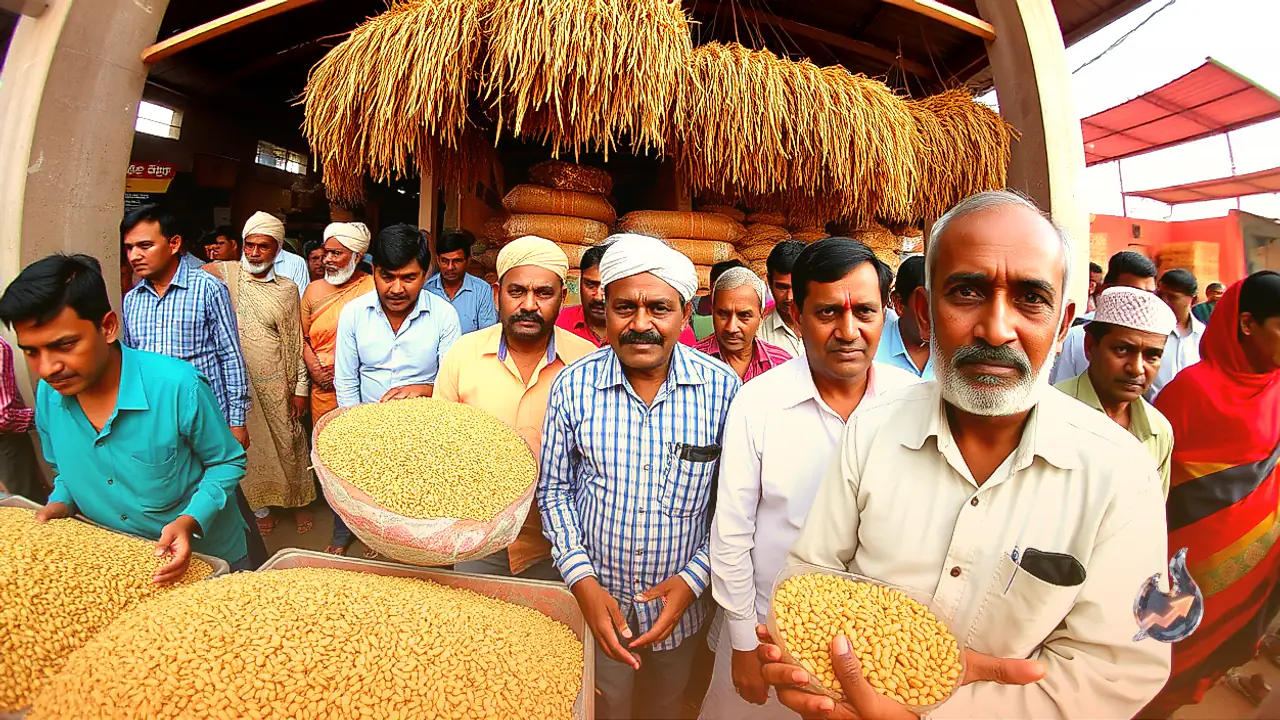
The agricultural plains of Nagaur are widely recognized for extensive yields of green gram, mustard, and psyllium husk. During the recent trading cycle, inbound shipments of moong and isabgol dropped markedly. Furthermore, the market fee rates levied on these particular commodities are naturally lower than those applicable to other commercial crops. While such a drop would ordinarily dent the market committee's fiscal intake, a surging influx of alternative produce reversed the situation. Large-scale arrivals of mustard, chickpea, cumin, and guar dramatically altered the trade volume. High trading turnover across these commodities generated robust cess collections that balanced the deficit.
Streamlined Auction Hours Eliminate Distress Sales
Administrative overhaul and practical scheduling reforms served as the core catalyst behind this revenue turnaround. In previous seasons, unscheduled and protracted auction procedures forced cultivators to linger at the yard until late in the evening, often preventing them from returning to their villages before 9 pm. To avoid exhaustion and delays, many farmers previously opted to liquidate their produce at deflated rates to private buyers outside the formal yard gates. In response, market authorities reorganized the bidding schedule, restricting auction procedures strictly between 11 am and 3 pm. This four-hour window enabled prompt sales, fair price discovery, and swift departures, discouraging unorganized transactions.
Farmer Outreach and Infrastructure Modernization Plans
A systematic outreach campaign informed growers about accurate prevailing spot prices, competitive auction rules, and yard amenities. Assured of open competition and fair value, farmers returned in large numbers to the regulated mandi, directly lifting arrival tallies. Leveraging this expanded revenue pool, the market administration is moving to modernize yard facilities. Comprehensive project proposals are being drafted to overhaul damaged restrooms, repair worn internal roads, install drainage infrastructure, establish systematic waste disposal, and upgrade drinking water stations. These civic upgrades will be executed on a priority basis as development funds are allocated.