














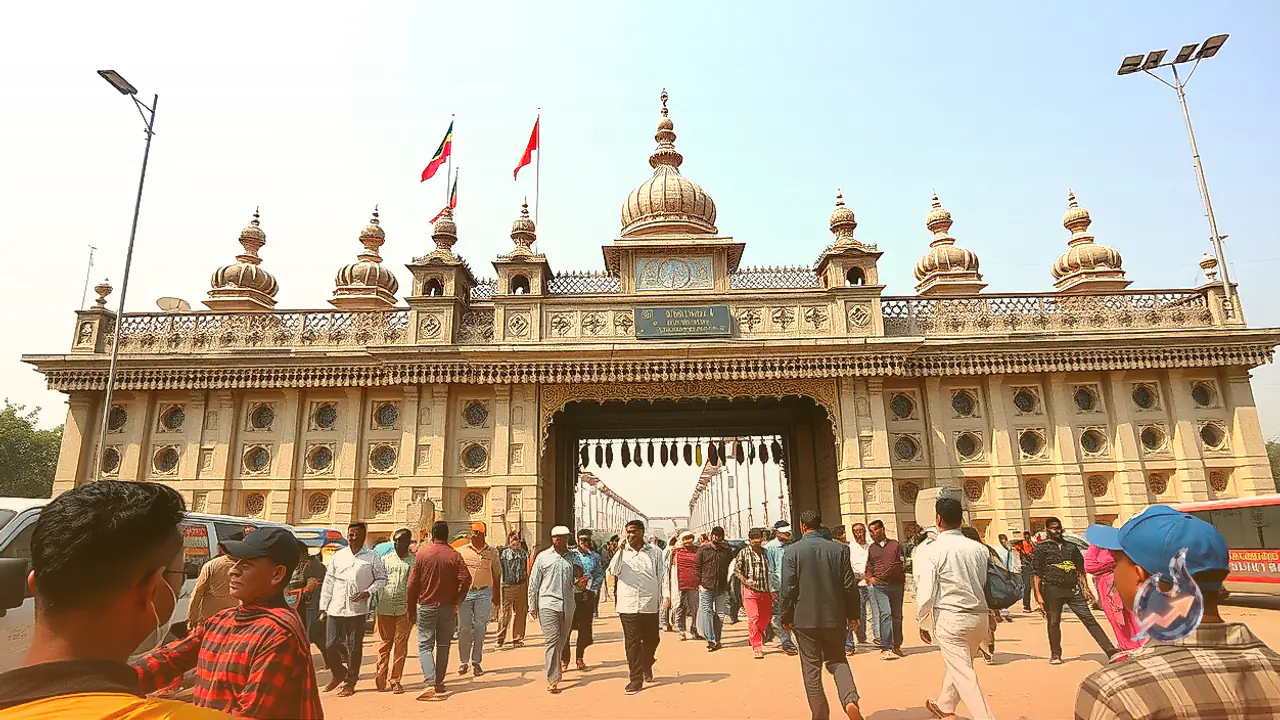

A grand new architectural landmark celebrating bilateral harmony now marks the international frontier between India and Nepal in Uttar Pradesh's Bahraich district. Bahraich shares a 101-kilometre international boundary with Nepal, anchored in age-old familial, cultural, commercial, and strategic bonds. To deepen these mutual ties, fortify border security protocols, and stimulate frontier commerce, the central and state governments spearheaded the construction of the Indo-Nepal Maitri Dwar at Rupaidiha. Now completely ready, the majestic entrance gate has quickly turned into a scenic point of interest for travellers and daily commuters alike.
Project Completed at an Outlay of Rs 643.28 Lakh
Positioned right at the terminus of the Barabanki-Bahraich-Rupaidiha National Highway, this monumental transit gate was executed with a total budget of Rs 643.28 lakh. Developing such a sprawling infrastructure project required securing designated land parcels within Rupaidiha town under Nanpara tehsil. The authorities procured the requisite plot through mutually negotiated agreements with private landholders, paving the way for smooth and timely civil construction.
Four-Pillar Structural Design and Streamlined Traffic Flow
The construction of this colossal gateway has transformed border transit, making vehicular and pedestrian movement substantially smoother and more organised. Structurally, the imposing gate is erected upon four sturdy supporting pillars, presenting a striking visual presence visible from a considerable distance. Navigational guidelines have been prominently marked across both directions of travel: commuters entering India from Nepal see Maitri Dwar, while those heading toward Nepal encounter signage reading Nepal Border Rashtra. An international border demarcation pillar stands positioned right beside the structure to delineate the boundary.
Enthusiastic Reception from Commuters, Traders, and Tourists
The unveiling of the modern gateway has generated immense enthusiasm among border communities, market merchants, and international cross-border visitors. Sharing his excitement, Devraj Bisht, a resident of Kohalpur in Nepal, remarked on the gate's striking aesthetic appeal and added that the decoration and arrangements here are excellent. Visitors arriving from diverse Nepalese districts and hill tracts, including Dailekh, Surkhet, and Mahendranagar, routinely halt at the complex to capture photographs and selfies. Local residents observed that the border previously featured an ordinary, modest gate, but this grand installation now offers the frontier crossing an international-standard identity.
Strengthening Strategic Security and Economic Linkages
Stretching along the 101-kilometre district frontier, the Maitri Dwar reinforces community connections while enhancing strategic border governance. The systematic layout assists security personnel with structured surveillance, while commercial freight and transport between the neighboring countries gain a more reliable transit point. For leisure travelers commuting toward Nepal via Bahraich, the site has swiftly established itself as an attractive and memorable stopover.