


















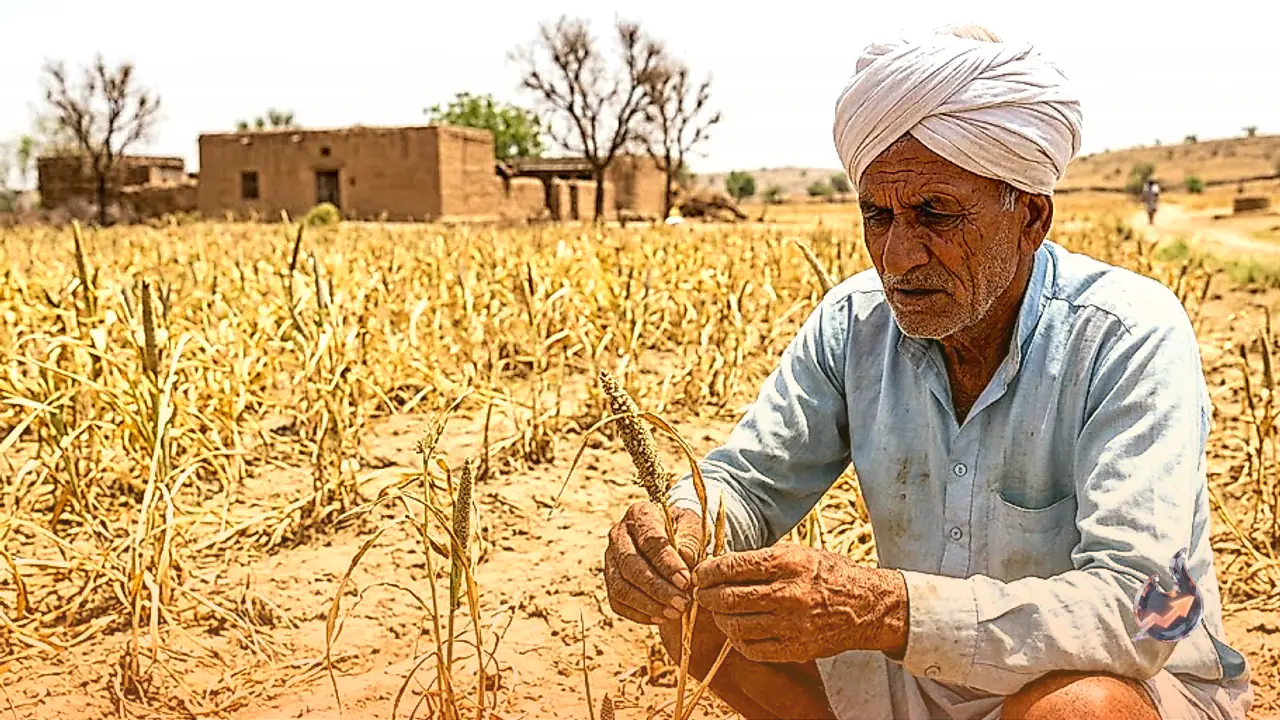

Agriculture in Sikar district of Rajasthan faces a severe trial as the 2026 monsoon season experiences its worst performance in nearly a decade. Considered the lifeline of the agricultural calendar, the crucial month of Sawan passed with virtually no rain across the region, creating intense anxiety among local farmers. Official rainfall logs show that between June 15 and September 2, Sikar recorded a mere 300 mm of precipitation against a seasonal average benchmark of 440 mm. This leaves the district with a substantial deficit of 140 mm. The monsoon intensity slackened noticeably after August 10, resulting in an unbroken 22-day dry spell that has plunged vast swathes of the district into drought-like conditions.
Depleting Soil Moisture and Rising Farming Costs
In Rajasthan's traditional agricultural cycle, Sawan rainfall is critical for sustaining Kharif crops. Showers during this period saturate the soil with vital moisture needed to carry crops through to harvest. However, the complete absence of expected rainfall this season has led to a rapid moisture loss across fields. Early-sown crops are already displaying severe symptoms of water stress. To save their wilting crops, farmers have had to rely heavily on artificial irrigation using tubewells and diesel water pumps. Running these pumps continuously has caused farm operational costs to surge while simultaneously escalating the extraction pressure on underground aquifers.
Weakest Monsoon Performance Since 2017
Irrigation department comparative data highlights that the current 2026 monsoon is the weakest the district has witnessed since 2017. Back in 2017, Sikar experienced a rainfall deficit of roughly 107 mm below normal. Following that difficult period, the district enjoyed several consecutive years of surplus rainfall. Notably, in 2024 and 2025, annual rainfall hovered around 630 mm, which brought about a notable recovery of approximately 3 meters in the district's average groundwater table. Unfortunately, the sharp monsoon downturn in 2026 threatens to completely reverse those hard-won groundwater gains.
Threat to Kharif Yields and Upcoming Rabi Sowing
The consequences of this prolonged rain deficit extend far beyond the immediate Kharif harvest. Agricultural analysts warn that without substantial rainfall in September, yields of key regional staples including pearl millet (bajra), moong, guar, and groundnut will take a heavy hit. Furthermore, the lack of residual soil moisture will complicate preparations for the upcoming Rabi sowing season. Farmers will be forced to apply multiple rounds of preliminary irrigation before planting, driving up expenditure on diesel fuel, electricity tariffs, and labor.
Depleting Aquifers and Expert Warnings
The failure of monsoon rains severely hampers natural aquifer recharge. Omprakash Jyani, a retired senior scientist from the Groundwater Department, emphasized that groundwater aquifers cannot replenish without adequate surface rainfall. At the same time, farmers are running tubewells nonstop to preserve standing crops. If September fails to bring heavy rains, groundwater pumping for Rabi crops and municipal drinking supply will intensify further, risking a rapid collapse of the 3-meter water table reserve restored over the last two years.
High Heat and Hopes Centered on September 4 System
Adding to the farmers' distress is a parallel rise in daytime temperatures across Sikar. Temperatures have soared to 37 degrees Celsius, accelerating moisture loss and heat damage in agricultural fields. Under these harsh conditions, all eyes are turned toward weather forecasts for early September. The India Meteorological Department indicates that a fresh monsoon weather system is expected to become active around September 4. This system is projected to bring moderate to heavy rainfall across the Shekhawati belt and other regions of Rajasthan. Should this system deliver widespread rain to Sikar, it could salvage standing Kharif crops, restore essential soil moisture, and kickstart much-needed groundwater recharge.